 ENG
ENG
 INA
INA
Faculty of Humanities Conducted Q2 2026 Performance Evaluation to formulate Strategic Steps for KPI Fulfillment
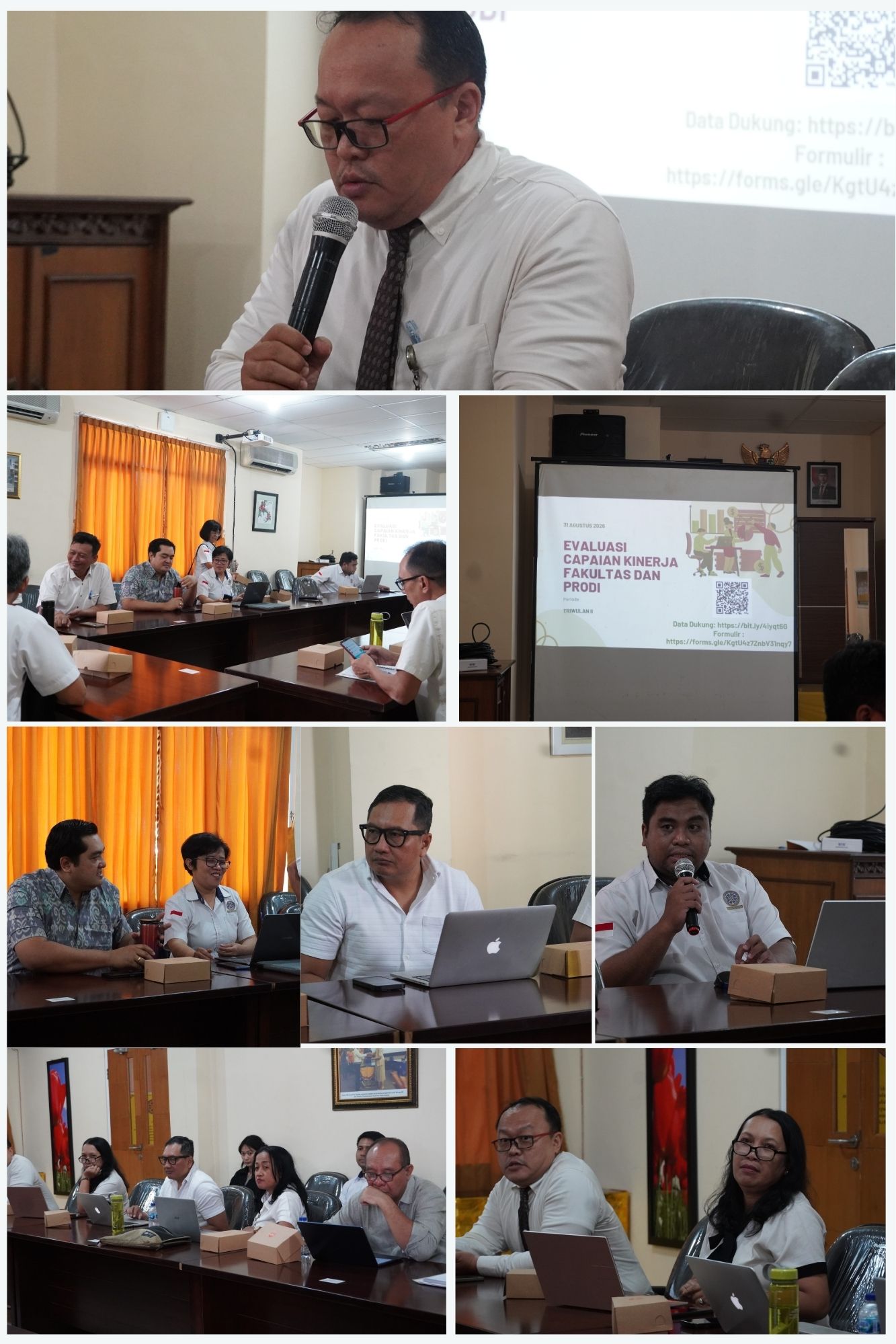
On Monday, August 31, 2026, the Faculty of Humanities Udayana University held the Faculty and Study Programs Performance Achievement Evaluation Meeting for the Second Quarter of 2026. The meeting, which took place in the Senate Meeting Room, Poerbatjaraka Building, was chaired by Dr. I Gede Oeinada, S.S., M.Hum. as the Vice Dean I of the Faculty of Humanities. The event was attended by the Study Program Coordinators (Undergraduate, Master's, Doctoral, BIPA, and BIPAS), the Head of the Information and Cooperation Management Unit (UPIKS), the Administration Coordinator, Sub-Coordinators, the Performance Achievement PIC Team from each study program, and the Learning Development and Quality Assurance Unit (UP3M). The meeting was held to review the realization of the Key Performance Indicators (KPI/IKU) and University Performance Indicators (IKP) targets up to the Second Quarter, as well as to formulate strategic countermeasures before the end of the Third Quarter in upcoming September.
In his presentation, the representative of the Faculty Planning Team, I Nyoman Agesta Amandayana, S.Kom. delivered a recapitulation of the faculty and study programs' performance achievements. Based on the initial evaluation, several performance indicators still require a significant push as they have not yet reached the annual percentage targets agreed upon with the Dean. In the aspects of educational efficiency rates and the percentage of active students, the average achievement is still below the target.
Additionally, student administrative obstacles were also discussed, such as the fulfillment of the PKKMB certificates and Participation Credit Units (SKP), which potentially hinder timely graduation. Regarding the percentage of alumni who are employed or pursuing further studies, the faculty continues to encourage the optimization of alumni tracking through collaboration with the Career Development Center (CDC), as well as providing guidance for unemployed graduates.
The discussion also covered aspects of lecturer qualifications and academic outputs. Regarding international recognition and the percentage of lecturers with doctoral degrees, international journal publications at the undergraduate level recorded significant progress. Meanwhile, data reporting at the postgraduate level continues to be streamlined through the IMISSU system. In terms of cooperation outputs and reputable publications, the faculty highlighted the importance of recording research-based outputs and international collaborations. Examples of published outputs include the collaboration with the Bali Province Language Center in the Proceedings of the National Seminar on Mother Languages as well as the documentation of cooperation reports into books or publicly accessible repositories.
Furthermore, the study programs' contributions to supporting the Sustainable Development Goals (SDGs) and the involvement of lecturers as experts in policy formulation are also encouraged to be officially documented through letters of assignment (surat tugas).
Responding to these achievements, the faculty leadership emphasized the importance of budget efficiency and accelerated actions by all working units. Considering the importance of fulfilling performance contracts with the rectorate and the ministry, study program coordinators and relevant units were asked to immediately draft an action plan to mitigate the indicators that are still below the target. Besides the KPI achievements, the meeting also discussed the mapping and digitalization of the faculty's business processes. Administrative workflows, ranging from yudisium registration to the preparation of work plans, were directed to be integrated into a digital system to improve the efficiency and transparency of academic services.
This evaluation meeting serves as a strategic foundation for the Faculty of Humanities to identify challenges and optimize performance in the middle of the 2026 fiscal year. As a follow-up, all Study Program Coordinators and Performance PICs were instructed to complete the data collection of students involved in research and MBKM, update the reporting of cooperation outputs, and immediately finalize the Quarter 3 Action Plan reporting through the faculty's integration system. The Faculty of Humanities is optimistic concerning on the designated performance targets in the upcoming period.
UDAYANA UNIVERSITY