 ENG
ENG
 INA
INA
25th Anniversary Celebration of the Doctoral Program in Cultural Studies at Faculty of Humanities: Dr. Jarrah Sastrawan Introduces “Kawi Culture” as a New Paradigm in Classical Studies
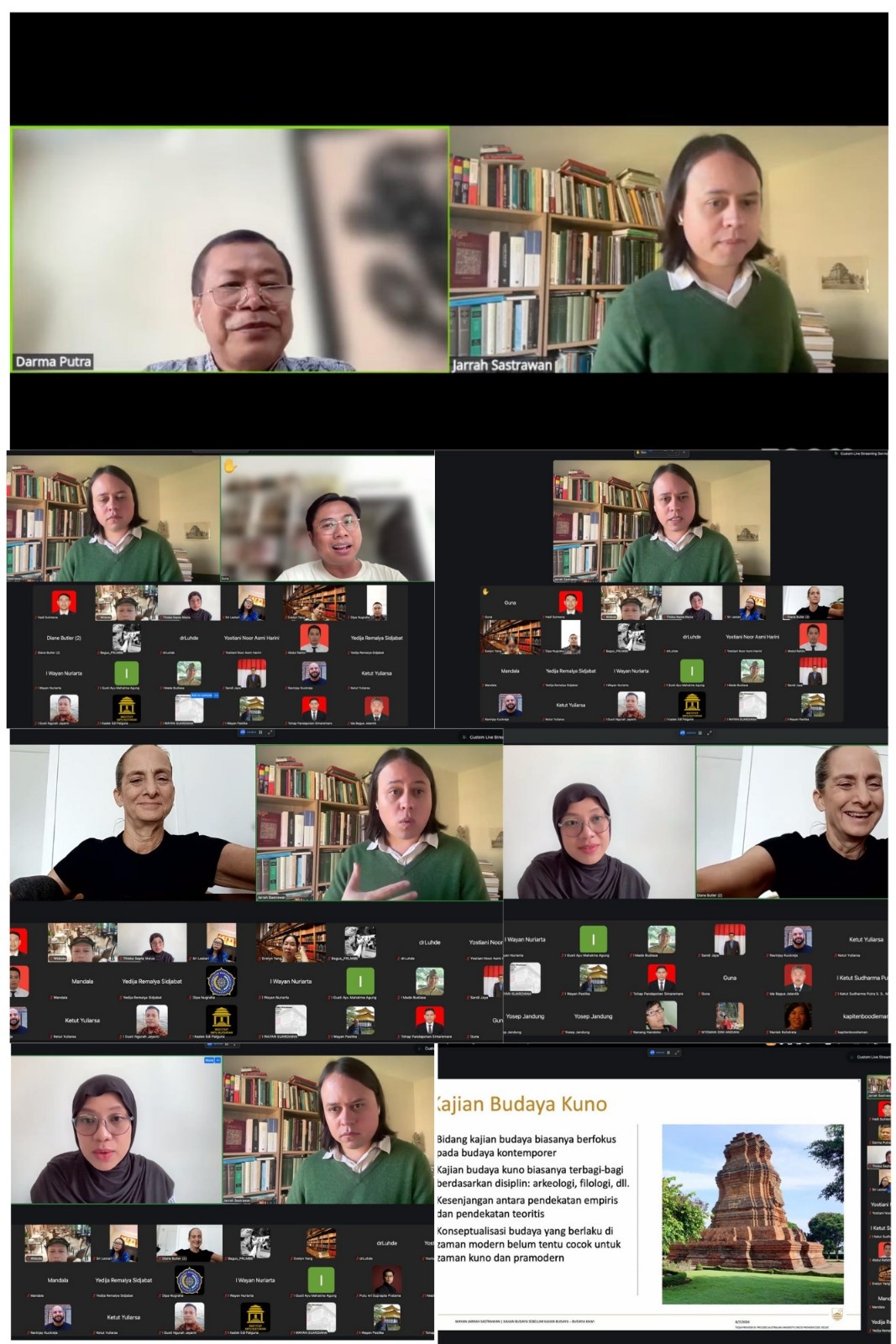
Denpasar, July 8, 2026 – To commemorate the 25th anniversary of the Doctoral (S3) Study Program in Cultural Studies at the Faculty of Humanities (FIB), Udayana University (Unud), which was initiated in July 2001, a special online guest lecture was held. During this event, Dr. Wayan Jarrah Sastrawan, a historian and academic from the Australian National University (ANU), provided an in-depth discussion on the topic "Cultural Studies before Cultural Studies."
The event was opened by the Coordinator of the S3 Cultural Studies Program at FIB Unud, Prof. Dr. I Nyoman Darma Putra, M.Litt. In his welcoming remarks, he emphasized the importance of broadening the scope of critical cultural studies beyond merely focusing on modern phenomena or contemporary popular culture. "The critical approach through deconstruction and the analysis of power relations has existed since ancient intellectual traditions. The challenge lies in how this critical study can be applied to historical materials, such as ancient manuscripts or archaeological artifacts, without falling into fallacies. This is where the urgency of a new perspective lies," stated Prof. Darma Putra.
Guided by moderator Thiska Septa Maiza, Dr. Wayan Jarrah Sastrawan began his presentation by reflecting on the gap between theoretical and practical approaches in the study of ancient Indonesian culture. Thus far, the study of the past has often been confined within rigid disciplines such as archaeology, philology, history, and linguistics. Dr. Jarrah also highlighted the challenge of anachronism, wherein modern social categories—such as the concept of nation-states, ethnic boundaries, religious codification, and modern linguistic structures—are forcibly applied to comprehend realities from thousands of years ago. Nevertheless, he brought new optimism regarding the revival of digital humanities and the participation of the younger generation. Ancient culture is no longer solely the domain of the state but has become public property. The enthusiasm of the youth in Bali in learning, preserving, and digitizing lontar (palm-leaf manuscripts) serves as concrete proof that the research of the past is now driven by the community.
As a theoretical proposition, Dr. Jarrah introduced the concept of "Kawi Culture." The term Kawi, which traditionally refers to a poet or creator, transformed in the context of Old Javanese literature into a literary language that transcends geographical and ethnic boundaries. "Kawi Culture must be viewed holistically. It encompasses various fields, ranging from visual arts, architecture, and rituals, to pragmatic laws and land deeds, rather than merely elitist literary texts from the royal courts," explained the University of Sydney Asian History alumnus. He further added that Kawi Culture functions as a cosmopolitan vernacular that connects global civilizations—such as the Sanskrit cosmopolis—with local wisdom. Its reach expanded across the islands of Java, Bali, Sunda, Madura, and Lombok, and continued to endure through Hindu, Buddhist, and Islamic traditions (via interactions with the Pegon script), up to Christianity.
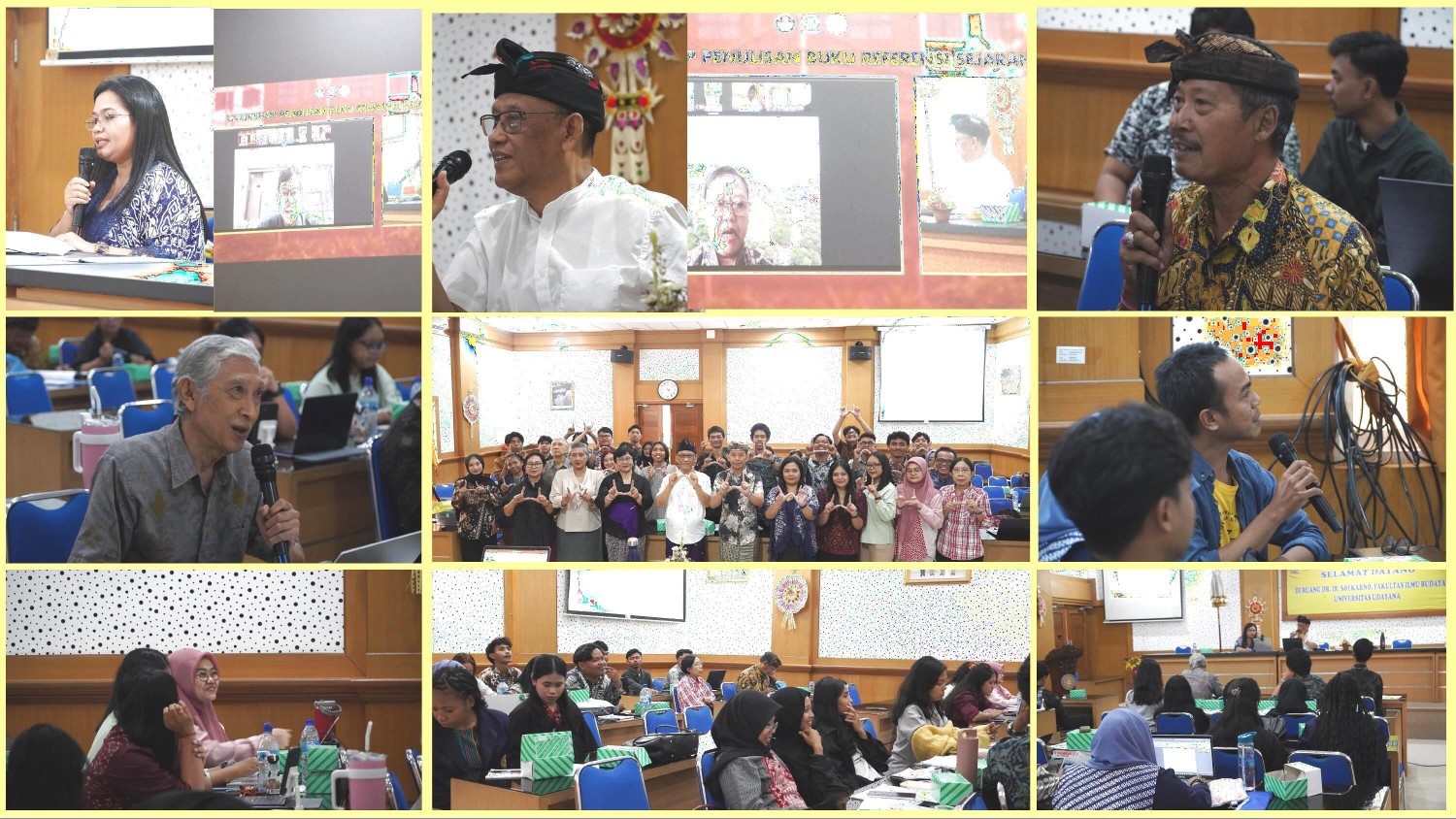
The guest lecture sparked interactive discussions among participants from various countries. Diane Butler opened the response session by praising the effort to position Nusantara's thoughts and texts as sources of global philosophical theory, rather than merely as exotic subjects of study for Western academics. This aligns with the ideals of the Udayana School of Cultural Studies pioneered by the late Prof. Ngurah Bagus.
Another critical perspective was shared by Dipa Nugraha, who connected the formation of grand historical narratives with the idea of "imagined communities," adopted by the nation's founders during the state-building process. On the other hand, philologist Putu Eka Guna Yasa prompted a profound debate regarding the historical relationship between Kawi Culture and Malay Culture. He questioned the reasons behind the declining prominence of the Kawi language in diplomacy during the 19th century, which was subsequently replaced by Malay, ultimately agreed upon as the national language. In response, Dr. Jarrah hypothesized that one of the main factors was the shrinking number of oral speakers of the Kawi language, in contrast to Malay, which continued to thrive as a daily language of communication (lingua franca).
From South Korea, Evelyn Yang of the Hankuk University of Foreign Studies (HUFS) provided a fascinating comparison regarding the infiltration of Sanskrit vocabulary into the Korean language through the spread of Buddhism and Chinese characters (Hanzi). This process contrasts with the assimilation of Sanskrit in Indonesia, which was far more organic, massive, and deeply rooted in various aspects of daily life and the legal system.
The discussion session also highlighted the significant role of women as active contributors to the literary tradition, such as the prominent figure Dewa Agung Istri Kanya in Klungkung, which was discussed alongside Yesi Candrika. The event concluded with a symbolic handover of a certificate by the moderator to Dr. Wayan Jarrah Sastrawan, accompanied by high hopes that the discourse on Kawi Culture will continue to pave the way for more inclusive and dynamic multidisciplinary research in the future.
.jpg)
UDAYANA UNIVERSITY