 ENG
ENG
 INA
INA
Improving Communication Skills, The Bachelor of English Literature Students Practice Public Speaking with Bali TV and RRI Practitioners
.jpg)
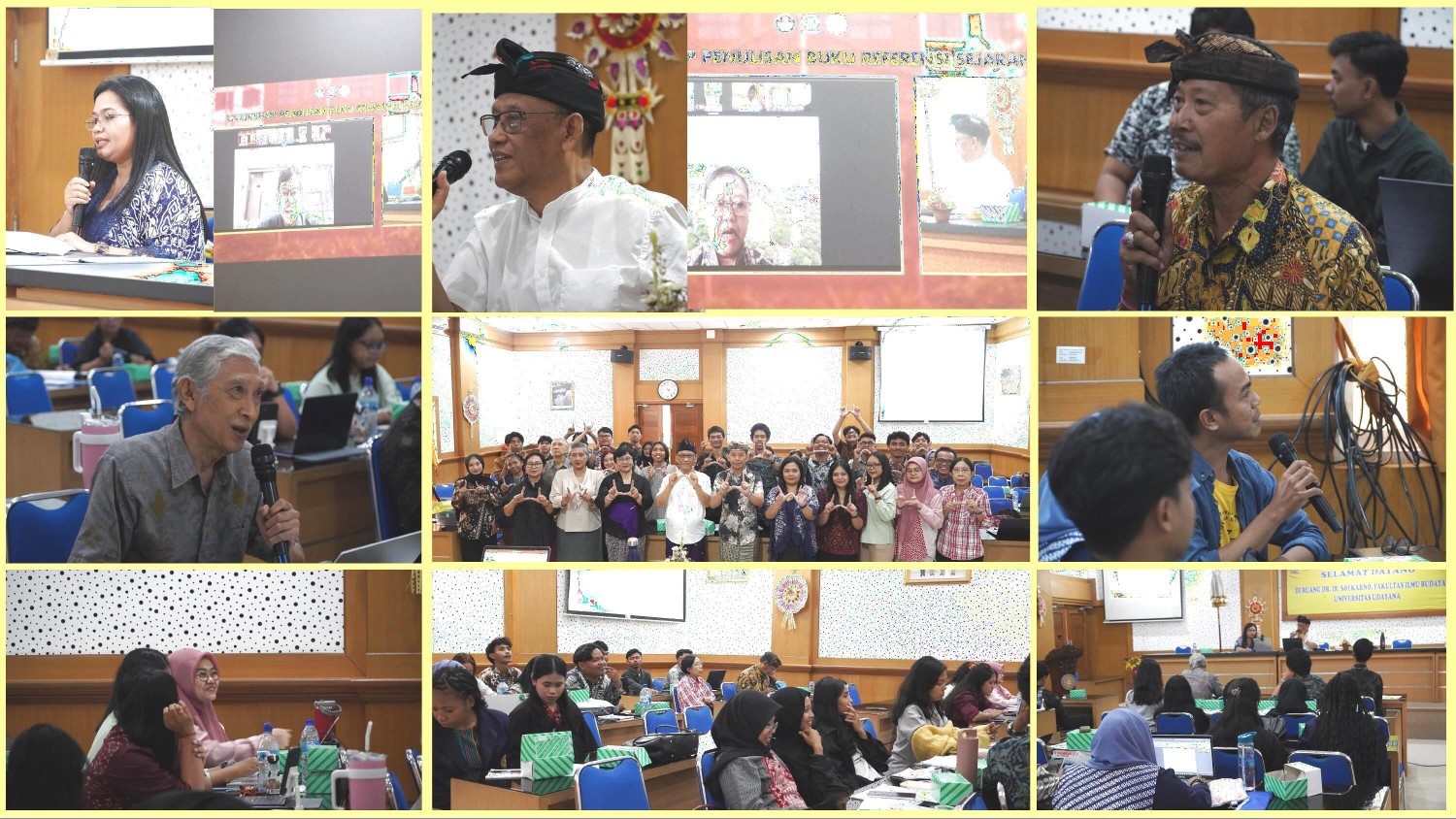
Implementation of the Public Speaking course in the 7th semester, the Bachelor of English Literature Faculty of Humanities, Udayana University held a guest lecture on strategies to hone effective public speaking techniques on Thursday, September 24, 2026. Taking place at the Widya Sabha Mandala Auditorium, Prof. Dr. Ida Bagus Mantra Building 3rd Floor. This event was targeted with year 2023 students. This guest lecture presented two professional practitioners, namely I Wayan Epa Jayantika from Bali TV and Ida Bagus Ngurah Tri Pramana from RRI Indonesia Bali Branch, to share their practical experiences with the attending students.
The Coordinator of Public Speaking class, Dr. Anak Agung Sagung Shanti Sari Dewi, S.S., M.App.Ling., M.Hum., opened the event by emphasizing the importance of active participation and direct practice (learn by doing) for the students. She explained that this session was specifically focused on mastering the practical aspects of public speaking, ranging from how to overcome the fear of speaking in public, techniques for developing speech materials, to strategies for building personal branding.
In the presentation session, Ni Made Dian Paramitha Sari, S.S., M.Hum.as the moderator accompanied representative from Bali TV, I Wayan Epa Jayantika who thoroughly explored the basics of public speaking from mastering fundamental elements to solutions for psychological obstacles on stage. He dissected various common problems such as a lack of self-confidence, erratic body movements, tremors, to the phenomenon of losing words or going blank when facing an audience. To support a convincing appearance, Epa emphasized five basic aspects of public speaking that must be mastered, namely visual and grooming, gestures and body language, expressions, vocal techniques, and the structure of material delivery. Closing his session, he provided tactical strategies to overcome nervousness, which he deemed a human thing, through thorough preparation, positive affirmations, slowing down the speaking pace while smiling, and continuous efforts to increase time on stage.
To avoid a monotonous atmosphere, the material presentation did not only run one way. The speaker, familiarly called Kak Epa, enlivened the atmosphere by involving the batch 2023 students in an interactive simulation. Through this participatory approach, selected students were directed to come to the front of the stage to directly practice the speaking techniques they had learned. This bravery-showcasing session, which was guided and evaluated directly by the speaker, successfully broke the ice, while also becoming a tangible manifestation of the implementation of the "learn by doing" concept in honing students' self-confidence.
Completing the previous presentation, Ida Bagus Ngurah Tri Pramana from RRI Indonesia Bali Branch highlighted the urgency of public speaking as a vital instrument for personal growth, leadership, career advancement, and as a driver of social change. Specifically, he shared a practical formula in compiling a speech structure that is also relevant for students to apply in drafting academic proposals, namely Opening, Thesis, Three reasons, and Closing. Furthermore, Tri Pramana dissected various speech approach techniques, ranging from the AIDA (Attention, Interest, Desire, Action) method to emotion-based persuasion tactics such as anger, fear, and excitement-based speech. To ensure the presentation runs smoothly, he provided tactical guidelines divided into three phases: preparation (audience and material research), execution (pace setting, anxiety management, to how to respond to interruptions or hecklers), and post-performance evaluation. This session was also packaged in a participatory manner through an interactive case study, where students were invited to opine and examine the communication blunder of an influencer on social media to emphasize how crucial research and empathy towards the audience are before conveying an idea.
At the closing of the guest lecture series, the enthusiasm of the batch 2023 students peaked during the Q&A session which explored various real obstacles when performing in public. Responding to anxieties regarding tremors and slips of the tongue, the speakers reassured the audience by stating that such obstacles are commonly experienced even by professionals due to the immense pressure to perform perfectly, thus students were advised to perform as best as they could and apply the principle of "fake it till you make it". Moreover, the speakers broke the stigma that public speaking must always strictly adhere to a grand opening structure; instead, the main key lies in the depth of well-reasoned content and audience research. Although extensive experience will form automatic adaptability in conditions of minimal preparation, beginners are still required to conduct in-depth research—especially when presenting a niche topic, where the level of understanding can be measured through the speaker's ability to independently rewrite the material.
UDAYANA UNIVERSITY