 ENG
ENG
 INA
INA
Book Discussion Session on the 62nd Anniversary of the Bachelor of History Udayana University: The Transition from a Hindu-Buddhist Cosmopolis to the Critique of Historical Sources
.jpg)
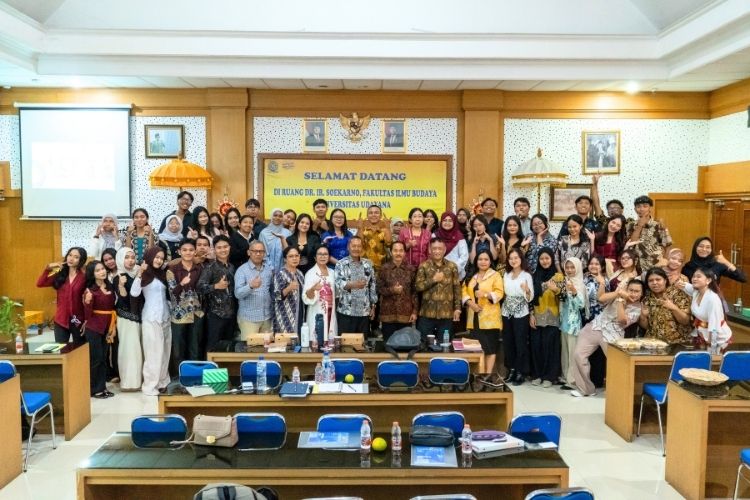
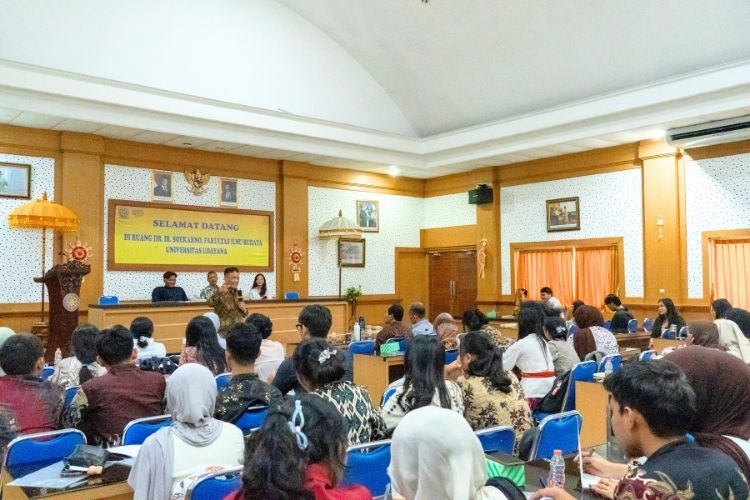
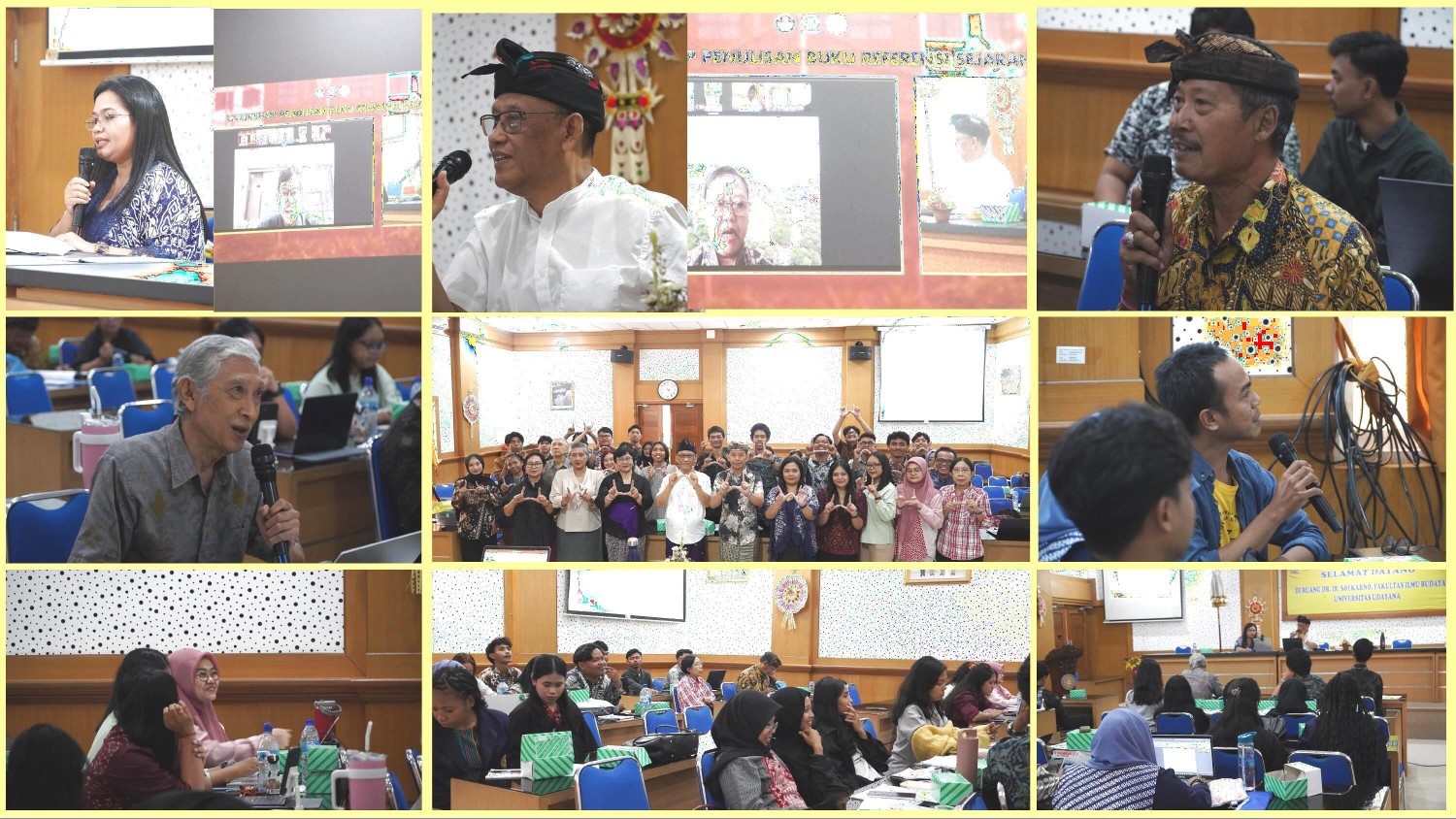
The peak celebration of the 62nd Anniversary of the History Department, Faculty of Humanities, Udayana University on Tuesday, August 18, 2026. It was continued with two parallel agendas. Participants attended the Film Review session in the Dr. Ir. Soekarno Room. Critical dialectic pulse was strongly felt during the Book Review session. The moderator, Salsabila Dinaristi from the Bachelor of History’s student year 2024 thoroughly examined two historical works through the lenses of international experts and senior academics.
This session thoroughly discussed two important works: "Hindu-Buddhist Cosmopolis Interfaith Studies in Comparative Perspective" and "Merawat Memori Kolektif dalam Konteks Kajian Budaya dan Sejarah: Kusumanjali Dr. Drs. Ida Bagus Gde Putra, M.Hum.".
The review session began with a captivating presentation by Dr. Preeti Oza from St. Andrew College, Mumbai, India attended virtually. Dissecting the book "Hindu-Buddhist Cosmopolis Interfaith Studies in Comparative Perspective," Dr. Preeti highlighted the traces of the Hindu-Buddhist cosmopolis in 9th-century Southeast Asia. She analyzed Borobudur Temple as a stone mandala that represents not only religious cosmology, consisting of Kamadhatu, Rupadhatu, and Arupadhatu, but also served as a manifestation of political theology and royal power legitimacy in the past.
Another perspective was presented by Naufal Azhar Romadhoni, a 2023 batch student from the Unud History Department. He sharply highlighted the importance of writing rural history. Taking his research on Budakeling and Buahan Kaja villages as examples, Naufal emphasized that villages possess their own rich historical narratives. He encouraged young academics to break away from colonial-nuanced views that often marginalize villages merely as a support system or a backdrop to urban history.
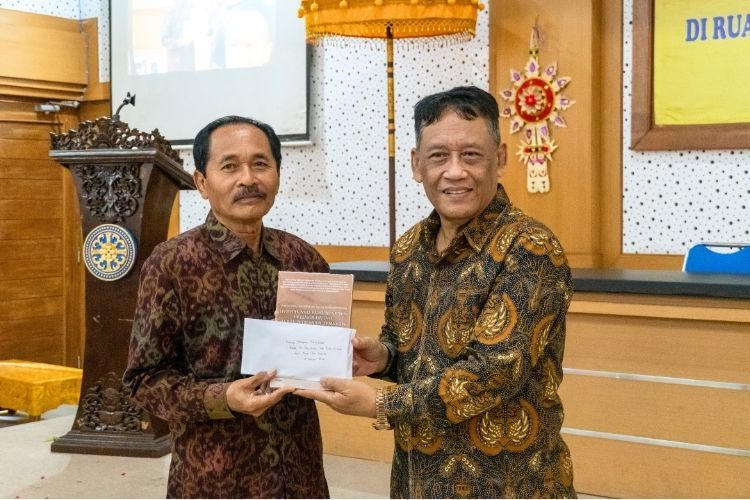
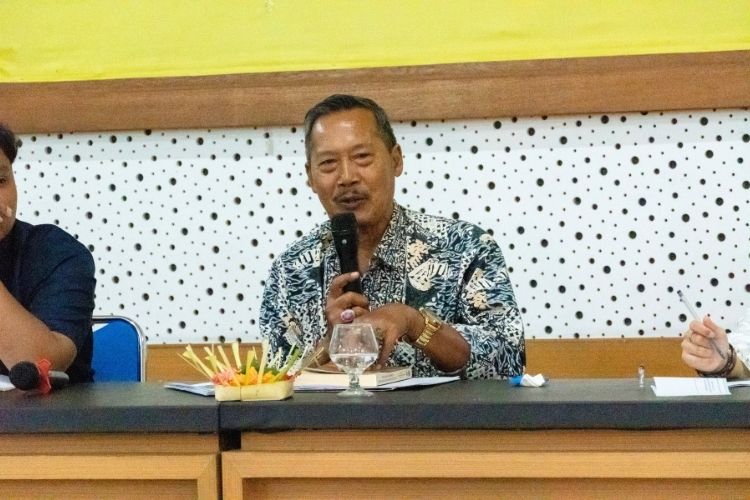
The discourse grew warmer when academic and art history expert, Dr. Drs. I Gusti Ngurah Seramasara, M.Hum., took the podium to review the book "Merawat Memori Kolektif dalam Konteks Kajian Budaya dan Sejarah: Kusumanjali Dr. Drs. Ida Bagus Gde Putra, M.Hum.". Before presenting his analysis, Dr. Seramasara expressed tremendous appreciation for the tradition of the Unud History Department, which consistently publishes dedication books for retiring lecturers. He considered this an exceptionally rare intellectual tradition that should be emulated by other study programs.
In his review, he provided a constructive dissection of historical methodology. He highlighted the crucial role of an editor in weaving a "common thread" across chapters so that a book does not merely become a compilation of manuscripts. Furthermore, he emphasized the importance of source criticism, particularly in analyzing historical photo archives and Indian building architecture. According to him, colonial legacy photos or revolutionary-era photojournalism must not be taken at face value, as behind a photographer's lens, there are always structural, dominant, hegemonic, and political orientations that historians need to critically evaluate.
Responding to the dynamic discussion, the coordinator of the History Department, Prof. Dr. phil. I Ketut Ardhana, M.A., welcomed the deep critiques and insights from Dr. Seramasara. Prof. Ardhana asserted that this straightforward academic debate served as a "valuable lecture" for students to understand the fundamental difference between “History as Art” and “History as Science.”
"When history is studied as a science, it must be testable, verifiable, and analyzable through the stages of a critical historical method, rather than merely a subject of interest," concluded Prof. Ardhana.
The book review session concluded with high enthusiasm from the participants, proving that at the age of 62, the FIB Unud History Department consistently creates sharp, progressive dialectical spaces that remain relevant to the challenges of the times.
Gallery
.jpg)
UDAYANA UNIVERSITY