 ENG
 INA
Bringing Together 401 Participants from Seven Countries, FIB Unud Hosts ASJI International Symposium 2026
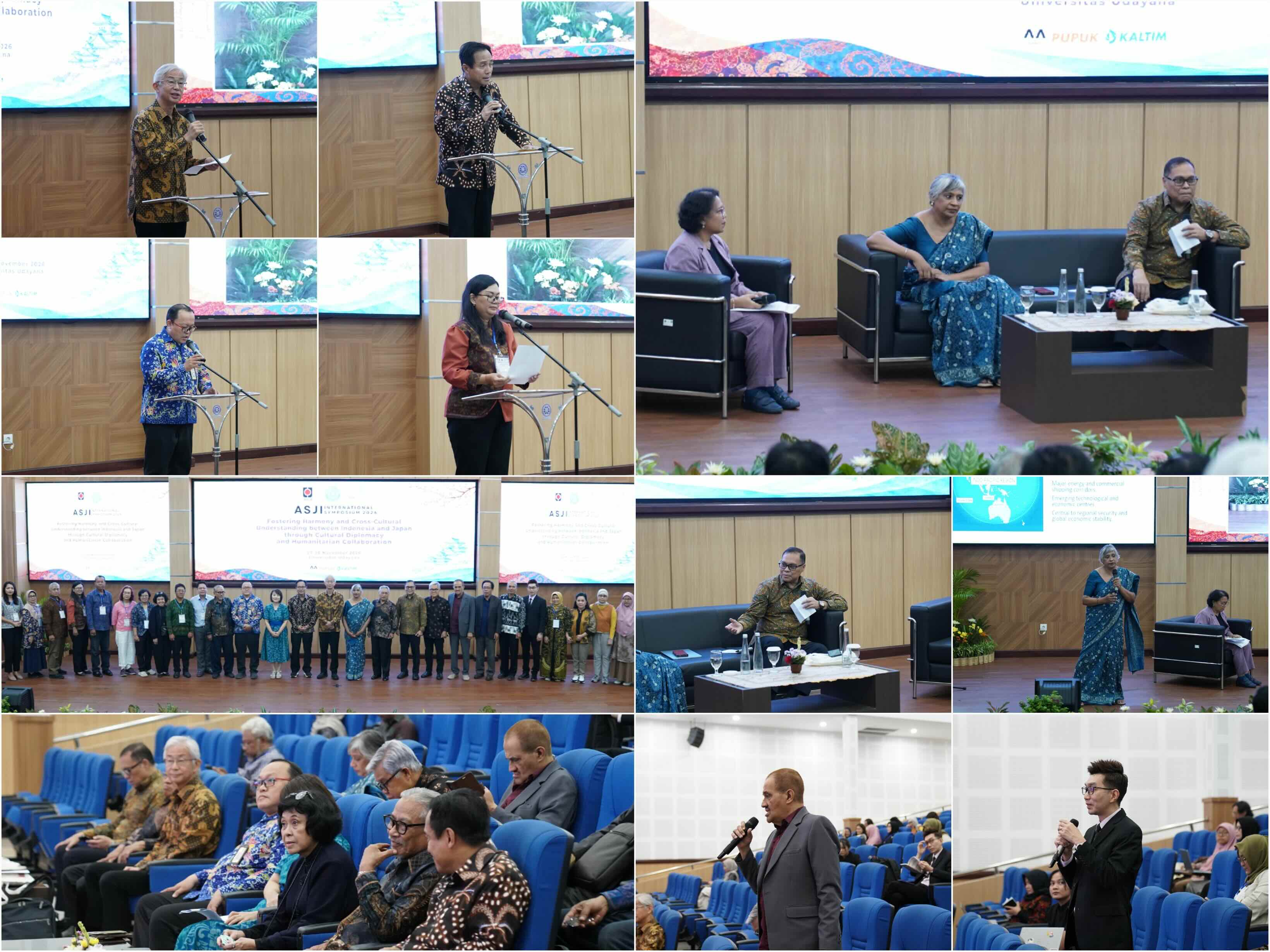
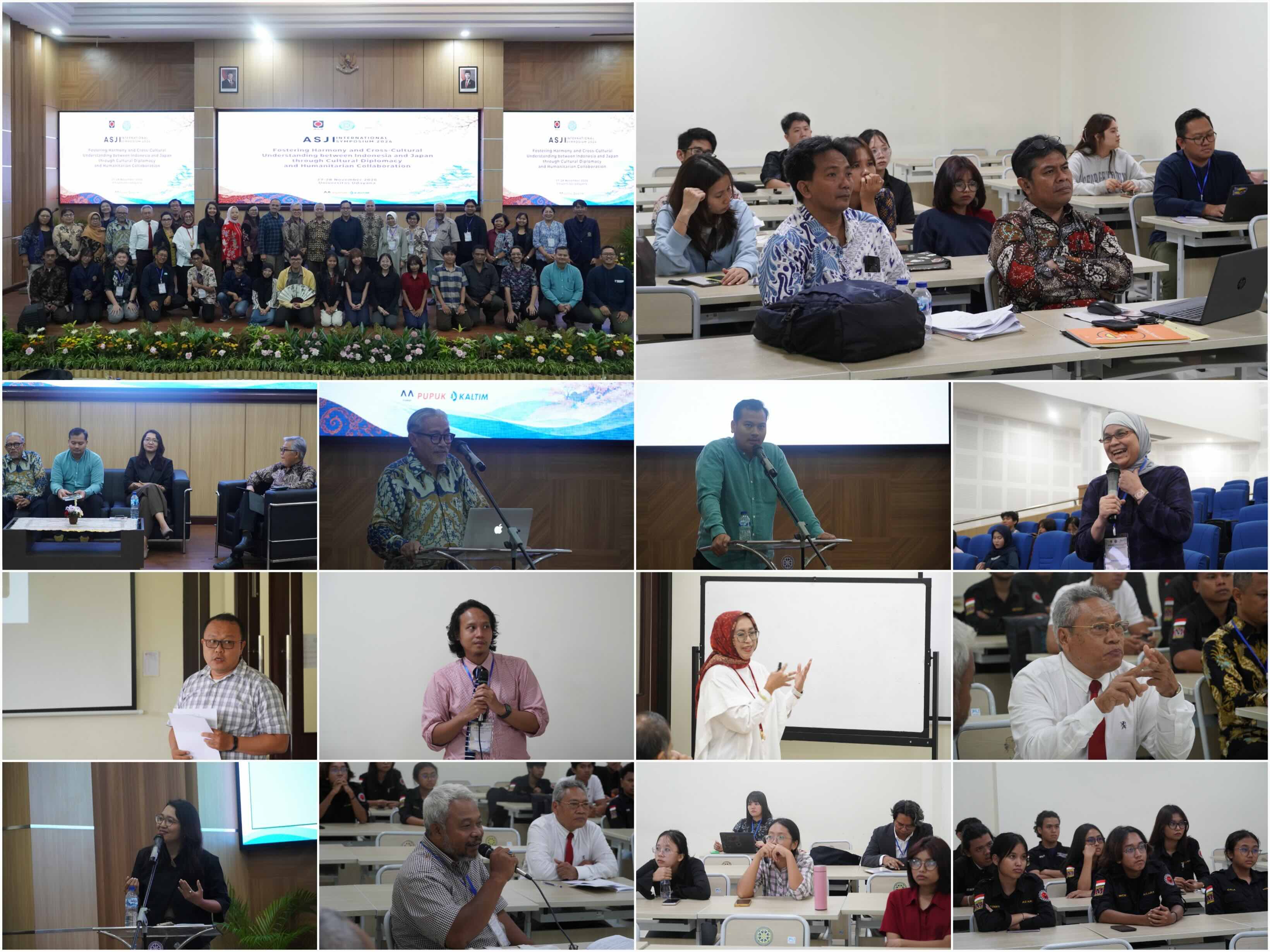
Udayana University, through the Bachelor of Japanese Literature of the Faculty of Humanities (FIB Unud), in collaboration with the Indonesian Association for Japanese Studies (ASJI) and The Japan Foundation, held an international seminar titled “ASJI International Symposium 2026” under the theme “Fostering Harmony and Cross-Cultural Understanding between Indonesia and Japan through Cultural Diplomacy and Humanitarian Collaboration” from Friday (27/11/2026) to Saturday (28/11/2026) in a hybrid format. Held in the Theater Room on the third floor of the Lecture Building at the Jimbaran Campus, the symposium was attended by presenters from various countries around the world.
Opening the symposium, Dr. Ida Ayu Laksmita Sari, S.Hum., M.Hum., as Chair of the Organizing Committee, reported that the event was attended by 401 participants from seven countries, namely Indonesia, Japan, India, Singapore, Thailand, the United States, and Malaysia. She also expressed her appreciation to the entire organizing committee, Udayana University, ASJI, The Japan Foundation, and all supporting institutions for their contributions to the success of the event, while hoping that the forum would strengthen academic cooperation and open opportunities for future international collaboration.
Representing Udayana University, Dr. I Gede Oeinada, S.S., M.Hum., Vice Dean for Academic and Student Affairs at FIB Unud, officially opened the symposium. He emphasized that the close friendship between Indonesia and Japan is not only built through formal relations but also rests on people-to-people ties in education, culture, and humanitarian commitment. He also expressed hope that the symposium would serve as an inspiring space for exchanging ideas and strengthening collaborative networks for future generations.
Meanwhile, President of ASJI, Julian Aldrin Pasha, M.A., Ph.D., emphasized that Japanese studies must now evolve beyond conventional area studies toward an interdisciplinary approach grounded in empathy, humanitarian values, and international academic cooperation. On the same occasion, Director General of The Japan Foundation, Jakarta, Inami Kazumi also announced the launch of a new initiative called the Indonesian Japanese Studies Scholars Database (IJSSDB) as a centralized database to map and connect Japanese studies researchers across Indonesia, while inviting all ASJI members to participate in its development survey.
Moving into the main session moderated by Prof. Dr. Dra. Ida Ayu Made Puspani, M.Hum., the forum featured Prof. Hikmahanto Juwana, S.H., LL.M., Ph.D., from Universitas Indonesia and Prof. Srabani Roy Choudhury from Jawaharlal Nehru University. Prof. Hikmahanto assessed that the ratification of the UN multilateral migrant workers convention is ineffective in protecting Indonesian workers because major destination countries such as Japan, South Korea, and Malaysia have not ratified it. Referring to the principle of pacta tertiis nec nocent nec prosunt, he advocated a pragmatic approach by strengthening workers' access to the domestic laws of destination countries as well as comprehensive and reciprocal bilateral agreements that cover workers in non-domestic sectors such as construction and manufacturing.
Meanwhile, an academic from Jawaharlal Nehru University, India, Prof. Srabani Roy Choudhury, examined opportunities for trilateral synergy among India, Indonesia, and Japan in responding to the multipolar world order in the Indo-Pacific region. Integrating Japan's Free and Open Indo-Pacific (FOIP) vision, India's MAHASAGAR policy, and the ASEAN Outlook on the Indo-Pacific (AOIP), she formulated seven concrete pillars of cooperation, ranging from maritime security, supply chain resilience, and energy transition to academic exchanges, to maintain regional stability inclusively.
In the first plenary session moderated by Universitas Indonesia Japanese Studies scholar Muhammad Reza Rustam, Ph.D., three speakers discussed the dynamics of migration policy and Japanese cultural diplomacy in Southeast Asia. Prof. Yasuko Iwashita from Hiroshima Bunkyo University highlighted the vulnerability of foreign trainees under the Technical Intern Training Program (TITP) and examined the transition toward the Employment for Skill Development (ESD) system in 2027, which must be accompanied by local multicultural coexistence. Next, Prof. Lim Beng Choo from the National University of Singapore discussed expanding Japanese cultural diplomacy beyond popular culture through a case study of traditional Kurokawa Noh theater performances in Singapore. Rounding out the session, Dr. Saikaew Thipakorn from Chulalongkorn University evaluated the shift in Japan's cultural diplomacy in Southeast Asia since the 1970s from one-way cultural introduction toward two-way, community-based exchanges and ASEAN connectivity.
In the second plenary session moderated by Aldrie Alman Drajat, Ph.D., three speakers explored people-to-people exchanges, popular culture identity negotiation, and the utilization of Japanese folklore in cultural tourism. Dr. Anderson Villa from Mindanao State University-General Santos City discussed people-to-people exchanges and humanitarian solidarity connecting the peoples of the Philippines, Indonesia, and Japan, ranging from the multicultural coexistence of Muslim diaspora communities in Japan to cross-border humanitarian relief following the Mindanao earthquake. Subsequently, Dr. Bemen Wong Win Koeng from Universiti Malaysia Sarawak (UNIMAS) presented qualitative findings on the influence of Japanese popular culture on identity formation and self-confidence among young cosplayers in Sarawak, including local innovations such as hijab cosplay that harmonize hobbies with religious values. Closing the session, FIB Udayana University scholar Dr. Ida Ayu Laksmita Sari, S.Hum., M.Hum., examined the oral traditions of the indigenous Ainu people in Hokkaido and their representation in the anime Golden Kamuy through a storyomics approach to promote sustainable cultural tourism that respects local identity.
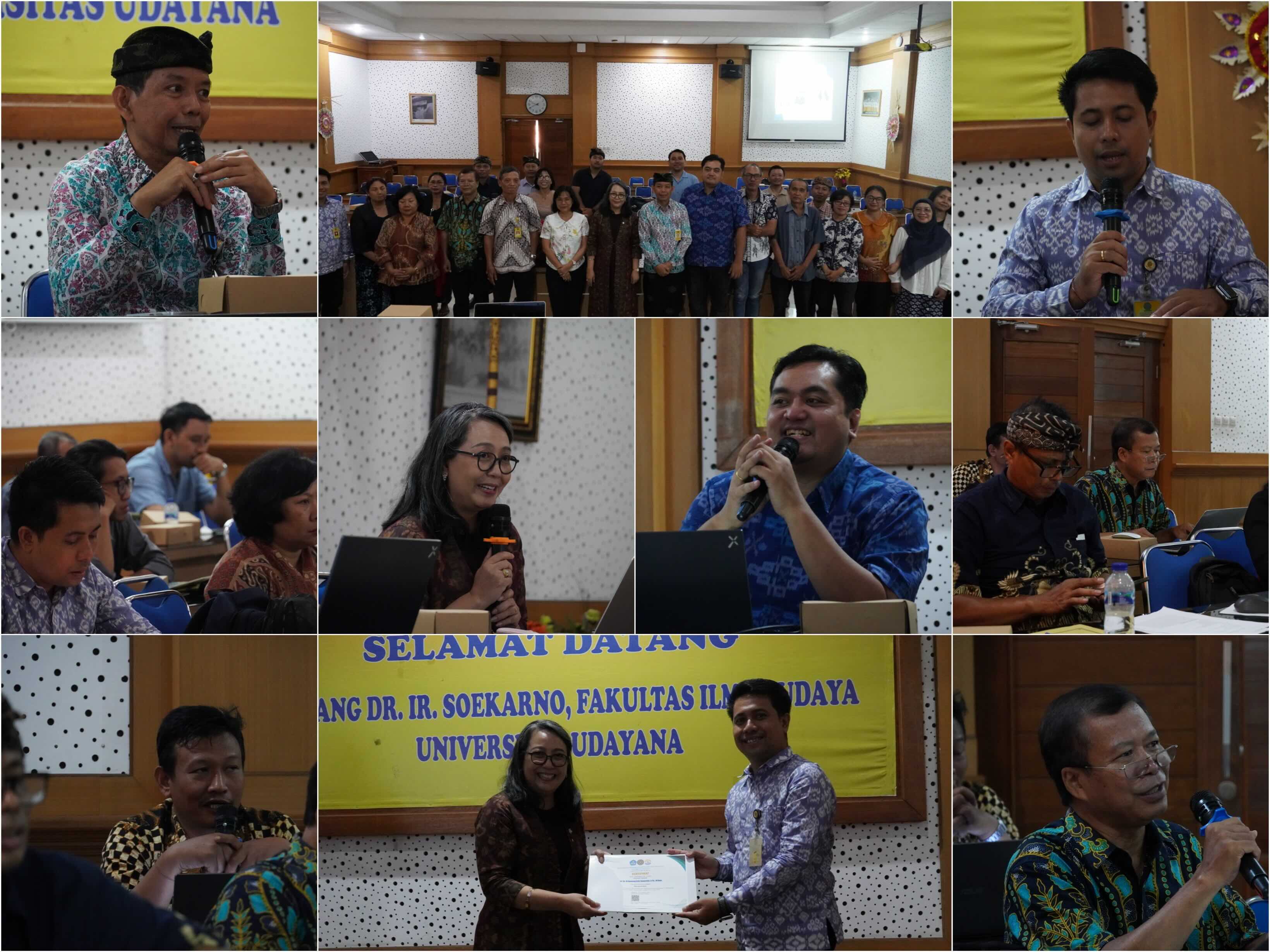
Concluding the series of events, the keynote session moderated by Julian Aldrin Pasha, Ph.D., featured Prof. Nobuhiro Aizawa, who proposed the concept of a social alliance between Indonesia and Japan. He highlighted the similarities between both nations as democratic archipelagic states in the Ring of Fire facing comparable middle-class vulnerabilities, yet supported by complementary demographic structures between Indonesia's young population and Japan's aging society. Responding to artificial intelligence disruption and global geopolitical shifts, he encouraged strengthening cross-border talent circulation, two-way investment, university research collaboration, and skill certification harmonization to build societies that balance prosperity, security, and freedom.
UDAYANA UNIVERSITY