 ENG
 INA
INBIS Unud Visits FIB to Socialize Work Programs and Research Downstreaming Opportunities
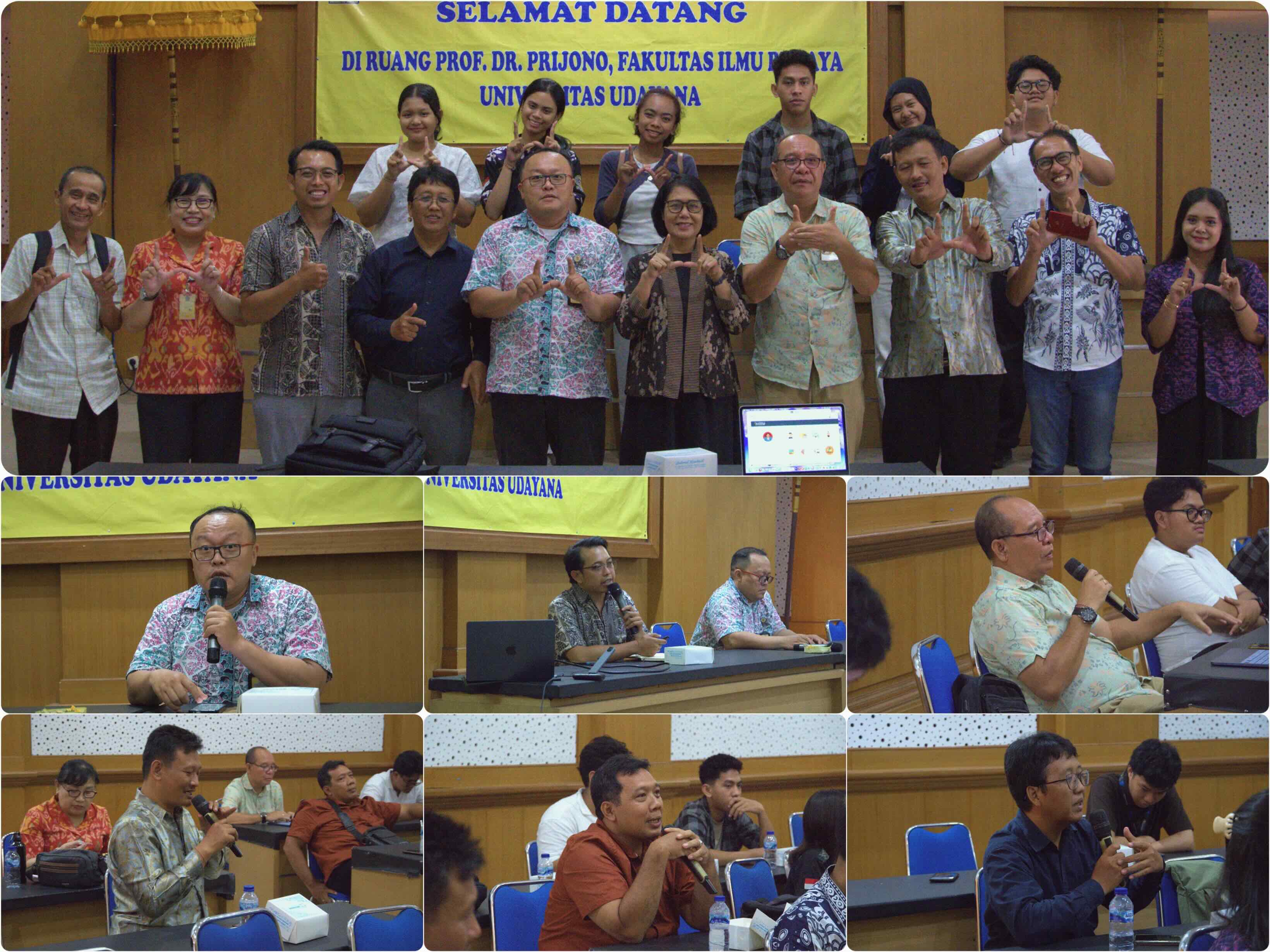
DENPASAR – The Faculty of Humanities, Udayana University (FIB Unud) received a visit from the Business Incubator (INBIS) for the coordination and socialization of its work programs on Wednesday, October 21, 2026. Taking place in the Priyono Room, Poerbatjaraka Building of FIB Unud, the event was attended by the leadership and academic community, including the Vice Dean I, Vice Dean II, Study Program Coordinators, and representatives of Student Associations from each study program.
The event was opened with remarks from the Vice Dean I of FIB Unud, Dr. I Gede Oeinada, S.S., M.Hum. He expressed his appreciation to the INBIS representative, Ir. Ida Bagus Gede Sarasvananda, S.Kom., M.Cs., for his presence to share insights regarding the business incubation program with lecturers and students.
In his presentation, Ir. Ida Bagus Gede Sarasvananda, familiarly known as Gus Nanda, explained the background of the visit. He highlighted the high production of quality research at Udayana University, whether in the form of scientific papers, prototypes, or Intellectual Property Rights (IPR). However, many of these research outputs often stall and fail to reach the downstreaming stage. Therefore, INBIS serves as a connecting bridge to guide the research results of lecturers and students through the incubation process until they are ready for commercialization.
Furthermore, Gus Nanda outlined the main objectives of the visit, which include introducing the role of INBIS, mapping the innovation potential within FIB, and identifying potential innovations ready to be developed through business incubation. He also explained the strategic position of INBIS in the Organizational Structure and Work Procedure (SOTK) of Udayana University as a Legal Entity State University (PTN-BH), the innovation flow from upstream to downstream, services for campus innovators, annual routine programs, FIB research opportunities suitable for incubation, and information regarding the 2026 Hackathon competition.
Closing his session, Gus Nanda expressed his hope that FIB can synergize with and provide full support to INBIS. This support includes encouraging the participation of the academic community in the Hackathon, facilitating the data collection of lecturers' innovations, and promoting the active role of lecturers in mentoring students to register and develop their innovative products during the incubation period.
UDAYANA UNIVERSITY