 ENG
ENG
 INA
INA
SNBSB 2026 at Faculty of Humanities Udayana University: Exploring the Role of Language, Literature, and Culture in the Digital Age
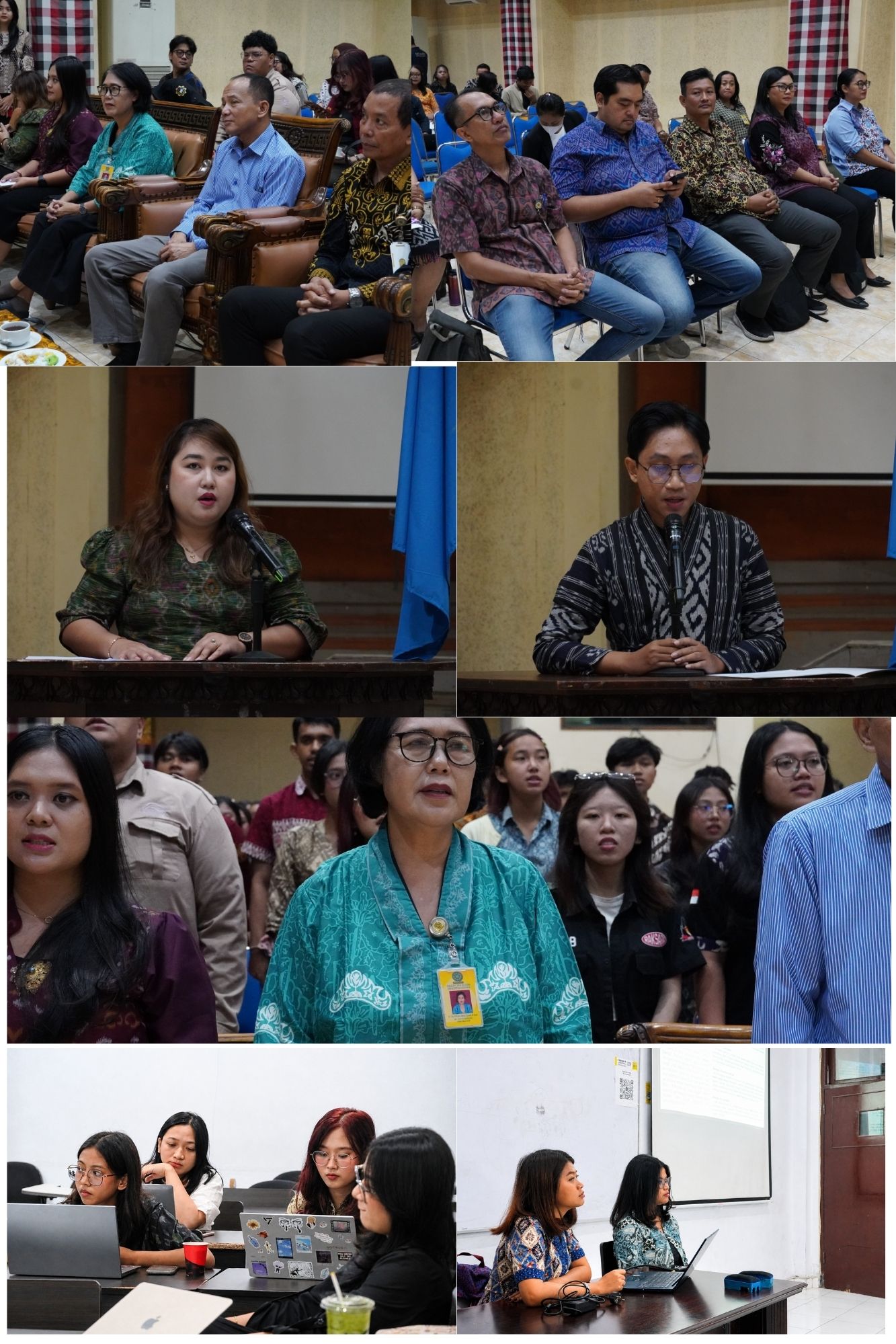
The National Seminar on Language, Literature, and Culture (SNBSB) is a regular annual event held as part of the celebrations marking the 68th anniversary of the Faculty of Humanities at Udayana University and the 45th anniversary of its Alumni Association (BK). This year, the SNBSB was held on Friday, September 1, 2026, at the Prof. Dr. Ida Bagus Mantra Widya Sabha Mandala Auditorium, Faculty of Humanities, Udayana University, with the theme “Bahasa, Sastra, dan Budaya Sebagai Penguatan Identitas Yang Berkelanjutan.” The seminar was attended by the Dean of FIB Unud and his staff, program coordinators, faculty members, and seminar participants.
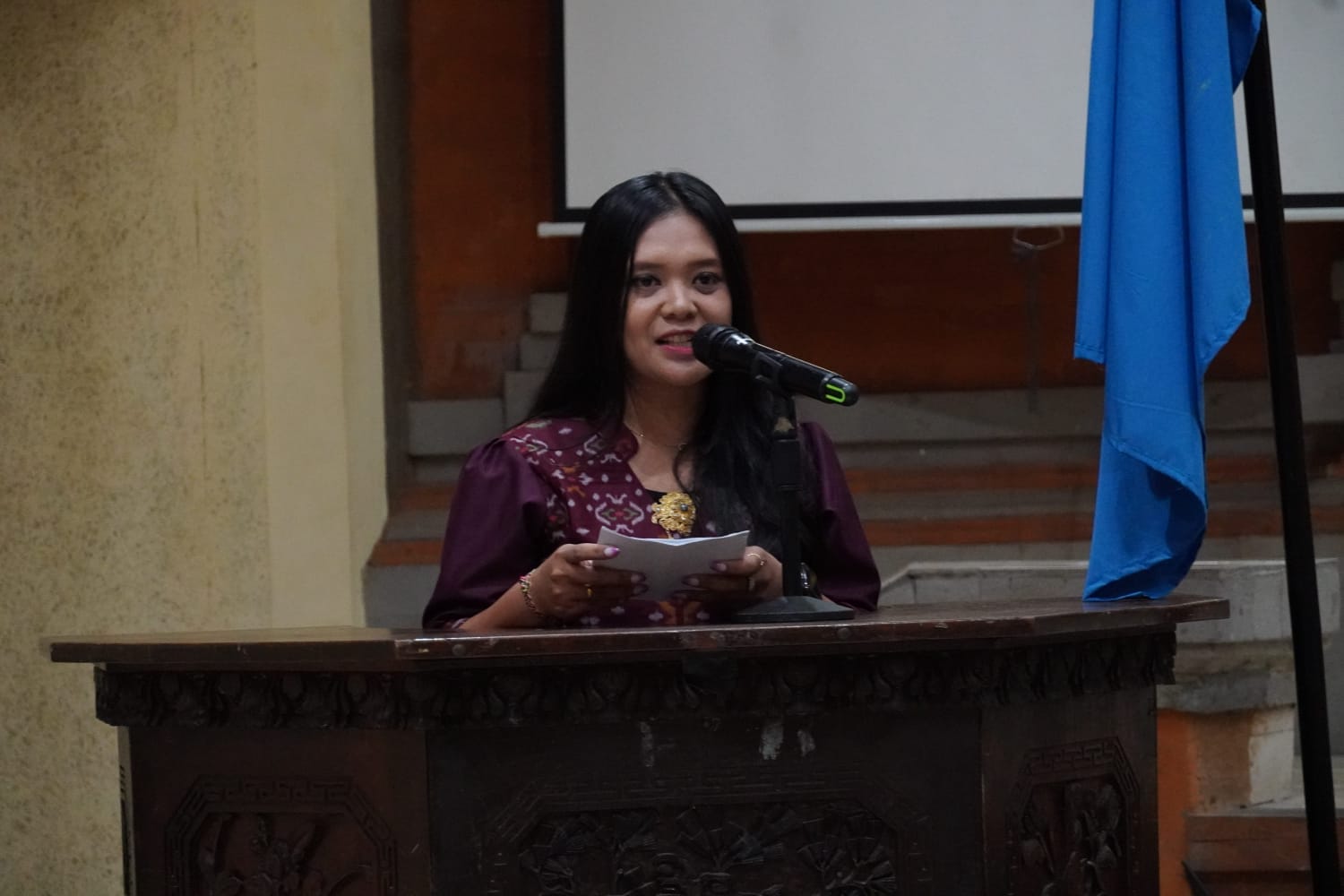
Eirenne Pridari Sinsya Dewi, S.S., M.Ed., as Chair of the BKFIB 2026 Organizing Committee, reported that the theme of the BKFIB 2026 event is “Gema Kampus Kuning: Merawat Tradisi Merespon Bumi.” This theme serves as a call to the younger generation to reflect on the role of cultural studies in addressing challenges through the preservation of local languages and cultures. Furthermore, as BKFIB marks its 45th anniversary, this demonstrates a commitment to strengthening the bonds among the entire extended family of the Faculty of Cultural Studies at Udayana University.
The Chairperson of the 2026 SNBSB Committee, Putu Dyah Pradnya Paramitha, S.S., M.A. stated that this year's event carries the theme "Bahasa, Sastra, dan Budaya Sebagai Penguatan Identitas Yang Berkelanjutan" because these three elements are deeply embedded in daily life and play a crucial role in shaping human identity. In the implementation report, it was noted that the committee received 73 abstracts, which then went through a blind pre-review stage, resulting in 57 accepted abstracts and 16 others that could not be accepted yet. The main strength of the 2026 SNBSB implementation is also evident in the high diversity of participating presenters from various institutions, both within and outside Bali.
The Dean of the Faculty of Humanities, Prof. I Nyoman Aryawibawa, S.S., M.A., Ph.D., expressed his appreciation to the committee ranks while officially commencing the kick-off of the Unud Faculty of Humanities Anniversary series on Friday, September 1, 2026. In his opening remarks, he highlighted the urgency of implementing the 2026 SNBSB through a case study presentation regarding the decline in the use of the Malay language in Singapore. In contrast to that situation, Indonesia is considered highly fortunate to have a strong legal foundation to protect its language and cultural entities. Through the comparison of these phenomena, Prof. Aryawibawa emphasized that the implementation of SNBSB serves as a highly relevant and crucial platform to continuously voice the importance of language and cultural preservation as the main pillars in maintaining national identity.
This SNBSB activity also invited one keynote speaker and three main speakers. The four speakers included Prof. Dr. Suhandano, M.A. from Universitas Gadjah Mada, I Made Sena Darmasetiyawan, S.S., M.Hum., Ph.D. from Udayana University, Dr. Ida Ayu Laksmita Sari, S.Hum., M.Hum. from Udayana University, and Dr. Nanang Sutrisno, S.Ag., M.Si. from Udayana University.
The next session was the material presentation moderated by Dr. Ni Ketut Widhiarcani Matradewi, S.S., M.Hum., and the keynote speaker, Prof. Dr. Suhandano, M.A., who presented the topic "Language, Local Knowledge, and Identity." He stated that everyone must be able to preserve language, safeguard knowledge, and maintain identity. He further explained that language originates from knowledge, knowledge grows from experience and culture, and experience and culture shape reality. Therefore, if language is preserved, knowledge and culture will continue to live and develop.
Continuing to the first material presented by I Made Sena Darmasetiyawan, S.S., M.Hum., Ph.D. He presented the topic "Psikolinguistik dan Eksperimen Bahasa." He examined the intersection of psychology and linguistics through the stages of language processing and the concept of the mental lexicon related to human memory storage. Regarding methodology, he emphasized that experimental language research requires an understanding of terminology, basic statistics, and, most crucially, strict research control to produce valid data. "The higher the control, the better the results," he said.
The second speaker, Dr. Ida Ayu Laksmita Sari, S.Hum., M.Hum., examined "Peran Budaya Populer dalam Penguatan Bahasa, Sastra, dan Identitas Masyarakat Ainu di Jepang" She highlighted how edutainment media such as the anime "Golden Kamuy" successfully elevated the existence and broke the stereotypes of the marginalized indigenous Ainu community through the positive representation of the character Asirpa. Despite its limitations in creating fluent language speakers, she asserted that popular culture has proven highly effective in sparking public awareness and interest in the preservation of Ainu identity.
In the third session, Dr. Nanang Sutrisno, S.Ag., M.Si., delivered the material "Makna Kebudayaan di Era Digital: dari Otoritas Tradisional Menuju Logika Algoritmik," which criticized the phenomenon of deterritorialization due to globalization. He highlighted the problem of cultural adaptation that risks eroding collective values while challenging the audience to transform the digital space into a productive social arena for the internalization of cultural values. He emphasized the importance of prioritizing context and reflection over merely chasing content and virality, allowing the digital space to function as a meaningful medium for identity formation. “If culture must constantly adapt to survive, then what exactly should be preserved?” he asked.
After the material presentations, the event continued with an interactive discussion session between students and lecturers highlighting Generation Z's digital literacy, the edutainment function of the anime Golden Kamuy, and the challenges of adapting cultural values in the modern era. The series of events then transitioned to two parallel presentation sessions at the Goris Building, which facilitated presenters in presenting various research on linguistics, literature, culture, and the dynamics of digital society's identity. The diversity of topics in these parallel sessions became a strategic forum for academicians to exchange research findings while broadening the horizon of perspectives in humanities studies.
Gallery
UDAYANA UNIVERSITY