 ENG
 INA
Highlighting New Directions in Japanese Studies, FIB Unud Successfully Wraps Up Day Two of ASJI International Symposium 2026
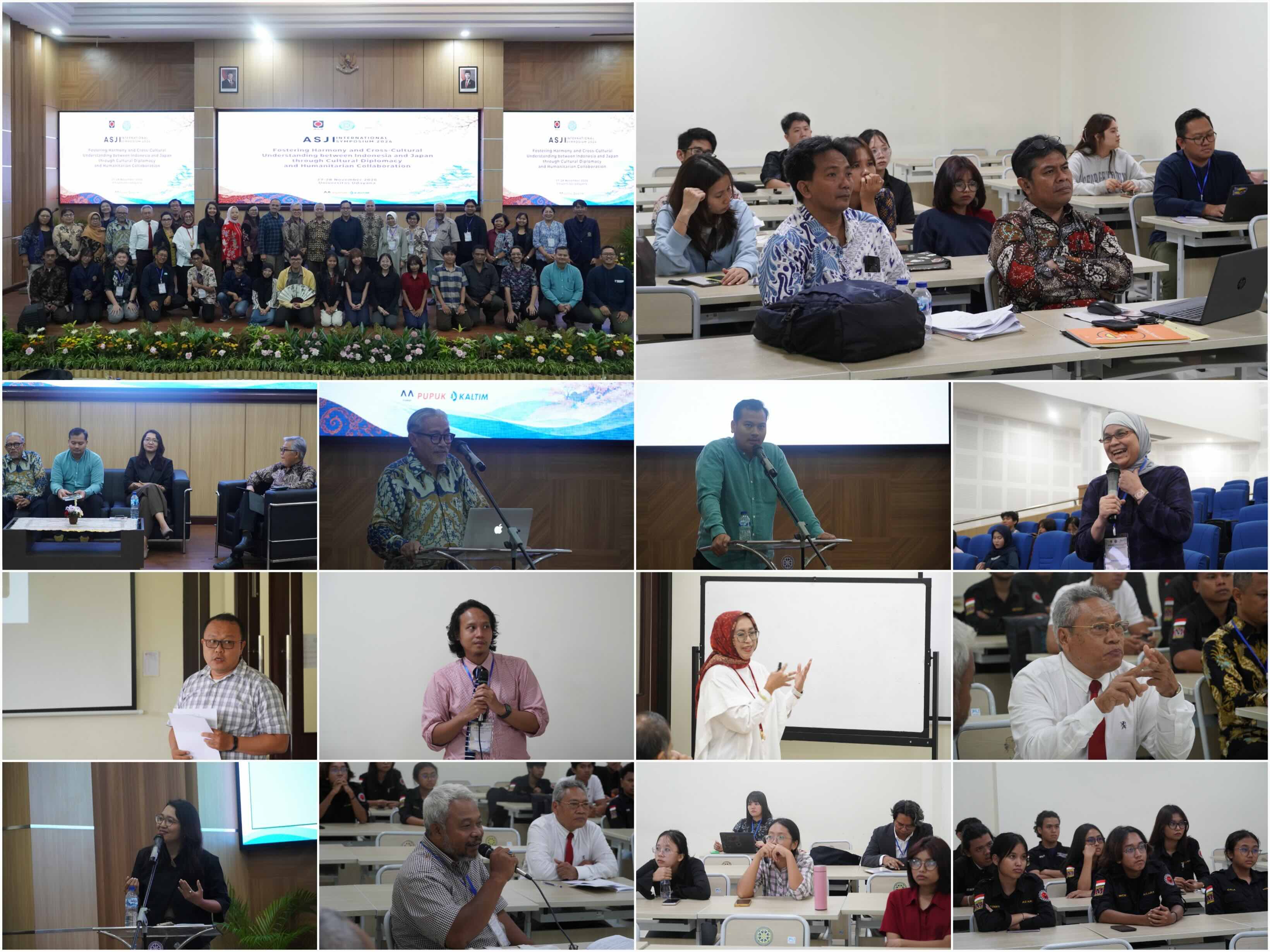
Udayana University, through the Bachelor of Japanese Literature of the Faculty of Humanities (FIB Unud), in collaboration with the Indonesian Association for Japanese Studies (ASJI) and The Japan Foundation, continued the second day of the “ASJI International Symposium 2026” offline on Saturday (28/11/2026). Held at the Lecture Building on the Jimbaran Campus, the agenda was attended by academics and presenters from various universities and research institutions to examine diverse studies on Japanese studies and the dynamics of Indonesia-Japan relations.
The second day's discussions were divided into 15 parallel panel sessions exploring a wide range of interdisciplinary themes. In the cluster covering linguistics, language teaching, literature, and popular culture, presenters examined the dynamics of language acquisition and cross-cultural communication, ranging from error analysis in the use of keigo, politeness strategies using kusshon kotoba on e-commerce platforms, and a comparison of three-argument verbs in Japanese and Balinese, to the utilization of Virtual Reality technology for teaching Japanese speaking skills. In addition, the discussions reviewed the translation of Japanese drama titles on digital platforms, literary analyses of works by authors such as Tawada Yōko and Ariyoshi Sawako, as well as the representation of cultural values and technological critiques in popular media such as the anime Frieren, Captain Tsubasa 2, the medical drama Doctor-X, and the musical works of Ryuichi Sakamoto.
Meanwhile, in the cluster on labor, sociopolitics, the environment, and cultural diplomacy, scholars highlighted the opportunities and communication barriers faced by Indonesian migrant workers under the Tokutei Ginou (Specified Skilled Worker) and technical intern training schemes, shifts in lifetime employment culture, and elderly education policies in Indonesia and Japan. Discussions also encompassed urban issues and environmental sustainability such as the vacant house phenomenon (akiya), biomass waste processing collaboration between Toyohashi University of Technology and Udayana University, gastrodiplomacy and food education (shokuiku), as well as historical studies and multiculturalism (tabunka kyōsei). Furthermore, several presenters shared collaborative research on children's disaster preparedness using the Iza! Kaeru Caravan method in Surakarta and community-based maternal healthcare services in Bali.
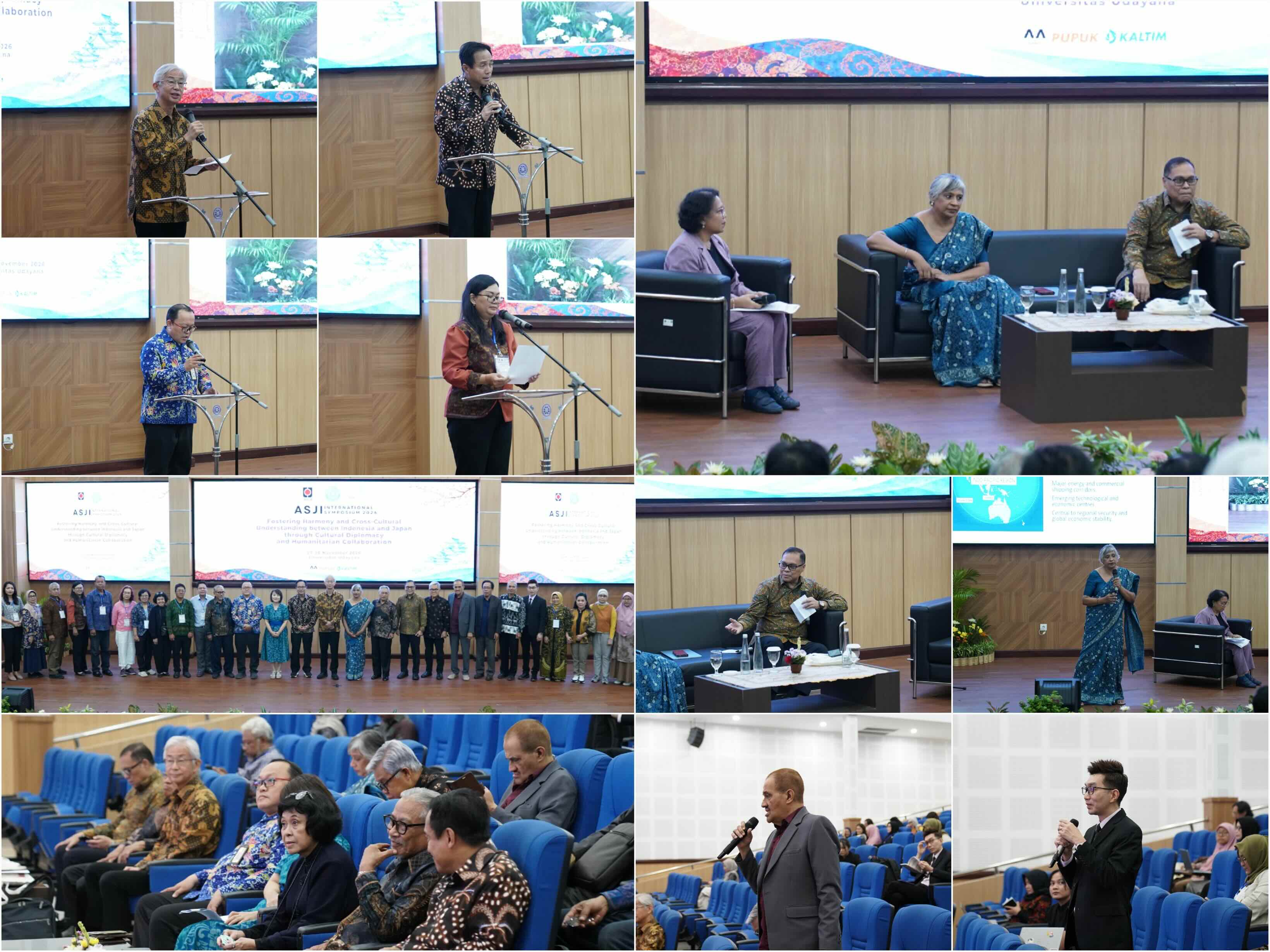
Closing the second day's agenda, a special panel moderated by Soekotjo Hardiwinoto, S.H., LL.M., featured four speakers examining paradigm shifts and future directions for Japanese studies in Indonesia and Southeast Asia. In his presentation, Universitas Indonesia Professor, Prof. I Ketut Surajaya, emphasized the importance of shifting toward Global Japan Studies, which positions Japan not merely as an object of study, but as a source of global knowledge, requiring future Japan specialists to combine linguistic and cultural expertise with multidisciplinary competencies such as security, technology, and economics. In line with this view, Prof. Djodjok Soepardjo from Universitas Negeri Surabaya highlighted the need for an ontological reconstruction of Japanese language teaching (Nihongo Kyōiku) so that it focuses not only on technical linguistic skills, but also serves as a bridge for cross-cultural understanding amid artificial intelligence disruption and labor market dynamics such as the SSW and TITP schemes.
Continuing the discussion in the same session, Universitas Indonesia scholar Himawan Pratama, Ph.D., urged Japanese studies in Southeast Asia to move beyond the hierarchical paradigm of “learning from Japan” toward more equal frameworks, namely “Japan in Southeast Asia” and “Southeast Asia in Japan,” to foster knowledge production rooted in regional experiences and history. Meanwhile, Chair of the Consortium of Japanese Studies Programs in Indonesia (KPSJI), Dr. Kadek Eva Krishna Adnyani, S.S., M.Si., presented a mapping of 50 Japan-related study programs across Indonesia in 2026 while underscoring the importance of Outcome-Based Education (OBE) curriculum renewal, increased research productivity, and sustainable inter-university collaboration.
UDAYANA UNIVERSITY