 ENG
ENG
 INA
INA
The 62nd Anniversary of Bachelor of History Faculty of Humanities: Combining Ceremonial Event and the Strengthening of Oral History Methodology
.jpg)
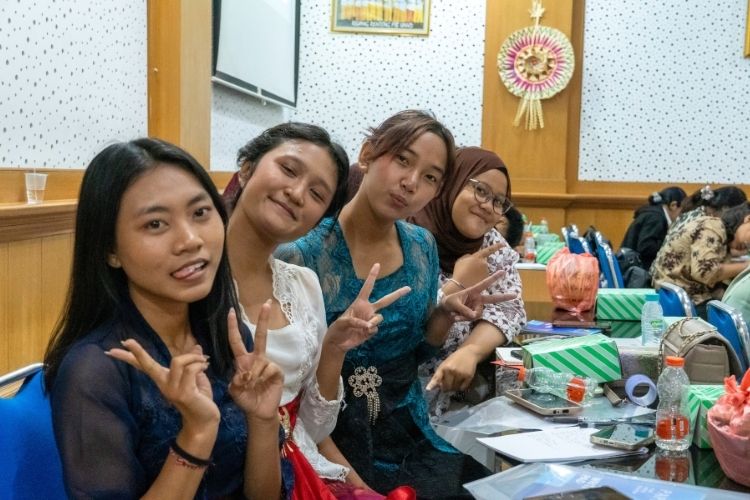
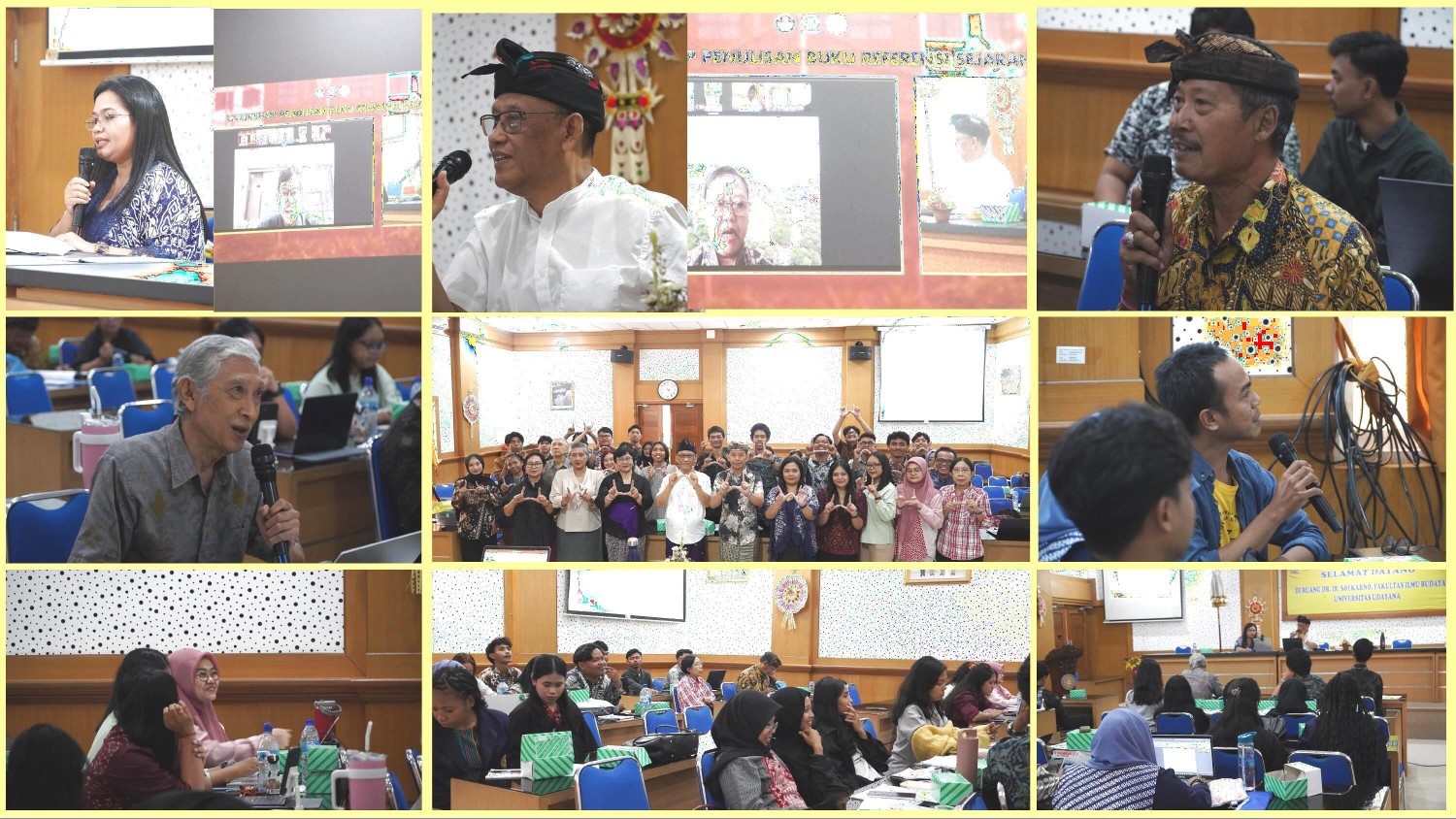
Denpasar – Still within the framework commemorating the 81st Independence Day of the Republic of Indonesia, the Department of History at the Faculty of Humanities (FIB), Udayana University (Unud), celebrated its 62nd anniversary on Tuesday, August 18, 2026. The event took place in the Dr. Ir. Soekarno Meeting Room, 4th Floor of the R.M. Ng. Poerbatjaraka Building at FIB Unud. Carrying the theme "Learning History, Interpreting Indonesia," this celebration served as a critical reflective momentum to strengthen intergenerational bonds among the academic community—ranging from students and lecturers to emeritus faculty. By adopting this theme, the celebration simultaneously became a platform for the entire History family to reinforce the role of academics in exploring national values and building a spirit of harmony in interpreting the reality of Indonesia's history as the foundation of the nation's identity. In addition to involving the entire academic community of the History Department, the celebration also invited students from various high schools in Denpasar and Tabanan.
The Chairperson of the Committee, I Kadek Surya Jayadi, M.A., reported that the commemoration—adorned with archipelago traditional attire (busana Nusantara)—focused heavily on academic reinforcement. The main highlight of the event was an oral history workshop featuring a history expert from Universitas Gadjah Mada (UGM), which was coupled with a talk show featuring veterans from LVRI Bali, a book review, and a film screening session. All of these agendas were designed to inspire the development of digital humanities and historical studies at Udayana University.
The Coordinator of the Department of History, Prof. Dr. phil. I Ketut Ardhana, M.A., commemorated this 62nd anniversary with deep gratitude regarding the positive upward trend in the number of new student admissions. As a strategic projection moving forward, the department will undertake collaborative research with the Anthropology and Archaeology study programs, focusing on the Eastern Indonesia region. This initiative is targeted to produce a monumental book while closing the historiographical reference gap between Western and Eastern Indonesia.
Officially opening the event, the Dean of FIB Unud, Prof. I Nyoman Aryawibawa, S.S., M.A., Ph.D., highly praised the educational concept of the event, specifically the application of a post-test during the Oral History Workshop so that students genuinely obtained concrete learning outcomes. Fully supporting the Eastern Indonesia research initiative proposed by the department head, the Dean reiterated the principle of Historia Magistra Vitae—that history is the teacher of life, serving as an essential foundation for determining the nation's future direction.
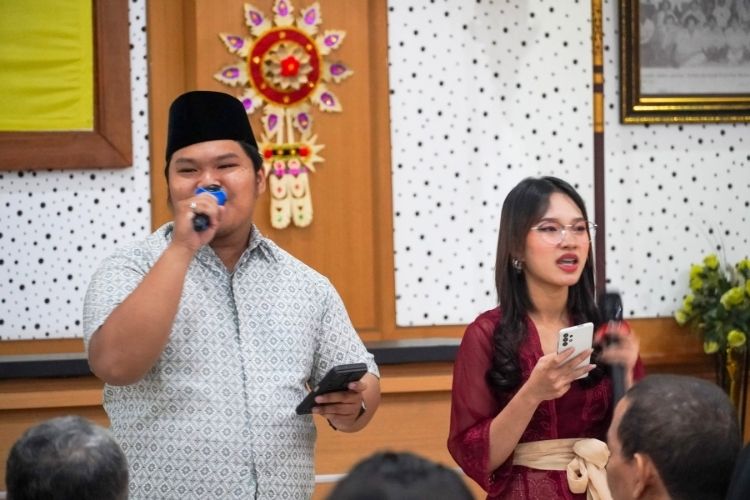
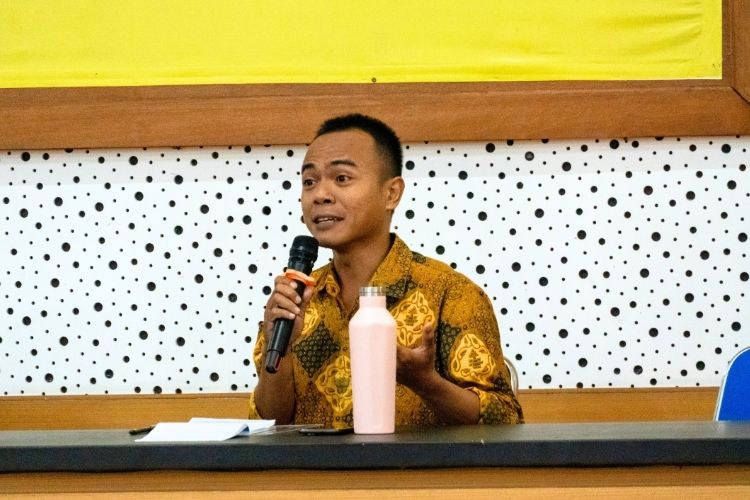
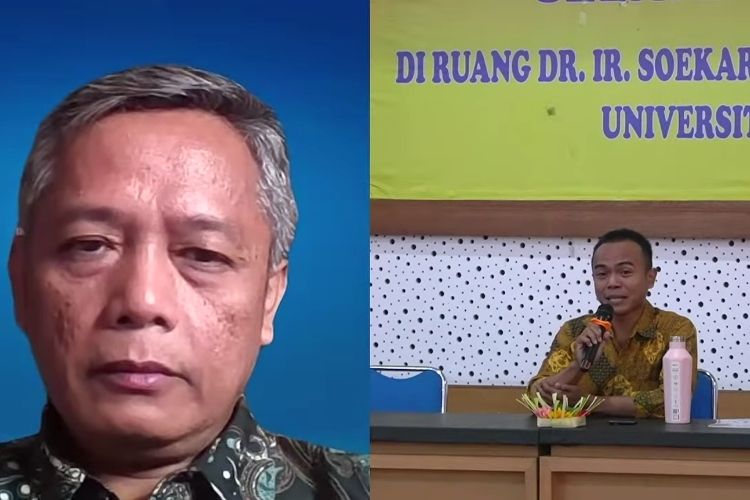
The event was officially opened through a flower-handover procession from the Head of the History Department to the Dean of FIB Unud. This moment was subsequently followed by the presentation of an orchid by representatives of the History Student Family (Kemas) to the department. The event then proceeded with the Oral History Workshop presentation, inviting Dr. Abdul Wahid, a history expert from Universitas Gadjah Mada (UGM), moderated by I Kadek Surya Jayadi, M.A. Before the presentation began, students were asked to complete a pre-test by writing a brief definition of oral history.
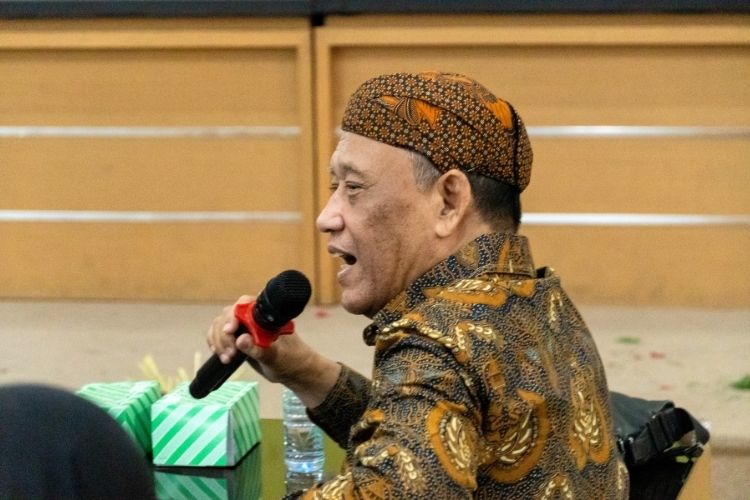
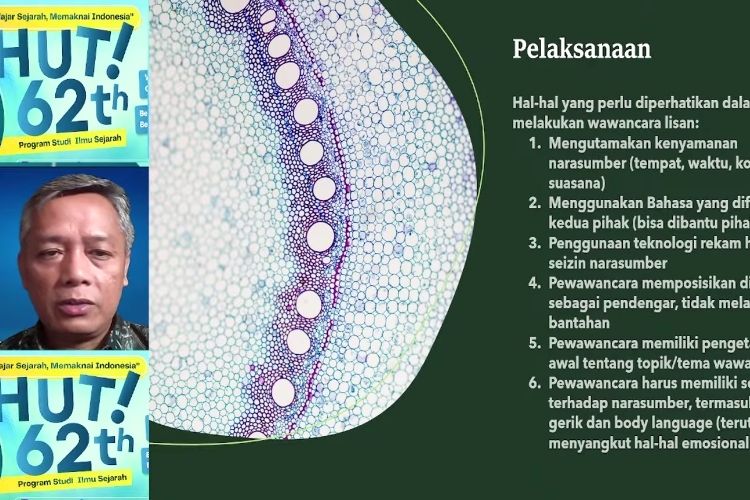
In his presentation, Dr. Abdul Wahid elaborated that oral history is a method of collecting memories and personal perspectives regarding significant historical events through in-depth interviews, which are subsequently recorded and transcribed. He emphasized that oral history does not merely serve as a research instrument or tool, but has also evolved into a form of historical construction itself. Considering that its primary object is humans and their memories—which are fluid, retrospective, and emotional by nature—interviewers are required to build mutual trust with their sources. Furthermore, interviewers must act purely as listeners and conduits without making any interventions regarding the interview results.
Continuing further, the workshop material dissected five crucial stages in executing oral history research: preparation, implementation, transcription, archiving, and utilization. This memory-tracking method is considered to possess strong philosophical and methodological benefits to produce a more balanced historical construction, particularly by providing a voice to marginalized groups, the less fortunate, and the defeated. On a practical level, oral history also offers various strategic utilities, ranging from creating new historical sources to fill the gaps in written documents, passing down memories across generations, to serving as a medium for trauma healing within society.
The theories and methodologies of oral history that were thoroughly dissected were then directly contextualized into a real discussion forum. Entering the next agenda, participants were invited to directly immerse themselves in the collective memory of a historical witness through a Talkshow session with the Chairman of LVRI Bali, I Gusti Bagus Saputera.
Gallery
.jpg)
UDAYANA UNIVERSITY