 ENG
 INA
Web Nyastra AI Model Dissemination at SMP N 1 Kuta: Collaborating with Teachers on System Evaluation for 2027 Downstreaming
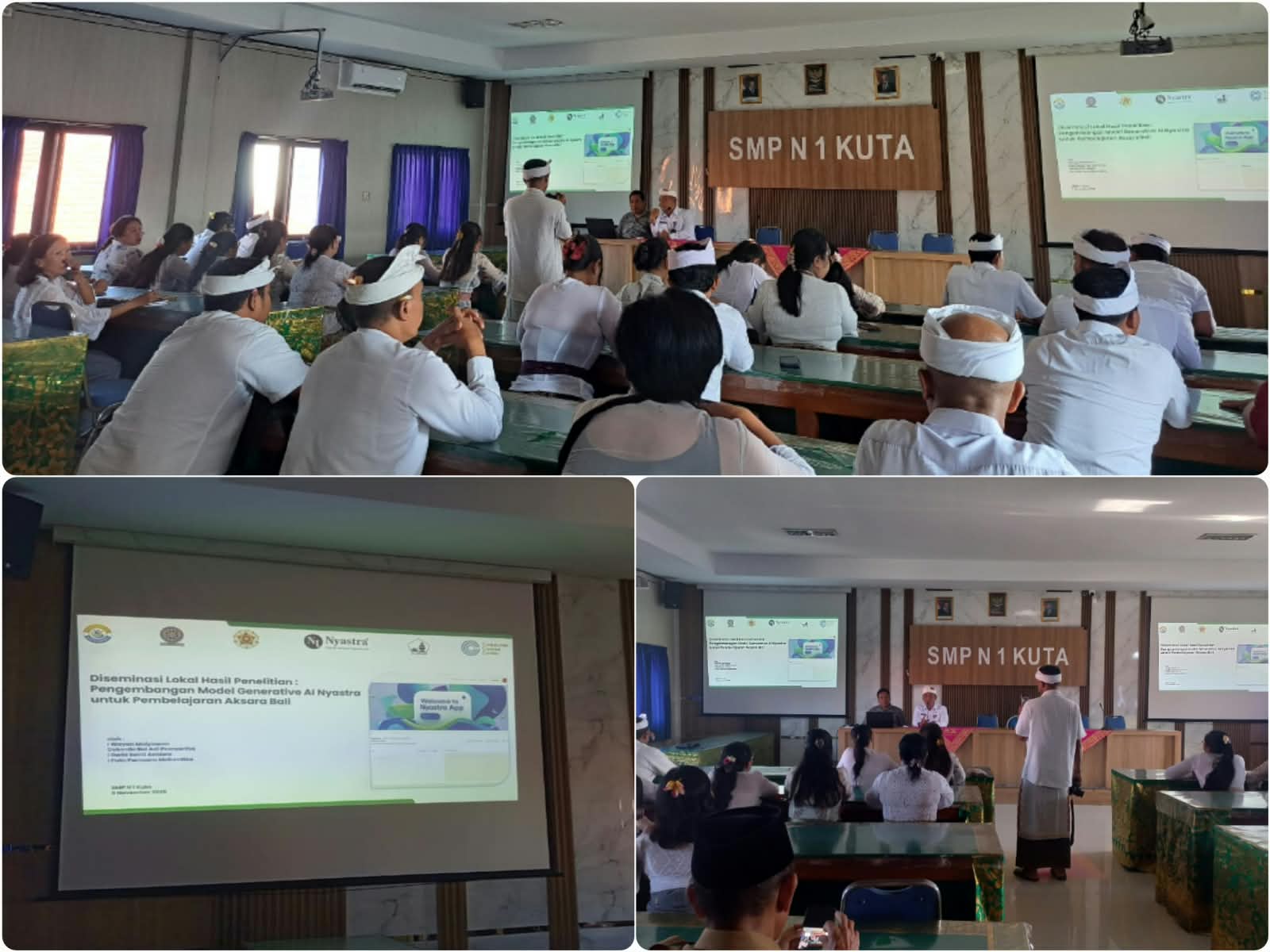
The research team behind the Web Nyastra AI initiative held a Local Research Dissemination event entitled "Development of the Nyastra Generative AI Model for Balinese Script Learning" at SMP Negeri 1 Kuta on Monday, November 9, 2026. Starting at 09:00 AM WITA, the session brought together the school's teaching staff and the academic research team to evaluate system performance and pedagogical usability ahead of wider downstream deployment.
The event was officially opened by the Principal of SMP N 1 Kuta, Bapak I Ketut Lokasanti S.Kom., M.Pd. In his opening remarks, he expressed full institutional support for the ongoing collaborative research, highlighting the school’s pride in serving as a primary research partner. He emphasized that the dissemination serves as a crucial milestone for educators to provide constructive feedback on the newly finalized Nyastra AI web platform, thereby solidifying the empirical outcomes required for technological downstreaming in the coming year.
The main session featured a comprehensive presentation by the Lead Researcher, Prof. Dr. I Wayan Mulyawan, S.S., M.Hum. In his address, Prof. Mulyawan underscored the systemic challenges observed in the public implementation of Bali Governor Regulation No. 80 of 2018, particularly transliteration errors and the limitations of legacy rule-based engines when handling modern loanwords and out-of-vocabulary terms. Nyastra AI resolves this paradox through an innovative hybrid framework.
"Nyastra AI operates on a deliberate architectural division of labor. The Generative AI model (Groq Llama-3.3-70B-versatile) functions strictly as a linguistic sensor and context normalizer rather than an autonomous generator of the script, preventing probabilistic AI hallucinations. The final script generation is anchored to an explainable, deterministic rule-based engine rigorously curated by linguistic experts to respect traditional pasang aksara, pangangge, and gantungan conventions," Prof. Mulyawan explained.
The presentation also detailed findings from the recent on-site pilot trials conducted with students at SMP N 1 Kuta. Deployed across web and mobile platforms, the pilot revealed substantial engagement as digital native learners successfully transliterated proper names, contemporary slang, and foreign lexical items into Balinese script. Insights gathered through this participatory human-in-the-loop mechanism and automated feedback logs (D2) will directly guide system enhancements, ensuring active digital preservation without compromising linguistic authority.
The session concluded with an interactive Q&A and practical demonstration, allowing teachers to share targeted pedagogical feedback on integrating the web platform into future local language curricula.
UDAYANA UNIVERSITY