 ENG
 INA
A Harmonious Prelude for Mahadayana: 2026 FIB PKKMB Integrates Campus Ecosystem and Safe Areas
.jpg)
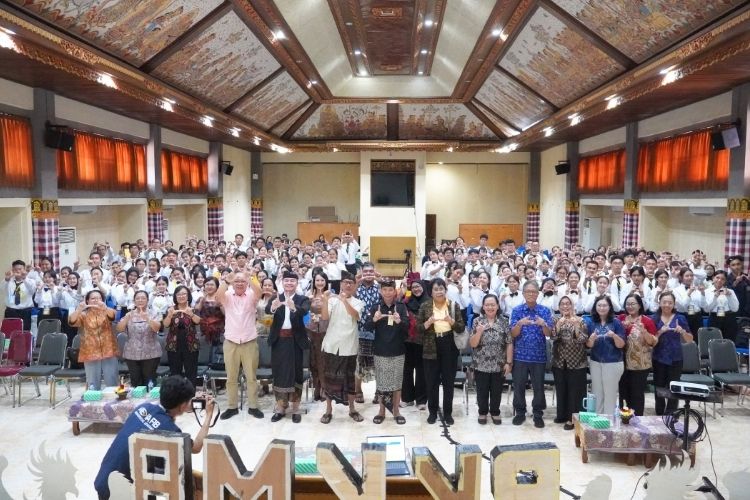
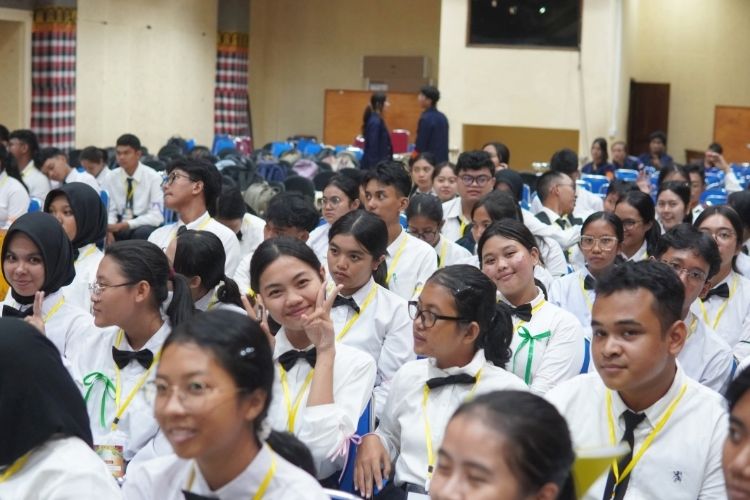
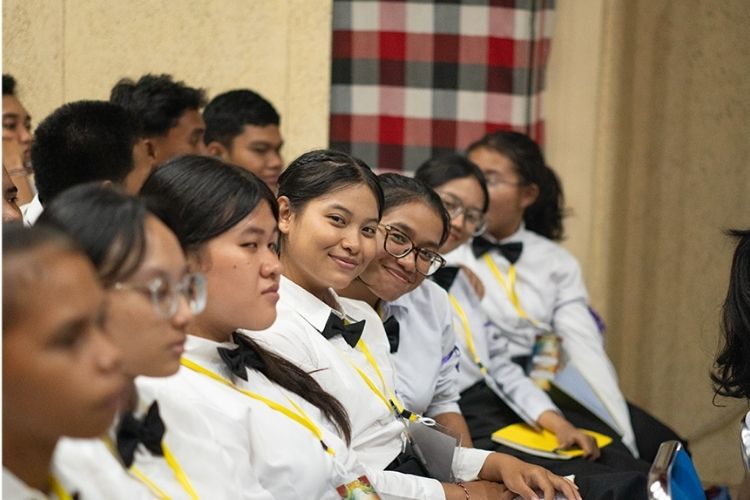
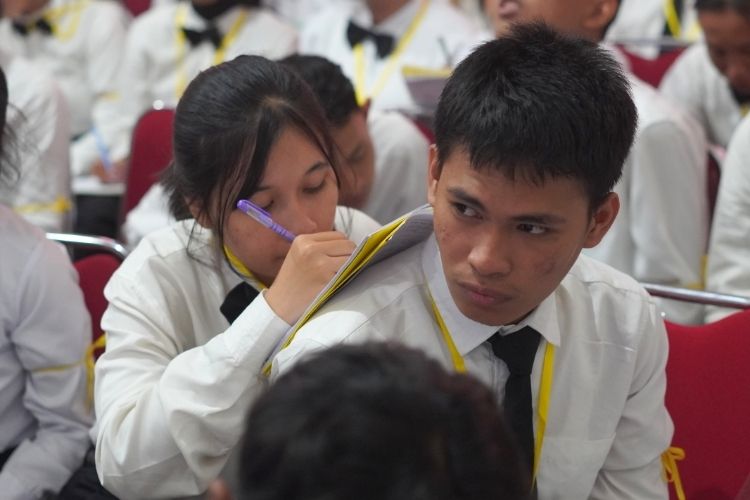
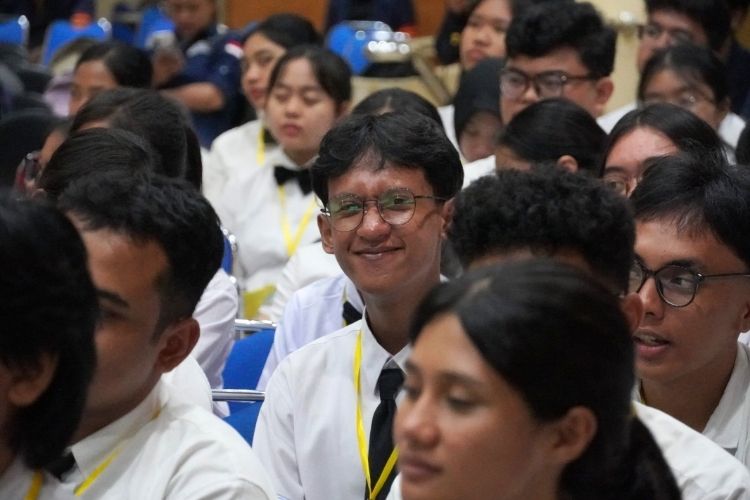
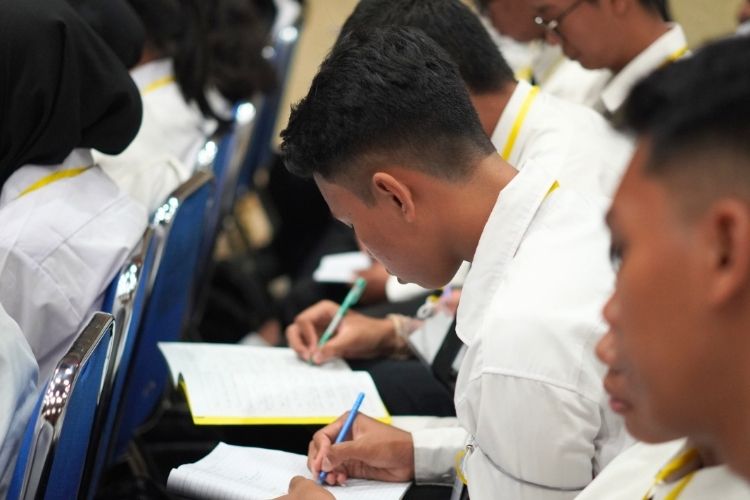
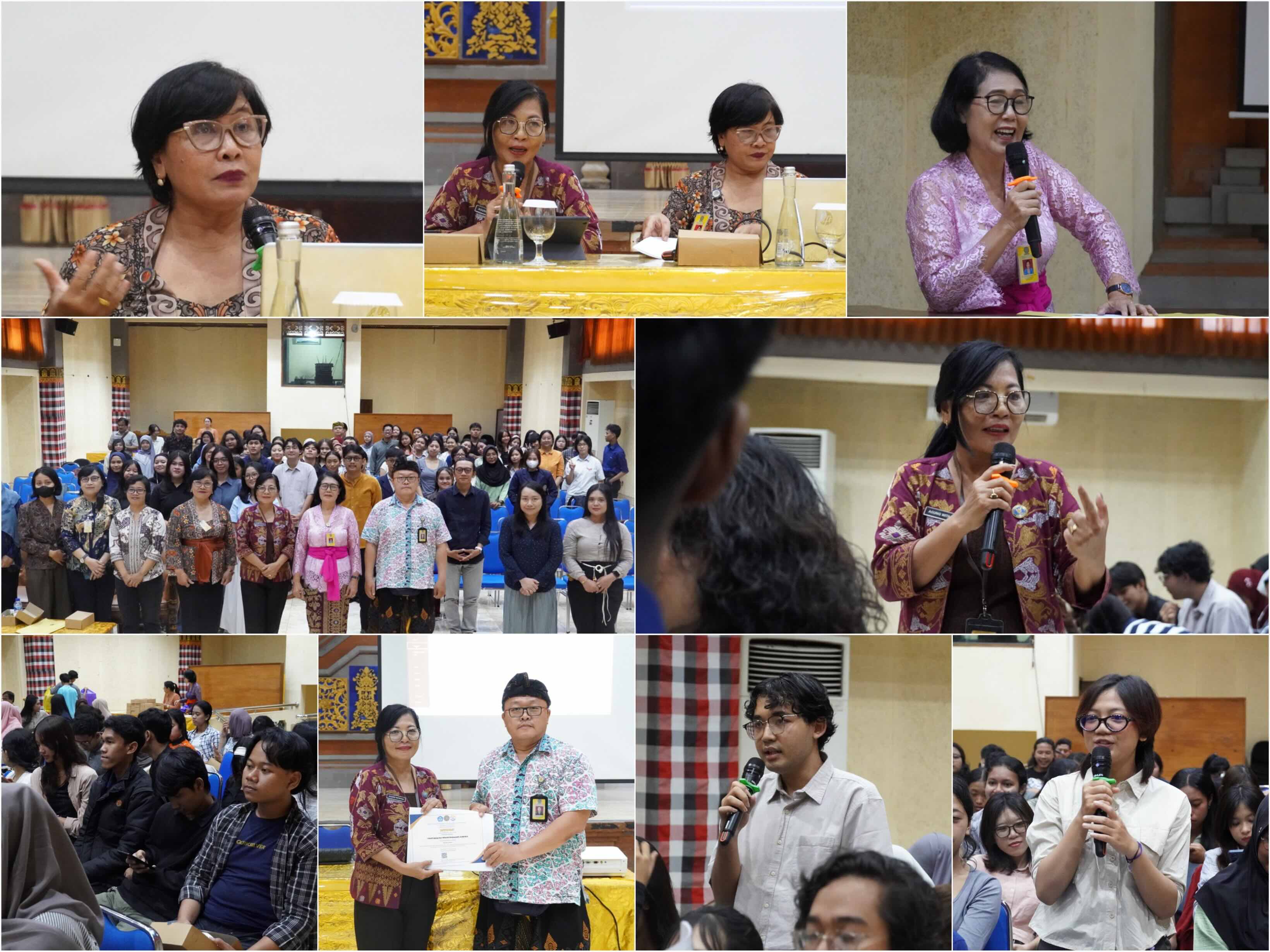
Denpasar – A new chapter for the Mahadayana (Udayana Humanities Students) officially commenced through the Introduction to Campus Life for New Students (PKKMB) of the Faculty of Humanities (FIB) 2026 on Thursday, August 6, 2026. The first day of this orientation series aimed to accelerate the new students' adaptation to the faculty's ecosystem, encompassing an understanding of the academic system, introductions to the leadership and student organizations, as well as education on violence prevention in higher education. The event was held at the Widya Sabha Mandala Auditorium and the Reading Room, 3rd Floor of the Ida Bagus Mantra Building at FIB Unud, and was attended by 460 new students and 16 continuing students. The orientation was also attended by the entire leadership of FIB Unud.
Opening the event, Taufik Agus Purnomo, S.Pd., M.A., as the General Chairperson of PKKMB FIB 2026, reported that this year's orientation period carries a commitment to a positive environment. "This activity prioritizes values that are educative, humanistic, inclusive, safe, and free from all forms of violence, discrimination, and hazing," he stated. This spirit was welcomed and echoed by the Chairperson of the Student Senate (SM) of FIB Unud, I Putu Gede Lion Ojasvin Putra Barata, who urged the Mahadayana 2026 cohort to maximize this orientation period as a transitional space to understand the campus ecosystem and build their character as academics.
The faculty's commitment to fostering new students was further reinforced by the directives of the Dean of FIB Unud, Prof. I Nyoman Aryawibawa, S.S., M.A., Ph.D. In his remarks, he issued an absolute reminder that participation in the PKKMB is a non-negotiable obligation for every student, serving as a crucial administrative prerequisite up to the final thesis completion stage. He also encouraged students to balance their academic responsibilities with involvement in student organizations to hone their leadership skills. Regarding the safety of the learning environment, he delivered a firm affirmation.
"The Faculty of Humanities is bound by the commitment to build an integrity zone. We are committed to zero bullying," he asserted. Following the introduction session of the Dean's leadership ranks, Study Program Coordinators, Unit Coordinators, and sub-coordinators, he officially opened the event symbolically by striking a gong. This inauguration was accompanied by the placing of name tags on the representatives of Mahadayana 2026, which was subsequently followed by all participants.
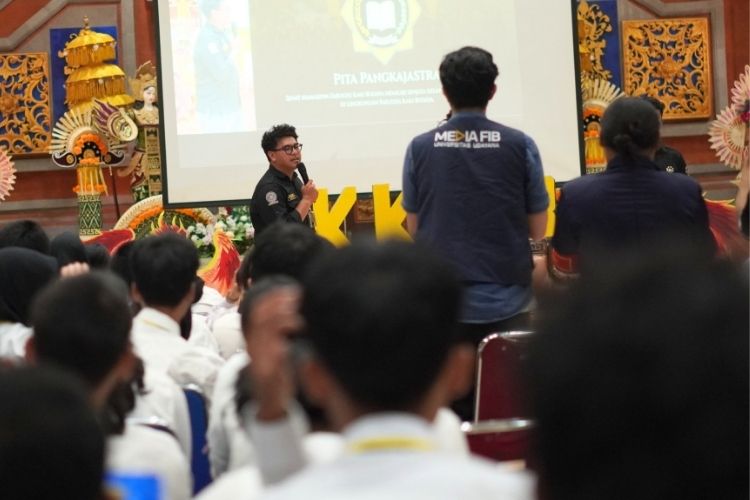
After the inauguration, the students' focus was immediately directed toward dissecting the various operational and academic aspects of the faculty. The comprehensive session, guided by Putu Gede Suarya Natha, S.S., M.Hum., as the moderator, featured three vice deans as the main speakers.
The first presentation was delivered by the Vice Dean for Academic and Planning Affairs, Dr. I Gede Oeinada, S.S., M.Hum., who thoroughly reviewed the academic rules and policies at FIB Unud. The session was then continued by the Vice Dean for General Affairs and Finance, Prof. Dr. Dra. Ni Ketut Ratna Erawati, M.Hum. She detailed the readiness of facilities and infrastructure at both the Jimbaran and Nias campuses, aligning with the faculty's commitment toward the Corruption-Free Area Integrity Zone (ZI-WBK). Concluding the session, the Vice Dean for Student Affairs and Information, Dr. Ni Ketut Puji Astiti Laksmi, S.S., M.Si., dissected the student affairs ecosystem by providing insights into the executive and legislative student bodies, study program associations, various Student Activity Units (UKM), and the Impactful Campus program.
Moving from faculty-level policies, the orientation then narrowed down to introductions of more specific academic spheres. The new students received in-depth explanations regarding the profiles of their respective study programs under FIB Unud, along with introductions to the Study Program Student Associations (HMPS) as their primary sheltering bodies. This dense academic atmosphere was later lightened during a break session, where the committee played interactive videos from clusters 1–5 as a form of appreciation for the Mahadayana's creativity.
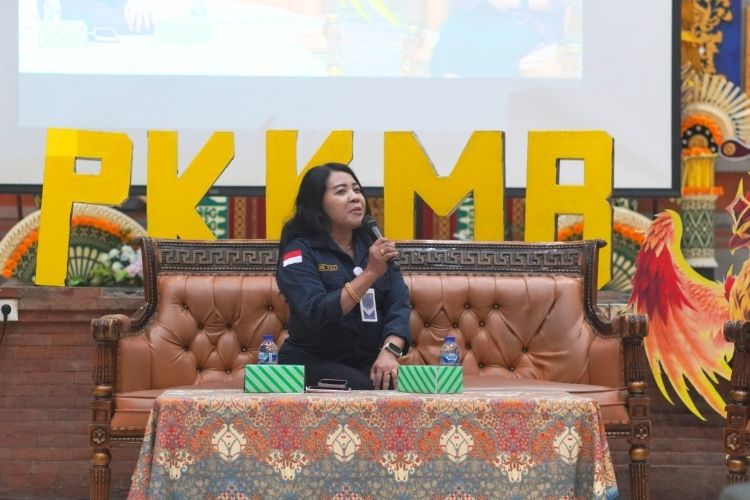
Entering the second half of the event, the focus shifted back to crucial institutional issues through a presentation on the prevention and handling of violence in higher education environments. This session invited I Gusti Agung Ayu Yuliari, S.E.Ak., M.Si., the Secretary of the Violence Prevention and Handling Unit (UPPK) of Udayana University, accompanied by moderator Putu Dyah Pradnya Paramitha, S.S., M.A. She emphasized that the latest legal framework via the Minister of Education, Culture, Research, and Technology Regulation (Permendikbudristek) Number 55 of 2024 has expanded the scope of campus protection, which now focuses not only on sexual violence but also firmly cracks down on physical and psychological violence, bullying, intolerance, and policies that perpetuate violence.
Furthermore, she highlighted the importance of students' courage to report immediately if they witness, hear, or experience any acts of violence, noting that the UPPK authority cannot process cases without an official report. As a manifestation of the commitment to maintaining a safe space, all new students of the 2026 cohort were required to agree to an Integrity Pact, accompanied by strict warnings regarding severe administrative sanctions, up to the threat of permanent dismissal as a student for anyone proven to be a perpetrator of violence.
The first day of the PKKMB FIB 2026 was then officially concluded with the introduction of faculty-level student organizations, including the Student Senate (SM) of FIB as the executive motor and the Student Representative Council (BPM) of FIB as the legislative pillar. In this final session, functionary representatives comprehensively detailed the structural organizations and the various aspects governed by each body, aiming to provide a complete overview for the Mahadayana to eventually channel their aspirational rights and direct their movements within the campus environment.
Gallery
UDAYANA UNIVERSITY