 ENG
 INA
Applying Experiential Learning, Social Anthropology Participants of FIB Unud Hold Field Research in Karangasem
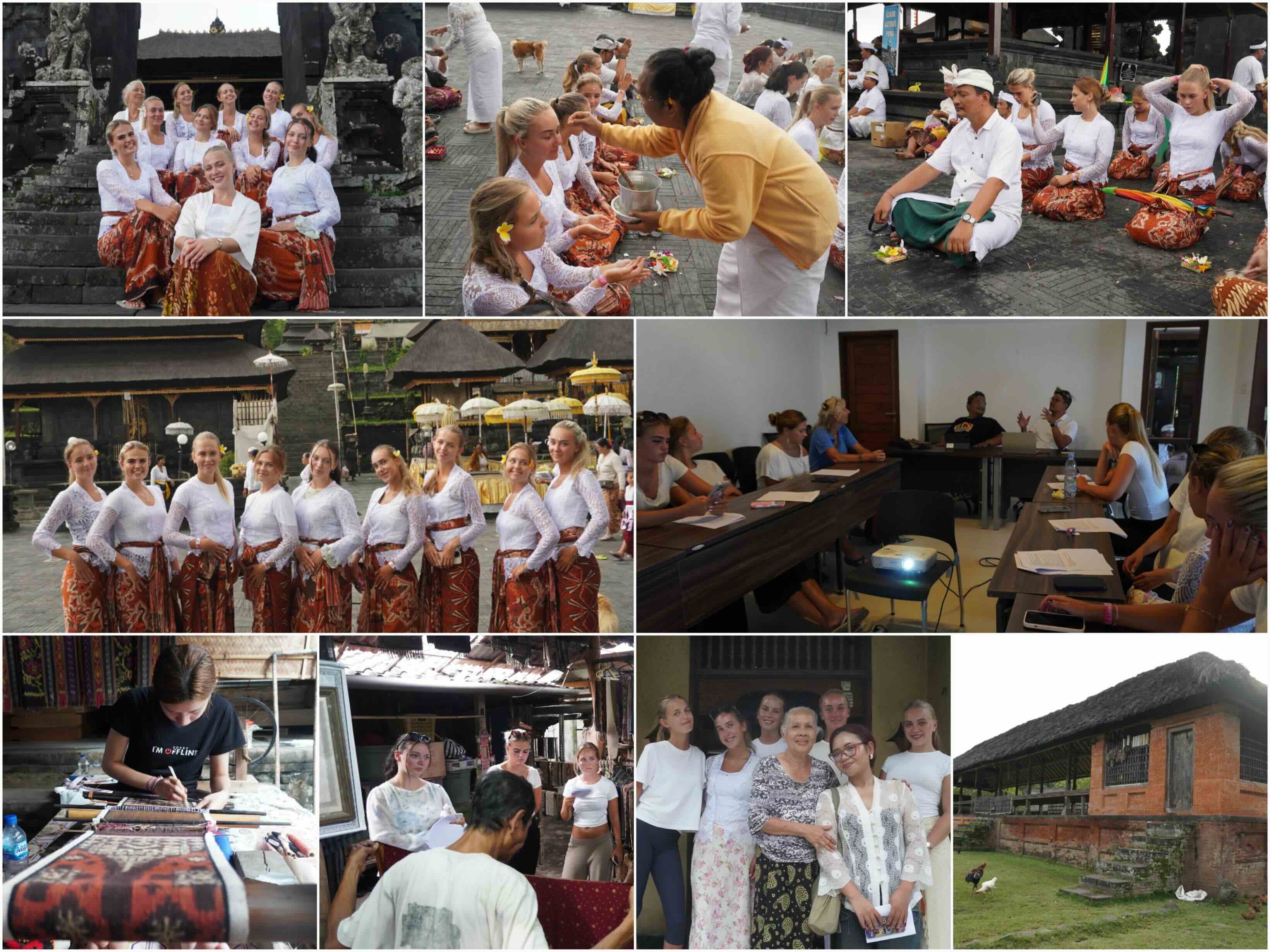
KARANGASEM – Participants of the Social Anthropology Program, Faculty of Humanity, Udayana University (FIB Unud), conducted fieldwork at two significant cultural destinations in Karangasem Regency, Bali, namely Besakih Temple and Tenganan Pegringsingan Traditional Village, on Thursday (12/11/2026).
This activity is part of an experiential learning process designed to provide participants with the opportunity to directly understand the social life, traditions, and cultural practices of the Balinese people. Beyond enriching academic insights, this fieldwork is intended to help participants collect empirical data that will serve as the primary material for composing ethnographic reports prioritizing an emic perspective, namely the viewpoint of the community as the bearers of their own culture.
Besakih Temple, known as the largest temple complex and one of the most vital spiritual centers for Hindus in Bali, was the first location of the field research. Through this visit, participants had the opportunity to examine the relationship between religion, culture, and the social life of the Balinese community. The Besakih Temple complex provides a rich context for participants to understand how sacred spaces, belief systems, and ritual practices play a strong role in shaping the local community's cultural identity.
Following the visit to Besakih Temple, the field observation continued to Tenganan Pegringsingan Traditional Village. As one of the Bali Aga villages, Tenganan is renowned for its success in preserving ancestral traditions and socio-cultural systems. This village offers a fascinating anthropological perspective, particularly regarding the social structure of indigenous communities, the preservation of traditions, and the sustainability of local knowledge amidst the massive development of tourism and modernization.
One of the cultural treasures observed in Tenganan Pegringsingan is the tradition of making gringsing woven cloth using the double ikat technique, which holds deep symbolic and cultural value for the local community. Through this observation, participants could grasp the tangible interconnectedness between cultural products, community identity, and the preservation efforts of ancestral heritage.
This fieldwork bridges the social anthropology concepts and theories learned in the classroom with the genuine realities of community life. The firsthand experience of interacting directly within the studied cultural environment is expected to sharpen the participants' observation skills, cross-cultural sensitivity, and critical analysis capabilities. All data and experiences gained during the activity will serve as a foundational basis for participants in composing final projects that reflect their understanding of Bali's social and cultural dynamics.
Through this activity, the Social Anthropology Program of FIB Unud continues to foster a learning model that is not only centered in the classroom but also involves direct interaction with the community and cultural environment. This approach is expected to provide a meaningful academic experience while simultaneously strengthening the participants' understanding of the richness and complexity of Balinese culture.
UDAYANA UNIVERSITY