 ENG
ENG
 INA
INA
Antrolog.id: Developing an Internet-Based Fieldnote Website for Anthropological Research
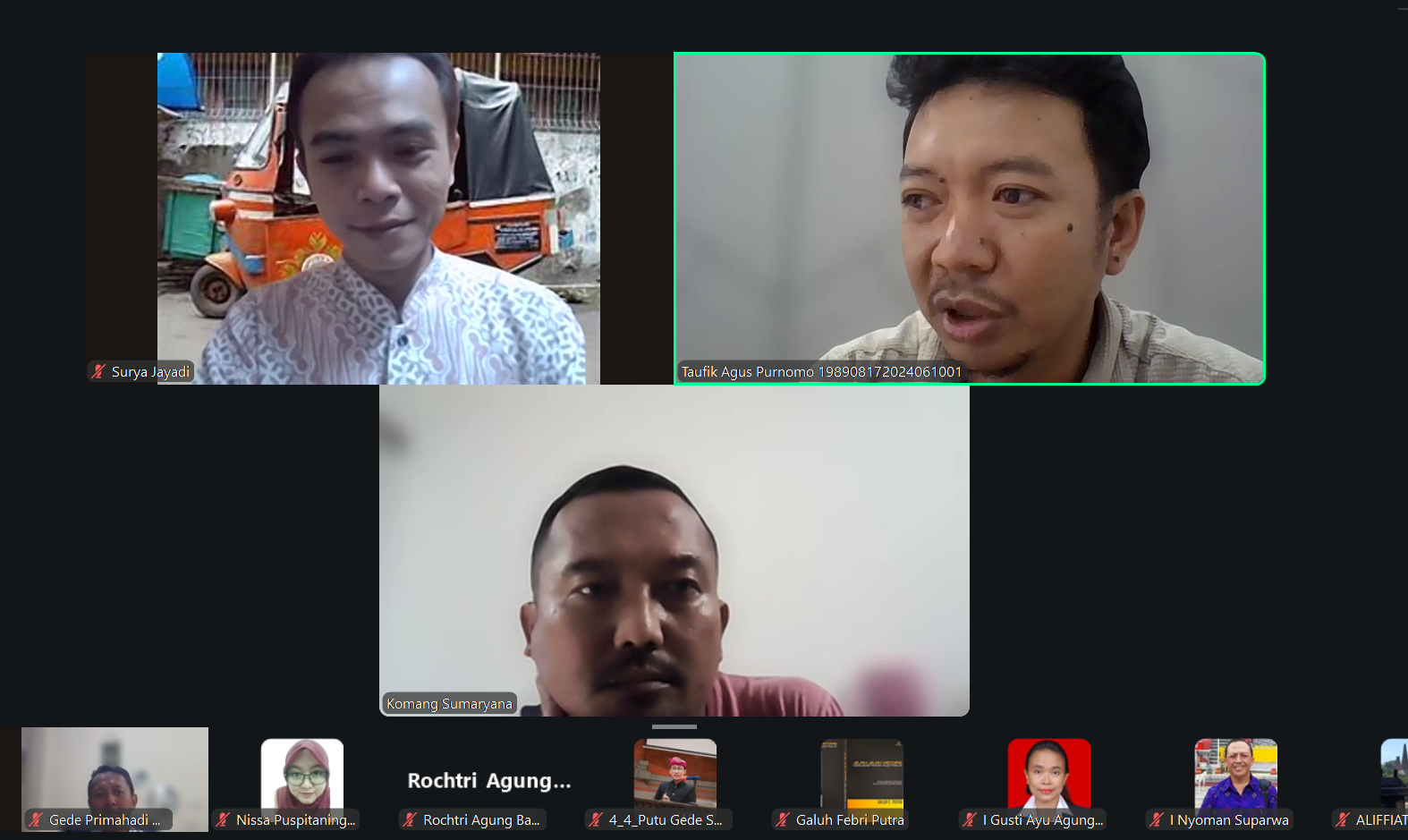
FIB DigiTalk titled “Antrolog.id: Developing an Internet-Based Fieldnote Website for Anthropological Research” was held by the Faculty of Humanities (FIB), Udayana University, on Wednesday, February 25, 2026. The webinar was conducted via Zoom Meeting and live-streamed on the FIB Media YouTube channel. Featuring Taufik Agus Purnomo, S.Pd., M.A., a lecturer from the Anthropology study program, this session explored topics surrounding the antrolog.id website in anthropological research at FIB Udayana University, the evolution of ethnography, and the practical utilization of the website, particularly within the Anthropology program.
Similar to previous episodes, the webinar was opened by Gede Primahadi Wijaya Rajeg, Ph.D., as the Chairperson of FIB DigiTalk 2025. The Dean of the Faculty of Humanities, I Nyoman Aryawibawa, S.S., M.A., Ph.D., stated in his remarks that this webinar remains part of the FIB DigiTalk 2025 series, which focuses on the consistent theme of Digital Humanities throughout the year. He expressed that although Indonesian Faculties of Humanities were somewhat late in adopting this theme in early 2025, the most important factor is developing digital humanities in the right direction. FIB DigiTalk 2025 has invited various speakers with expertise in this field to facilitate deeper learning. As the final session in the series, the title reflects the future direction of digital humanities at FIB Udayana University.
The inspiration for creating the antrolog.id website stemmed from a comparative study with the Anthropology program at Gadjah Mada University, specifically their LAURA (Anthropology Laboratory for Research and Action). The speaker, alongside several other lecturers, planned to develop a similar system at FIB Udayana. This plan gained momentum when an alumnus, who had developed a similar website during an internship, became involved. Following an agreement that the university would continue its development, antrolog.id was established. The website serves as a connecting platform between lecturers and students in the Anthropology program who are conducting fieldwork.
The periods of ethnography continue to evolve, reaching the current era of digital ethnography. In this era, ethnographic anthropological research no longer strictly requires direct involvement, as established by Kozinets in the early 2000s. This era produces audio-visual and reflective sensations, the latter being driven by how deeply the internet is integrated into our identities. The practice of digital ethnography raises a fundamental question: is anthropology still a field-based science?
Despite its practicality, this period sees a diminishing "sense of adventure" compared to previous eras where researchers physically entered the field. Furthermore, the speaker noted that the use of AI in ethnography presents a challenge; while AI can generate ethnographic research, students in the Anthropology program are still required to conduct actual fieldwork. This is where antrolog.id plays a vital role as a solution, providing a platform to store digital fieldnotes. Unlike other platforms, antrolog.id allows lecturers to directly supervise and evaluate progress to ensure that fieldwork is genuinely carried out. Additionally, the website facilitates project management, team assignment, and the limitation of specific regions and durations. The platform is not limited to students; lecturers can also use it for their own projects. Currently, antrolog.id is utilized by the Anthropology study program, though there is potential for wider implementation. The speaker expressed hope for the continued development of antrolog.id to expand its features.
During the Q&A session, a question was raised regarding the public visibility of data on antrolog.id. The speaker clarified that access is currently restricted to account holders. However, it is hoped that "finalized" data can be displayed to the public in the future. Another question concerned the role of Anthropology lecturers on the platform. The speaker explained that lecturers utilize antrolog.id in their courses, such as for giving assignments. Additionally, antrolog.id is used in Research and Community Service (P3M) activities. The speaker concluded by mentioning that internal socialization plans are already in progress.
UDAYANA UNIVERSITY