 ENG
ENG
 INA
INA
Enhancing Graduate Quality: Bachelor of Indonesian Literature Study Program at Faculty of Humanities Udayana University Held A Workshop on Course Learning Outcomes-Based Textbook Writing
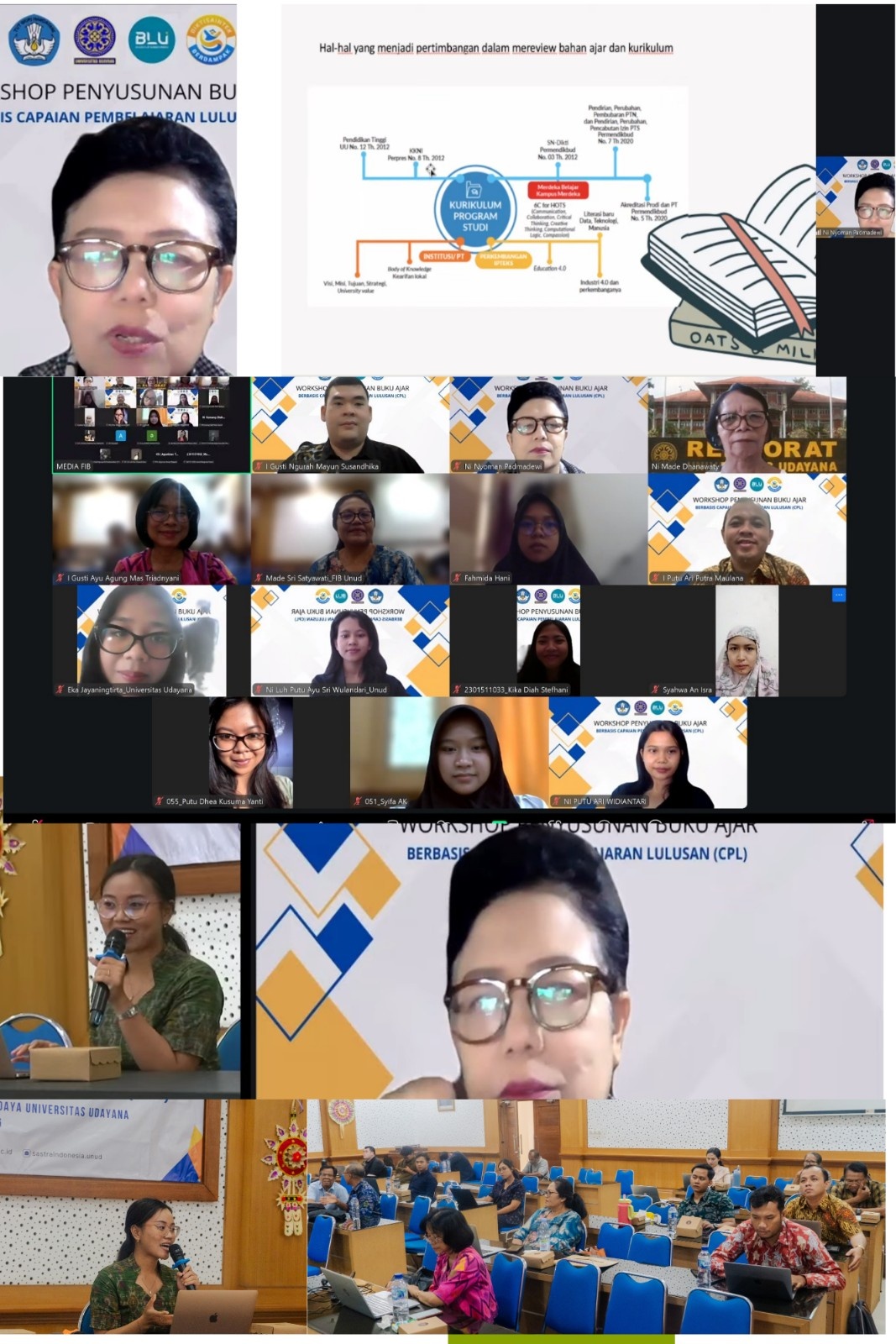
On Saturday, March 7, 2026, the Bachelor of Indonesian Literature, Faculty of Humanities, Udayana University held a Workshop on the Preparation of Textbooks Based on Course Learning Outcomes Program. The event was conducted in a hybrid format, taking place in the Dr. Ir. Soekarno Meeting Room, 4th Floor of the Poerbatjaraka Building, Faculty of Humanities, Udayana University, and via Zoom Meeting. The activity was attended by lecturers from the Bachelor of Indonesian Literature Study Program of Faculty of Humanities, Udayana University, along with invited guests from various universities in Bali, such as Ganesha University of Education, PGRI Mahadewa University, and Warmadewa University.
In her opening remarks, the Coordinator of the Bachelor of Indonesian Literature at Faculty of Humanities Udayana University, Dr. I Gusti Ayu Agung Mas Triadnyani, S.S., M.Hum., introduced the theme of the workshop: "Transforming Teaching Materials into Relevant and CPL-Based Textbooks." This theme was chosen to respond to the demands of higher education for quality learning based on Outcome-Based Education (OBE). This activity represents the study program's commitment to encouraging lecturers to actively discuss and transform their existing Lesson Plans or lecture materials into structured textbook drafts.
The event was officially opened by the Dean of the Faculty of Humanities, Udayana University, Prof. I Nyoman Aryawibawa, S.S., M.A., Ph.D. He appreciated the initiative, noting that transforming lecture materials into textbooks will greatly facilitate the study program in monitoring the fulfillment of CPL while simultaneously refining the curriculum. This aligns with the demands of implementing Outcome-Based Education (OBE), which shifts the focus of teaching from mere material delivery to the achievement of tangible competencies relevant to the dynamics of the professional world. The activity is considered highly urgent as it directly supports the achievement of the institution's Key Performance Indicators (KPI), particularly in improving the quality of graduates.
The speaker for this workshop was Prof. Dr. Ni Nyoman Padmadewi, M.A. from Ganesha University of Education. She elaborated on the importance of curriculum adjustments based on the Regulation of the Minister of Higher Education, Science, and Technology of the Republic of Indonesia Number 39 of 2025 concerning Higher Education Quality Assurance. This regulation mandates that the educational output standard is the graduate competency standard, which must be formulated into Program Learning Outcomes (CPL). To realize this, higher education institutions must adopt the Outcome-Based Education (OBE) system, an educational approach fully focused on achieving student learning outcomes that encompass knowledge, skills, and attitudes. The main principle of OBE emphasizes the clarity of learning outcomes, flexible teaching and assessment methods, and a student-centered learning approach.
On a practical level, the development of materials and textbooks must be integrated with the OBE curriculum hierarchy, which consists of Program Educational Objectives (PEO), Program Learning Outcomes (PLO/CPL), and Course Outcomes (CO/CPMK). When designing OBE-based teaching materials, lecturers are expected to conduct self-evaluations through three crucial aspects. The first aspect is alignment, ensuring that learning objectives and cognitive levels are directly connected to the CO. The second aspect is student-centeredness, which requires the presentation of real-world contexts and encourages active student participation rather than mere passive reading of materials. Finally, the assessment aspect must be present through exercises or assignments that directly and specifically measure the achievement of competencies.
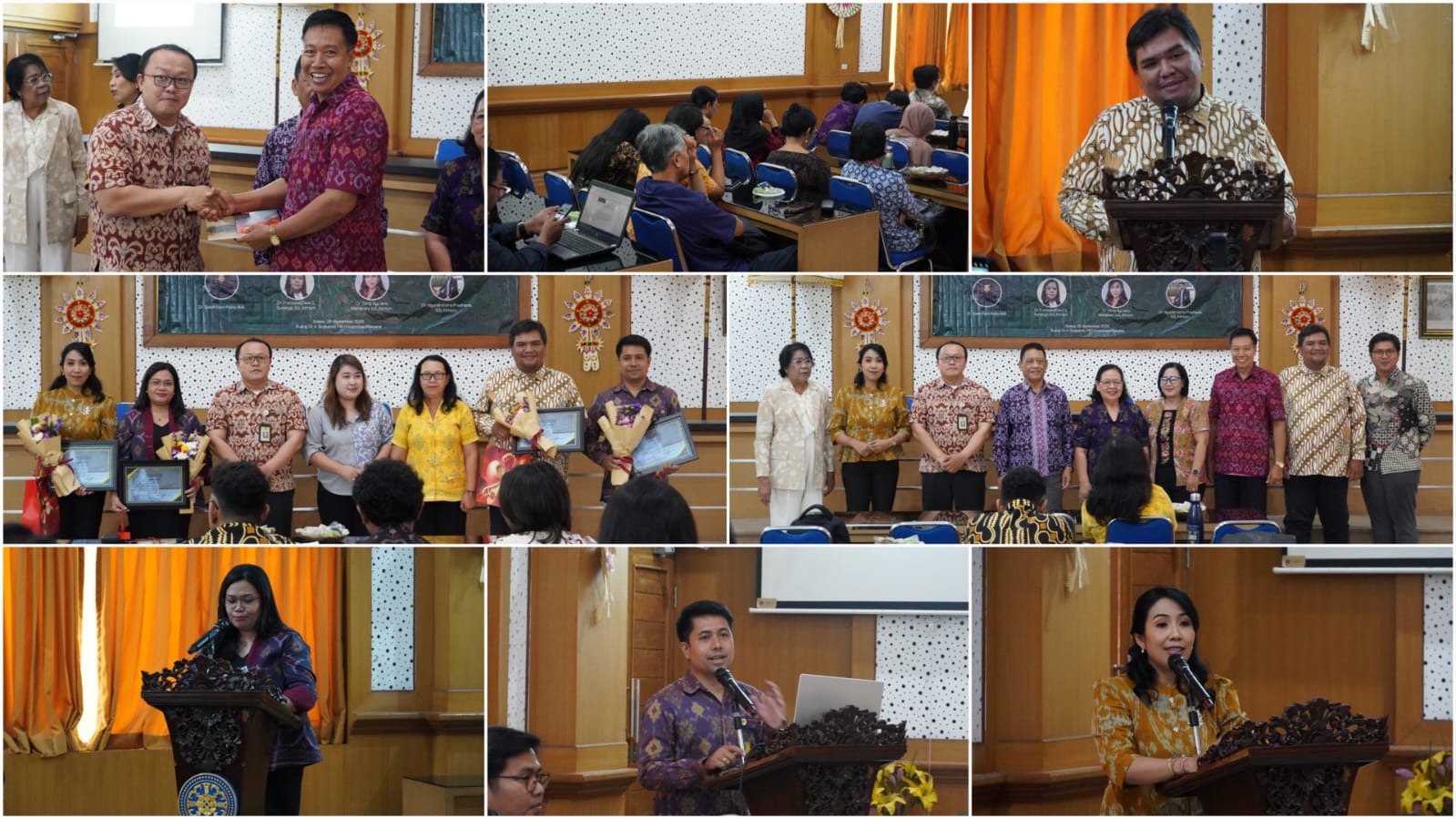
Following the material presentation, the workshop continued with an interactive discussion session that specifically analyzed the practical steps in preparing teaching materials. The series of activities was then officially closed with the presentation of a certificate of appreciation to the resource person. In the future, the organization of this activity is expected to ignite the motivation of educators to continuously strengthen their academic performance through teaching material innovations that align with Program Course Learning Outcomes. Thus, the institution can continue to produce excellent graduates who are adaptive and ready to compete in facing the challenges of the times.
UDAYANA UNIVERSITY