 ENG
 INA
Experiencing Balinese Culture Firsthand, Social Anthropology Participants of FIB Unud Join a Series of Cultural Activities
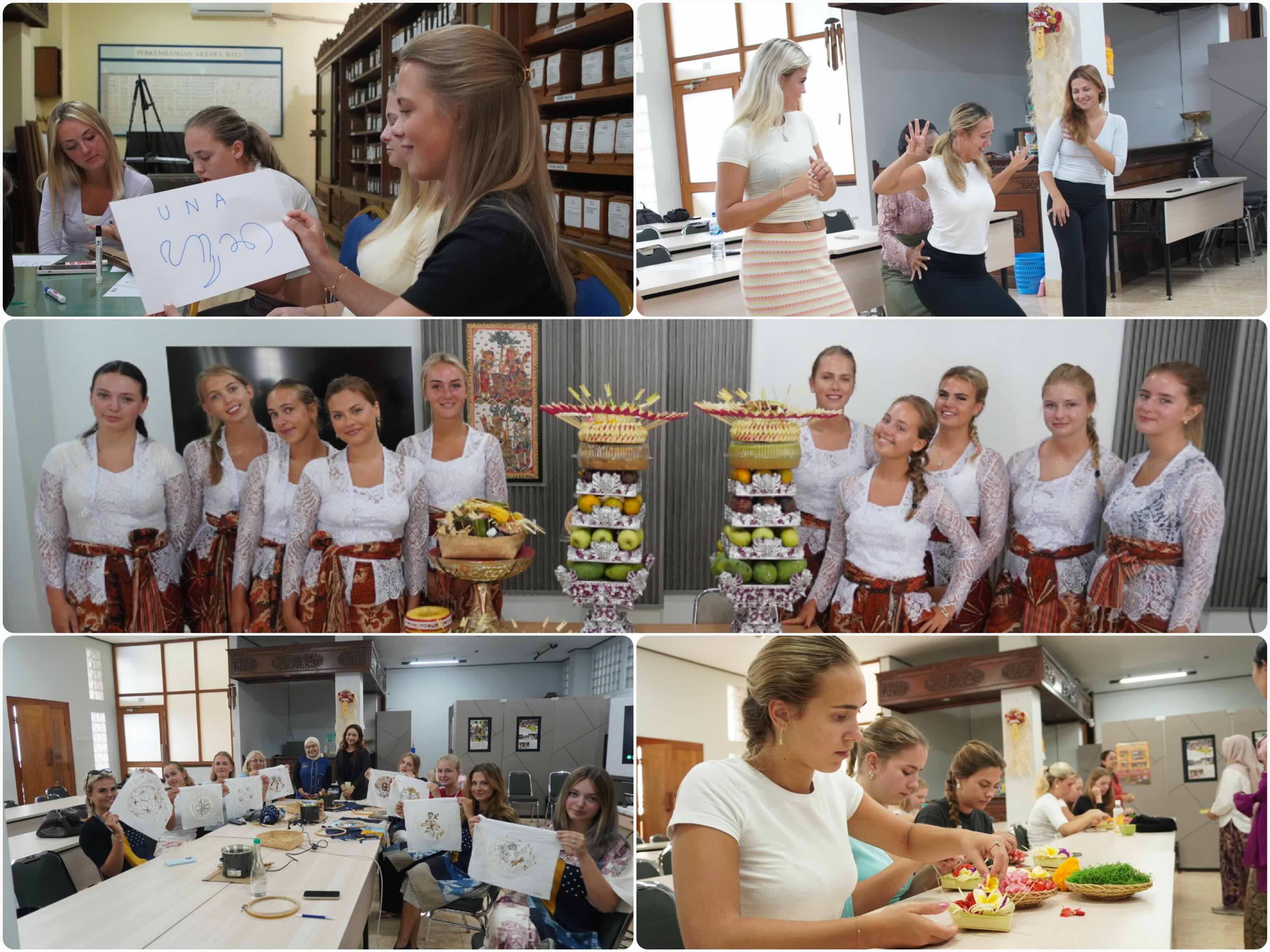
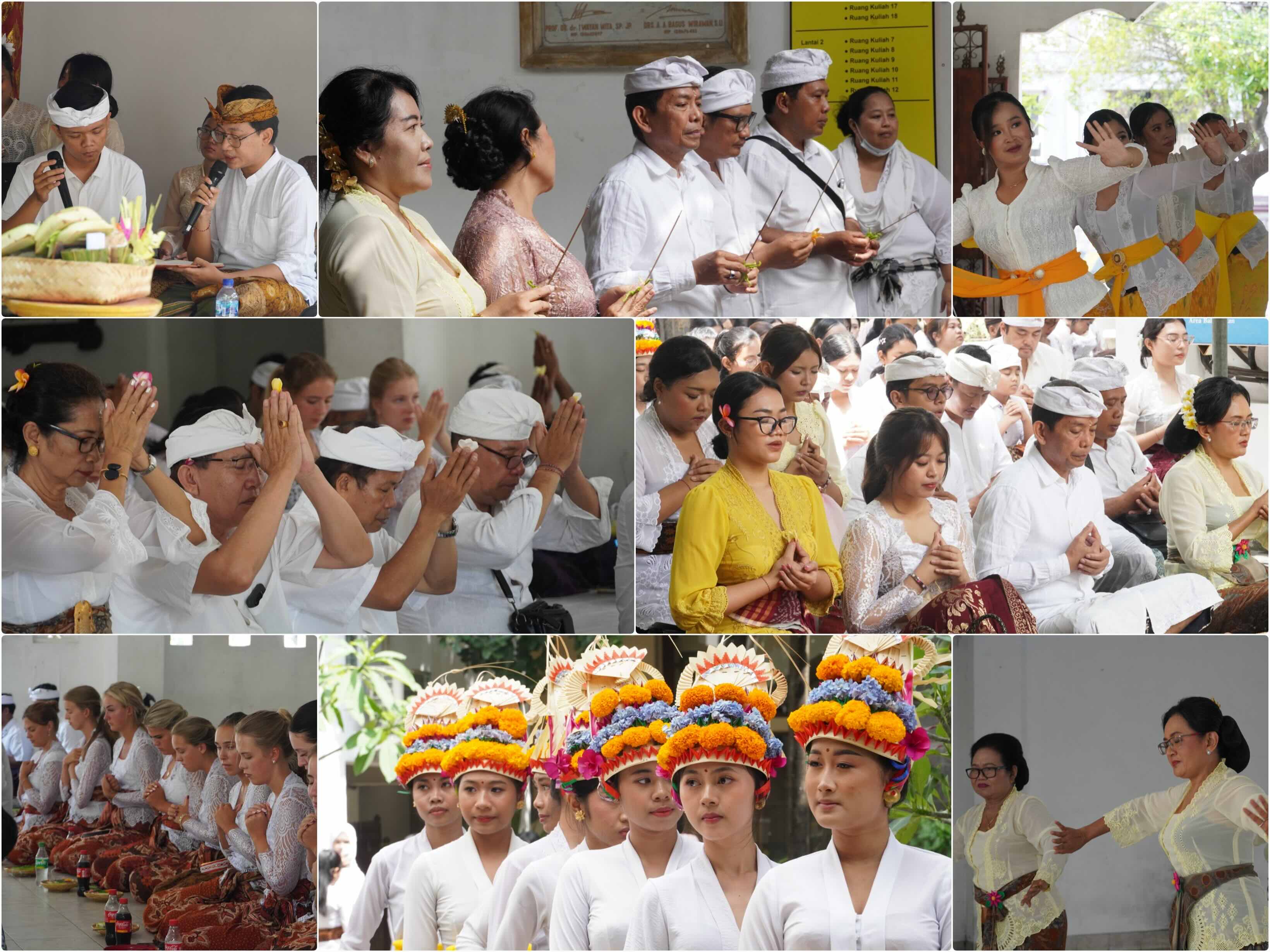
DENPASAR – The Faculty of Humanity, Udayana University (FIB Unud), through the Social Anthropology Program for the 2026/2027 Odd Semester (Autumn 2026), organized a series of Cultural Activities that provided participants with the opportunity to get to know and learn about Balinese culture firsthand. Taking place from September through October 2026, this series of activities offered cultural learning experiences through the practice of wearing traditional Balinese attire, making ritual offerings, learning about Balinese script and palm-leaf manuscripts (lontar), making batik, learning traditional dances, and participating in the Saraswati Day celebration.
The Cultural Activities series was carried out across five activity agendas on September 10, September 17, October 1, October 15, and October 31, 2026. Each activity was designed to introduce the richness of Balinese culture while providing an in-depth understanding of the philosophical values, symbols, and traditional practices continuously preserved in community life.
The first activity, held on Thursday, September 10, 2026, carried the theme of introducing traditional Balinese attire and making ritual offerings. The participants learned about the levels of wearing traditional Balinese attire—ranging from nista, madya, to utama—along with their functions and meanings in various customary and religious events. The learning process then continued with the practice of making canang and kewangen, wearing traditional Balinese attire, as well as presenting canang and joining prayers at the Padmasari of the FIB Unud Campus, Jalan Pulau Nias, Denpasar. Through this activity, participants gained a direct understanding of the close relationship between traditional attire, ritual offerings, and the spiritual life of the Balinese community.
On Thursday, September 17, 2026, the second activity continued with an introduction to the Balinese script (aksara Bali) and the heritage of lontar manuscripts. Participants learned the shapes and structure of the Balinese script as well as the child-naming tradition based on birth order in Balinese society. They also had the opportunity to visit the Lontar Unit (Unit Lontar) of FIB Unud to view various collections of lontar manuscripts and learn about prasi, an art form consisting of paintings or engravings on palm leaves. The activity became even more engaging when participants practiced writing their names using Balinese script and received souvenirs featuring their respective full names engraved on lontar blades.
Entering October, the Cultural Activities series presented its third activity in the form of a batik art lesson on Thursday, October 1, 2026. Participants were introduced to the diversity of batik motifs from various regions in Java and Bali, including the development of batik as a result of cultural interaction and acculturation. Influences from Chinese, European, Persian, and Indian cultures were also part of the discussion to illustrate the dynamic development of batik art. After learning about various tools and basic techniques, participants practiced the batik-making process directly on fabric. This activity provided firsthand experience of batik as an artistic heritage that represents creativity, history, and intercultural encounters.
Subsequently, on Thursday, October 15, 2026, participants joined the fourth activity, a Balinese dance lesson that began with an introduction to dance classification based on function: wali (sacred), bebali (ceremonial), and balih-balihan (entertainment) dances. They then practiced basic Balinese dance movements, such as agem, hand, eye, and foot movements, while learning the different movement characteristics of female, male, and bebancihan (androgynous) dances. The activity ran interactively and served as a space for cultural exchange when participants also presented a video of the traditional Halling or Hallingdans dance.
The entire Cultural Activities series concluded with the fifth activity on Saturday, October 31, 2026, coinciding with the celebration of Saraswati Day and the Pujawali Ceremony at the Padmasari of FIB Unud. In this activity, participants were introduced to the tradition of making gebogan, an arrangement of fruits and cakes shaped like a mountain as a ritual offering. Wearing traditional Balinese attire, participants practiced assembling gebogan before presenting them before the statue of Goddess Saraswati and the Padmasari of the FIB Unud Campus. They also witnessed tari wali performances and joined the Panca Sembah (kramaning sembah) prayer procession. The activity concluded with everyone enjoying the blessed offerings (lungsuran) together, creating an atmosphere of togetherness in a cross-cultural learning experience.
Through this series of activities, the Social Anthropology Program of FIB Unud demonstrated the importance of experiential learning in understanding culture. Participants not only acquired theoretical knowledge, but also engaged directly in various artistic practices, traditions, and the religious life of the Balinese community.
This activity simultaneously strengthens the role of the Faculty of Humanity, Udayana University, as a space for learning and cultural exchange that bridges academic knowledge with the richness of local traditions. Through direct interaction with Balinese cultural heritage, participants are expected to develop a deeper understanding and appreciation of cultural diversity and the importance of preserving cultural heritage amidst the development of global society.
UDAYANA UNIVERSITY