 ENG
ENG
 INA
INA
Faculty of Humanities Udayana University and Jembrana Regency Synergy: Archaeological Excavation Uncovers Various Prehistoric Artifacts in Gilimanuk
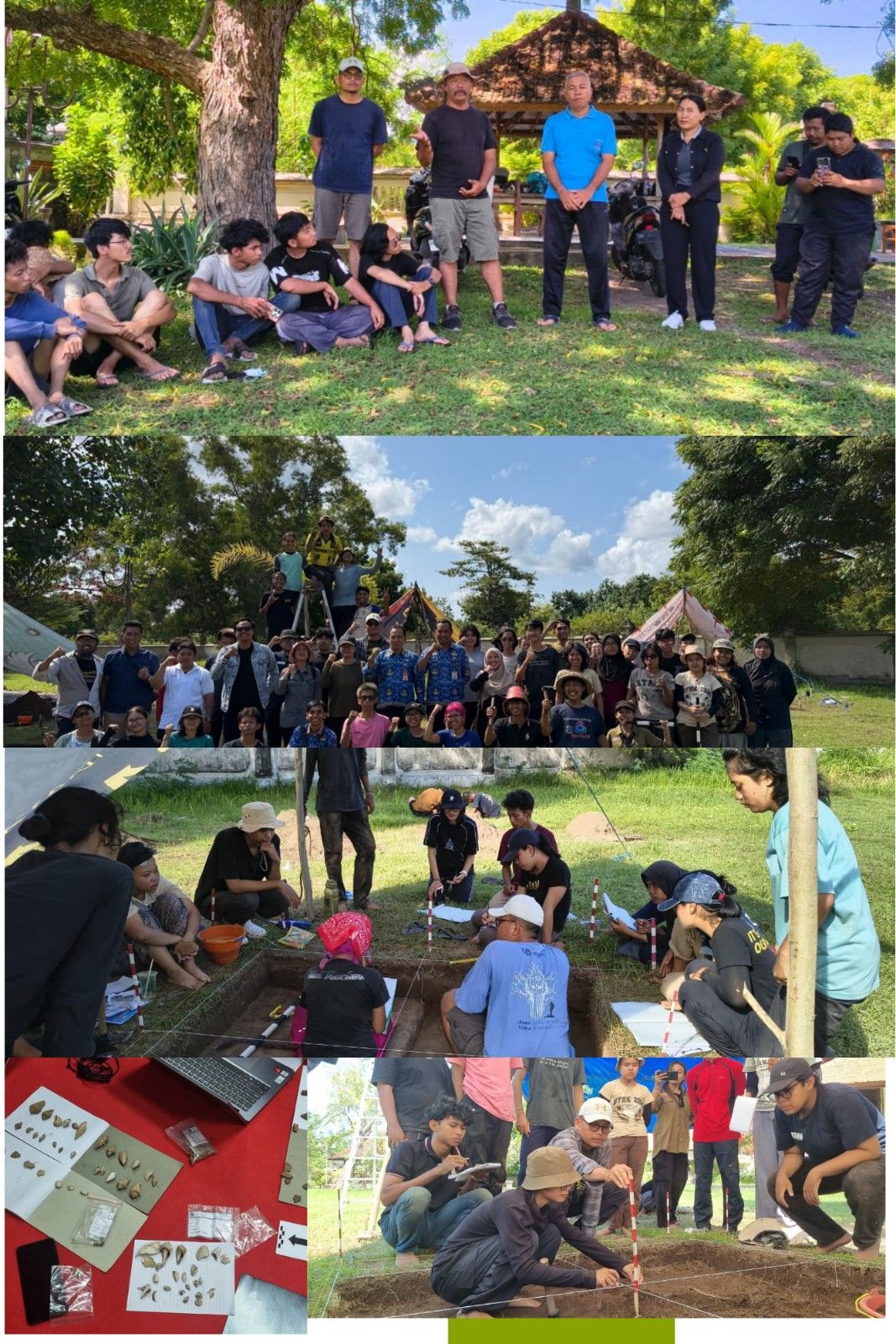
Gilimanuk, May 22, 2026—Students of the Archaeology Study Program, Faculty of Humanities, Udayana University, in collaboration with the Tourism and Culture Office of Jembrana Regency, conducted an excavation training at the Gilimanuk Museum of Early Humans from May 18 to 22, 2026. This activity is part of the archaeology practicum course held annually to provide students with direct experience in the processes of excavation, recording, documentation, and scientific archaeological data analysis in the field. The students were accompanied by the lecturers of the Archaeology Practicum course, Mr. Kristiawan, S.S., M.A., and Mr. I Made Agus Julianto, S.S., M.Sc., to ensure that the excavation was carried out in accordance with scientific principles and cultural site preservation ethics.
The series of activities commenced on the first day with a museum visit, site survey, and an opening ceremony involving the Tourism and Culture Office of Jembrana Regency. During this initial stage, the students and accompanying lecturers also determined the main grid point, which served as the reference for dividing the excavation squares. On May 19, 2026, the students began measuring the X and Y axes based on the main grid to determine the excavation points and commence the digging process. On the following days, the activity rhythm was divided into two sessions: field excavation activities from 08:00 to 17:00 WITA, followed by preliminary artifact analysis in the evening alongside the accompanying lecturers. The excavation series concluded on the final day with stratigraphic drawing as a method of site data documentation.
Several historical artifacts were successfully uncovered during this excavation training. These findings included human and animal bone fragments, mollusk shells, jug shards, plain and decorated pottery, as well as beads made from various materials such as stone, glass, shell, and bone. Interestingly, the discovery of the beads became the main highlight, as these objects are characteristic remnants of the Gilimanuk Site. All artifacts will later be inventoried and further researched by the student team and accompanying lecturers. Once the analytical process is complete, these historical objects will be returned to the museum for the sake of collection preservation and research data.
The implementation of this excavation also received appreciation from the lecturers of the Archaeology Practicum course, Kristiawan, S.S., M.A., and I Made Agus Julianto, S.S., M.Sc. Representing the Coordinator of the Archaeology Study Program, they expressed their gratitude for the full support, facilities, and learning spaces provided by the Tourism and Culture Office of Jembrana Regency and the Gilimanuk Museum of Early Humans. "We would like to express our gratitude and appreciation to the Tourism and Culture Office of Jembrana Regency and the Gilimanuk Museum of Early Humans for providing a platform and facilities for the students. We hope that this activity and collaboration will continue and be developed by the Archaeology students of Udayana University in the coming years," they concluded.
Through this fieldwork, students are expected not only to understand theories but also to be capable of practicing excavation research methods directly. This practice is deemed crucial to sharpen data analysis acumen while deepening their insight into Bali's archaeological wealth, specifically Gilimanuk, which is known as one of the most important prehistoric sites. In addition to these academic benefits, this activity also serves as a concrete contribution by the students to enrich archaeological data collection and support the preservation of cultural heritage objects at the Gilimanuk Museum of Early Humans.
UDAYANA UNIVERSITY