 ENG
ENG
 INA
INA
Faculty of Humanities Udayana University bestowed the New Doctor: "Examining Contextual-Medical Politeness Maxims in Padang City"

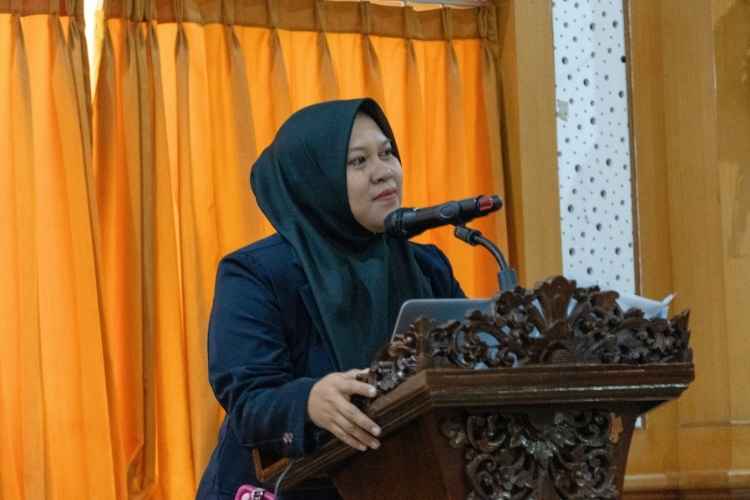
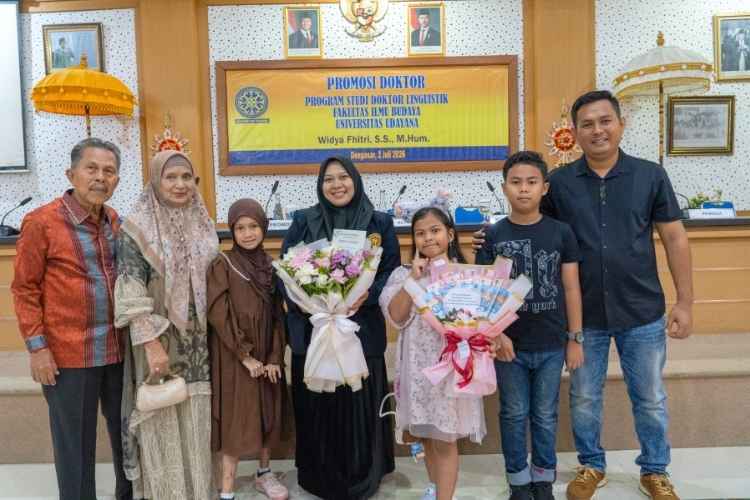
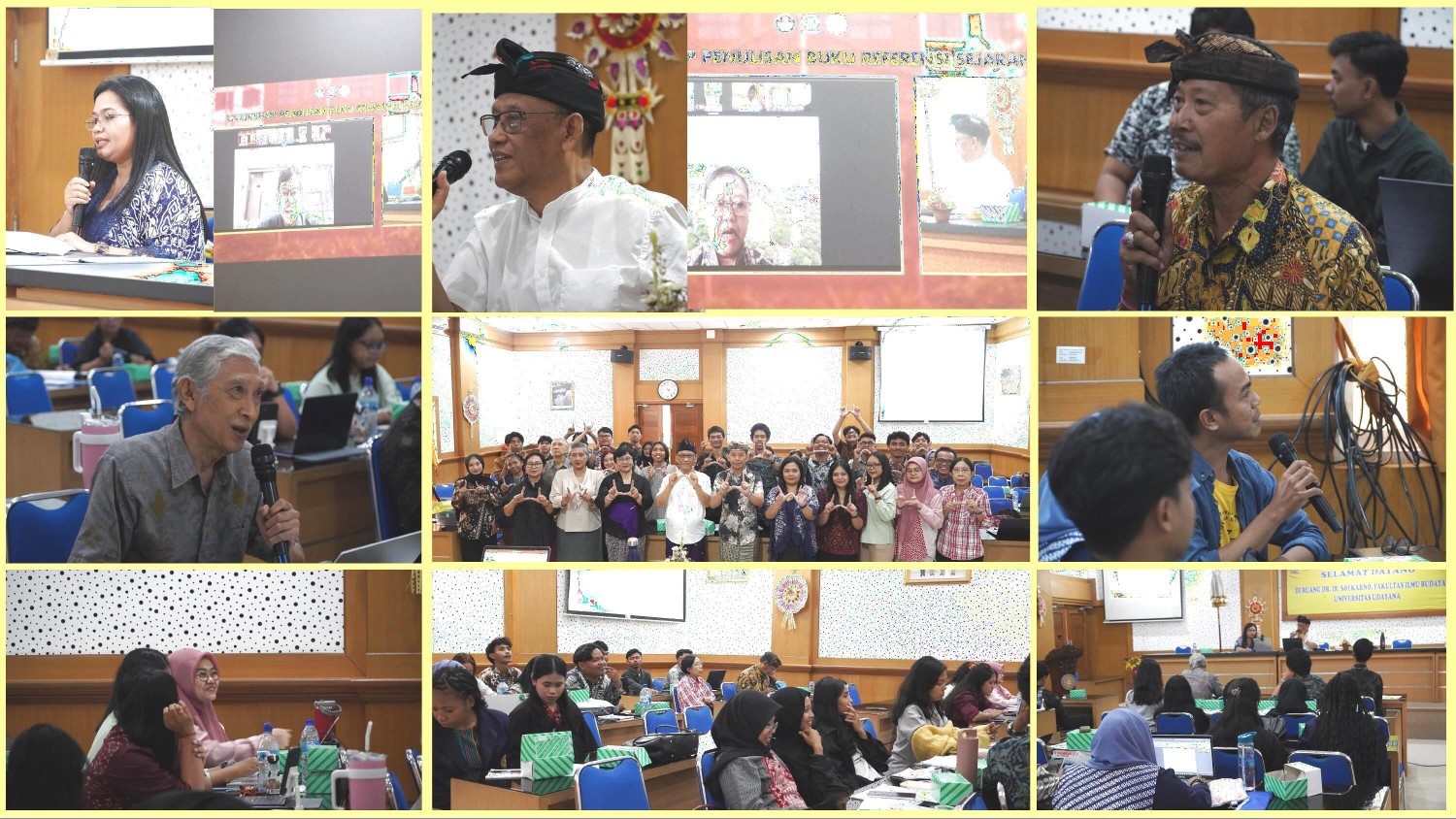
Denpasar, July 2, 2026 – The Faculty of Humanities, Udayana University (FIB Unud) officially inaugurated a new doctoral graduate through an Open Doctoral Defense held in the Dr. Ir. Soekarno Room, 4th Floor of the Poerbatjaraka Building. During this defense, Dr. Widya Fhitri, S.S., M.Hum., successfully defended her dissertation entitled "Language Politeness of Healthcare Professionals with Patients at Hospital X in Padang City." Based on the evaluation results, the promovenda was officially declared graduated with a "Cum Laude" predicate. Dr. Widya Fhitri, S.S., M.Hum., is recorded as the 284th doctor within the Faculty of Humanities at Udayana University, as well as the 284th doctoral graduate of the Doctoral (S3) Linguistics Study Program at FIB Unud.
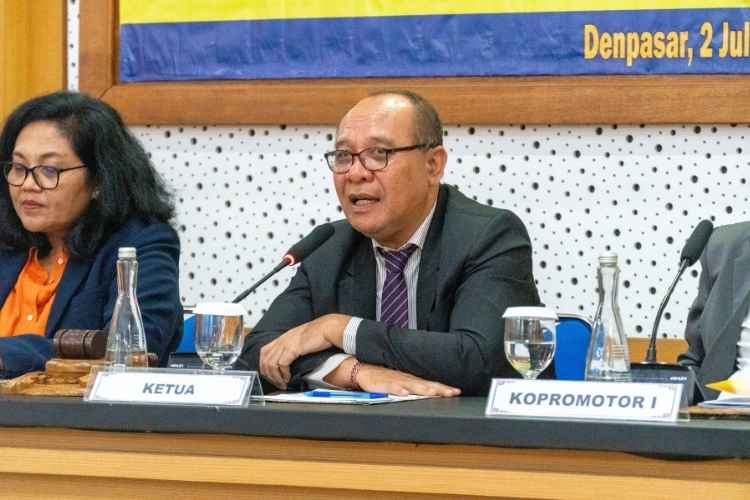
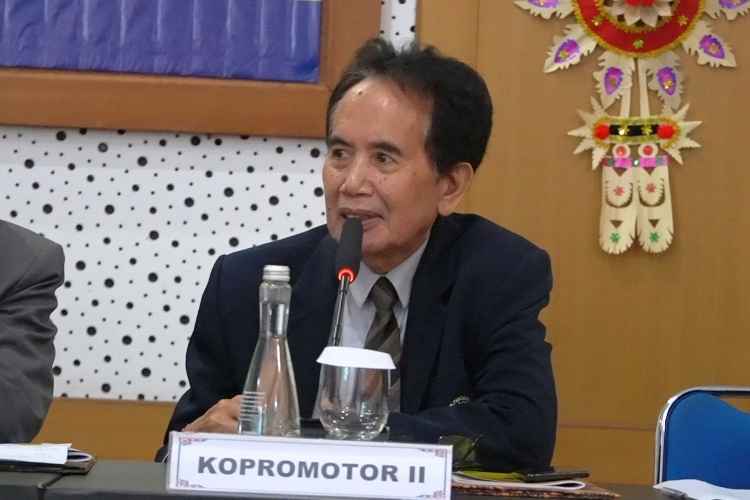
This open examination was presided over directly by Prof. Dr. I Made Netra, S.S., M.Hum., acting as the Chairperson of the Assembly. Serving as the Promoter was Prof. Dr. Made Sri Satyawati, S.S., M.Hum., accompanied by Prof. Dr. I Wayan Pastika, S.S., M.Hum., as Co-promoter I, and Prof. Dr. Ketut Artawa, M.A., as Co-promoter II. Also present was the board of examiners who provided a comprehensive evaluation, namely Prof. Dr. Made Dhanawaty, M.S., Prof. Dr. Dra. Ni Made Suryati, S.S., M.Hum., Prof. Dr. Ketut Widya Purnawati, S.S., M.Hum., and Dr. Silvia Damayanti, S.S., M.Hum.
This dissertation research was motivated by the crucial role of communication skills in healthcare services to create high-quality medical care. Effective communication established between healthcare workers and patients is believed to be capable of building mutual trust, which ultimately supports the success of the medical diagnosis and treatment process. Therefore, the phenomenon of language politeness in clinical settings, particularly at Hospital X in Padang City, became the focus of in-depth study to observe how these communication strategies are implemented.
Methodologically, this research applied a descriptive qualitative approach, utilizing primary data in the form of direct utterances from healthcare professionals to patients in the central administration unit, internal medicine polyclinic, and pharmacy. Data collection was conducted using a non-participatory observation method (Uninvolved Conversation Observation technique), supported by recording and note-taking techniques. Through a pragmatic identity analysis method, the researcher correlated the forms and functions of language with the socio-cultural situational context of the local community.
The results of the study proved that healthcare professionals predominantly utilize interrogative sentences when interacting with patients. From a pragmatic perspective, negative politeness strategies were recorded as the most frequently implemented approach, evidenced by the high frequency of politeness markers aimed at saving the patients' "face". As a theoretical contribution, the promovenda initiated an alternative model in the form of Contextual-Medical Politeness Maxims (MKMK), which accommodates Minangkabau cultural dimensions, such as the principles of Kato Nan Ampek and Raso jo Pareso, into functional medical communication practices.
Moving on to the discussion session, the dilemma of using technical medical terms versus lay terms became a focal point, considering the difficulty in bridging the knowledge gap between healthcare professionals and patients. Responding to this matter, the promovenda explained that the use of both types of terms is actively adjusted according to the context and patient demographics. Lay terms, such as "high blood pressure" instead of "hypertension," are frequently chosen to simplify the delivery of information to elderly patients to make it easier to understand. Conversely, technical terms are maintained for patients deemed to have adequate cognitive capacity in order to preserve the accuracy of clinical information. This proves that healthcare workers consciously make linguistic adjustments to achieve optimal therapeutic communication.
In the final session of the defense, Prof. Dr. Made Sri Satyawati, S.S., M.Hum., as the promoter, expressed her deep appreciation and pride, considering that the promovenda is her first doctoral supervisee to successfully graduate. She emphasized that this dissertation holds extraordinary significance because it does not merely reveal pure linguistic phenomena, but also offers practical outcomes to improve the quality of public services in hospitals. The promoter asserted that the integration of noble local cultural values with pragmatic theories will strengthen therapeutic relationships, where communication based on politeness can indirectly boost patients' immunity and motivation to recover.
Gallery
.jpg)
UDAYANA UNIVERSITY