 ENG
ENG
 INA
INA
Faculty of Humanities Udayana University Held Graduate Learning Outcomes Workshop Amidst Accreditation Preparation
.jpg)
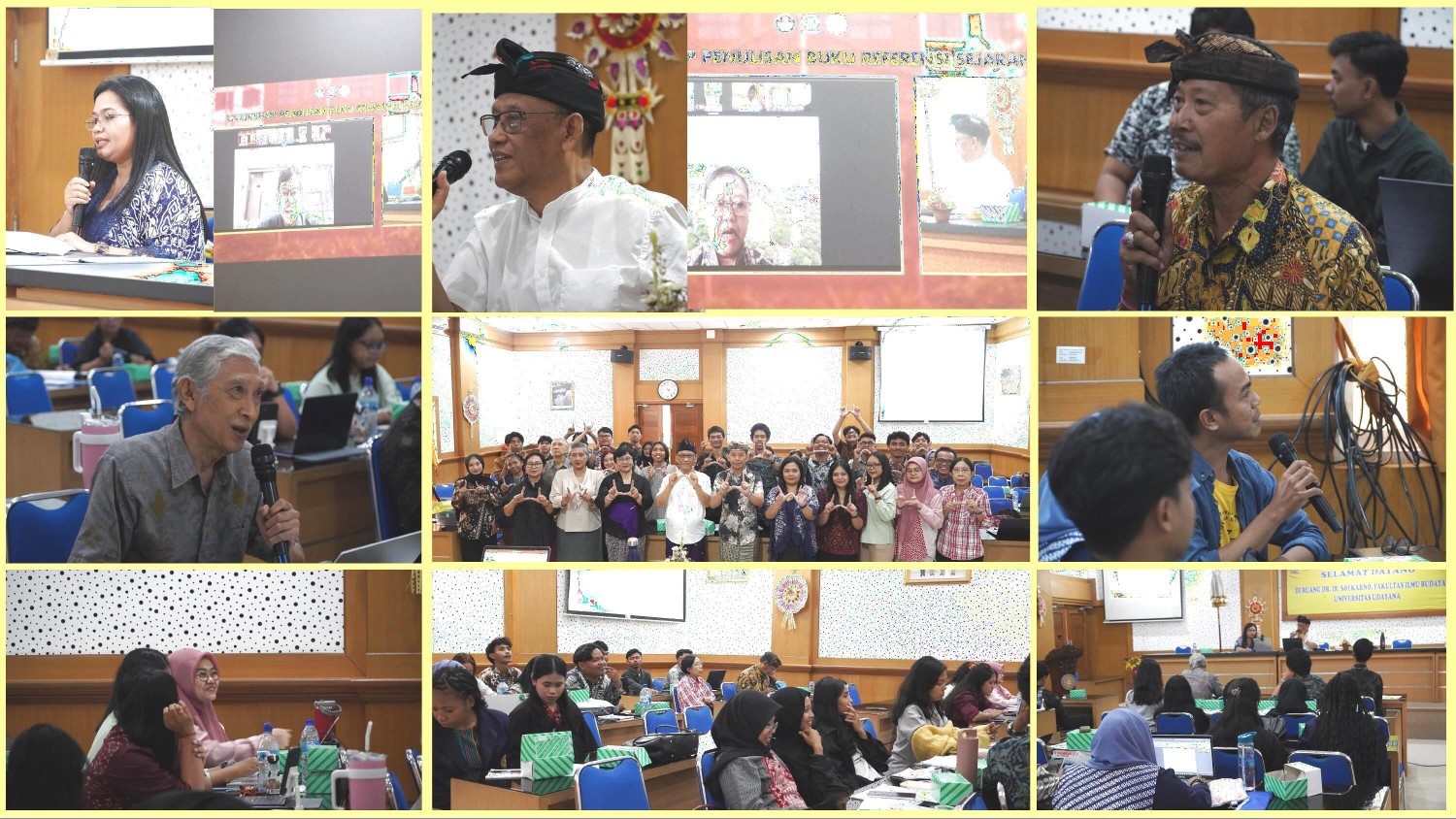
The Learning Development and Quality Assurance Unit (UP3M) of the Faculty of Humanities (FIB), Udayana University (Unud), held a Workshop on Graduate Learning Outcomes (CPL) on Wednesday, July 1, 2026. The event, which took place in the Soekarno Room of FIB Unud, was conducted in a hybrid format. This workshop was attended by the Vice Dean I of FIB Unud, the guest speaker Prof. Dr. Drs. Maman Suryaman, M.Pd., study program coordinators, the Head of the Quality Assurance Unit and the UP3M team, the Head of UPIKS and the Media FIB Unud team, internal facilitators, the curriculum team and the Quality Assurance Implementation Team (TPPM) of the undergraduate (S1) to doctoral (S3) study programs within FIB Unud, as well as the accreditation task forces for the English Literature, Japanese Literature, and Doctoral (S3) Linguistics study programs.
Opening the event, Dr. I Gede Oeinada, S.S., M.Hum., as the Vice Dean I of FIB Unud, expressed his appreciation for the speaker's willingness to lead this workshop. He stated that this event is a strategic step, considering the upcoming accreditation schedules for several study programs, such as English Literature, Japanese Literature, and S3 Linguistics. He also invited the attending alumni to provide input so that this activity yields results that align with the competencies required in the professional world. Special appreciation was also extended to the UP3M team and the organizing committee.
The material presentation session was guided by Dr. Ni Ketut Widhiarcani Matradewi, S.S., M.Hum., as the Head of UP3M as well as the moderator. Prof. Dr. Drs. Maman Suryaman, M.Pd., began his presentation with a discussion on literacy. He highlighted the current increase in literacy rates in Indonesia. This is crucial because top-ranked universities are generally located in countries with high literacy levels. Therefore, higher education curricula must be designed to foster students' reading interest. He also emphasized the need to build human literacy through critical thinking skills. These skills can be integrated into several CPLs, such as leadership, teamwork, and social entrepreneurship.
Before dissecting the curriculum and CPL, the speaker touched upon the role of academic vision. According to him, the academic vision of a study program serves as a directional guide for the development of the program itself. This differs from the institutional vision, as the academic vision focuses specifically on a single field of study. Regarding the curriculum, the speaker explained that the initial stage of drafting a curriculum document is a needs analysis, which reviews society's expectations of education, as well as a study of Science, Technology, and Arts (IPTEKS).
These two aspects then serve as the foundation for formulating the graduate profile. In practice, further tracing regarding the types of jobs held by alumni is absolutely necessary. The speaker underlined that merely categorizing job relevance is insufficient; a graduate profile must be able to represent the professional fields of multiple alumni simultaneously. It is this profile that is subsequently derived into the CPL formulation of the study program. Once the CPL is established, the next stage is the formation of courses, which includes selecting study materials, determining learning materials, establishing courses, and allocating credit (SKS) weights.
The discussion session at the end of the event was met with enthusiasm by the participants. Concluding his presentation, the speaker reminded that the graduate profile must be proportionally reflected in the number of courses and the distribution of credits. During this session, an alumni representative from the Indonesian Literature study program also shared his perspectives. He stated that the courses he took during college are highly relevant and applicable in supporting his profession as an Indonesian language teacher. Although there were technical educational materials, such as the preparation of Lesson Plans (RPP), that were not studied in depth, he considered this perfectly reasonable given that the foundation of his study program is rooted in pure literature, rather than educational sciences.
.jpg)
UDAYANA UNIVERSITY