 ENG
ENG
 INA
INA
From Borobudur to Modern Rituals: IFSSO Panels Explore Cultural Heritage
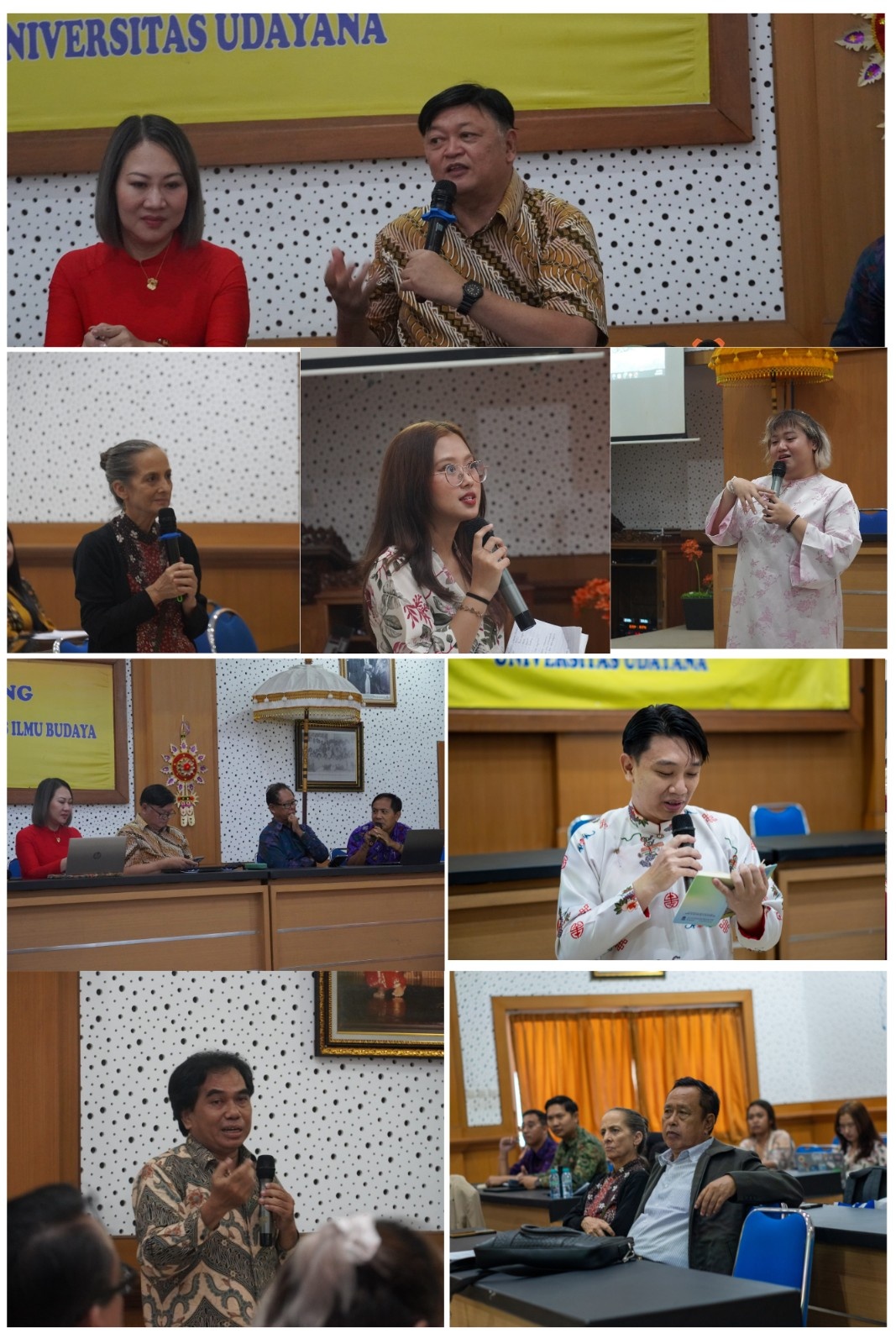
Denpasar, April 21, 2026 – Entering the second half of the first day of The 27th IFSSO International Conference, the enthusiasm of global delegates remained high. Following the presentations by the keynote speakers at the Widya Sabha Mandala Auditorium, the academic fervor continued with parallel panel discussion sessions centered at the Poerbatjaraka Building, Faculty of Humanities, Udayana University. The delegates dissected various specific studies divided into three main rooms: the Dr. Ir. Soekarno Room, the Prof. Dr. Priyono Room, and the Senate Meeting Room.
In the Dr. Ir. Soekarno Room, the discussion dynamics centered on tracing the footprints of past civilizations and diplomacy. This session, moderated alternately by Prof. Dr. I Wayan Karja and Prof. Dr. Sudarman, featured sharp debates with the presence of discussants Prof. Dr. Nestor T. Castro, Dr. Nguyen Thi Hau, and Dr. Cao Thu Nga. The main highlight fell on the presentation by Assoc. Prof. Dr. Phan Thi Hong Xuan, who utilized Borobudur Temple and the Dong Duong site as a foundation for academic diplomacy between Indonesia and Vietnam. This narrative was reinforced by Vo Thi Huynh Nhu's historical study on the continuity of Champa Buddhism, the excavation of Buddhist heritage in West Sumatra by Prof. Sudarman, and the tracing of Hindu-Buddhist influences in the pre-Hispanic era of the Philippines by Prof. Nestor T. Castro.
Moving to the Prof. Dr. Priyono Room, the discourse shifted toward socio-cultural adaptation and the continuity of rituals in the modern era. Moderated by Assoc. Prof. Dicky Sofjan and Dr. Duong Hoang Loc, and discussed by discussants Vo Phan My Tra and Phan Hieu Nghia, this room explored issues closely related to today's reality. Assoc. Prof. Dicky Sofjan dissected the transformation of pilgrimage practices amidst globalization, while Dr. Duong Hoang Loc explained the vital role of Buddhism in maintaining the spiritual resilience of the community during the COVID-19 pandemic. Issues of maritime tolerance in the Lombok Strait by Putri Maya Masyitah and a study of chess as cultural heritage by Võ Phan Mỹ Trà also enriched the discussions in this room.
Meanwhile, the Senate Meeting Room presented the wealth of local wisdom and traditional Nusantara belief systems. With Budiana Setiawan and Dr. Nguyen Thi Hau as moderators, this session delved into the deepest layers of social spiritual values, ranging from the Kuk Kir Kna ritual of the Doreri people in Papua by George Mentansan to the Katoba tradition of the Muna community by La Aso. The dynamics of religious tourism at the Troloyo Cemetery were also studied by Rochtri Agung Bawono, complementing I Kadek Surya Jayadi's findings on the preservation of local Buddhist practices through family archives in Budakeling, as well as Dr. Preeti Oza's presentation on the 9th-century Hindu-Buddhist cosmopolis.
This entire series of parallel discussions proved the strong thread of history and culture binding the Southeast Asian region. After this intense session concluded, the delegates prepared for the closing agenda of the first day: the Gala Dinner, which will be held in the evening.
UDAYANA UNIVERSITY