 ENG
ENG
 INA
INA
Japanese Literature Study Program, Faculty of Humanities, Udayana University Holds a Workshop on Improving Japanese Language Teaching Skills Through the "Can-Do" Approach
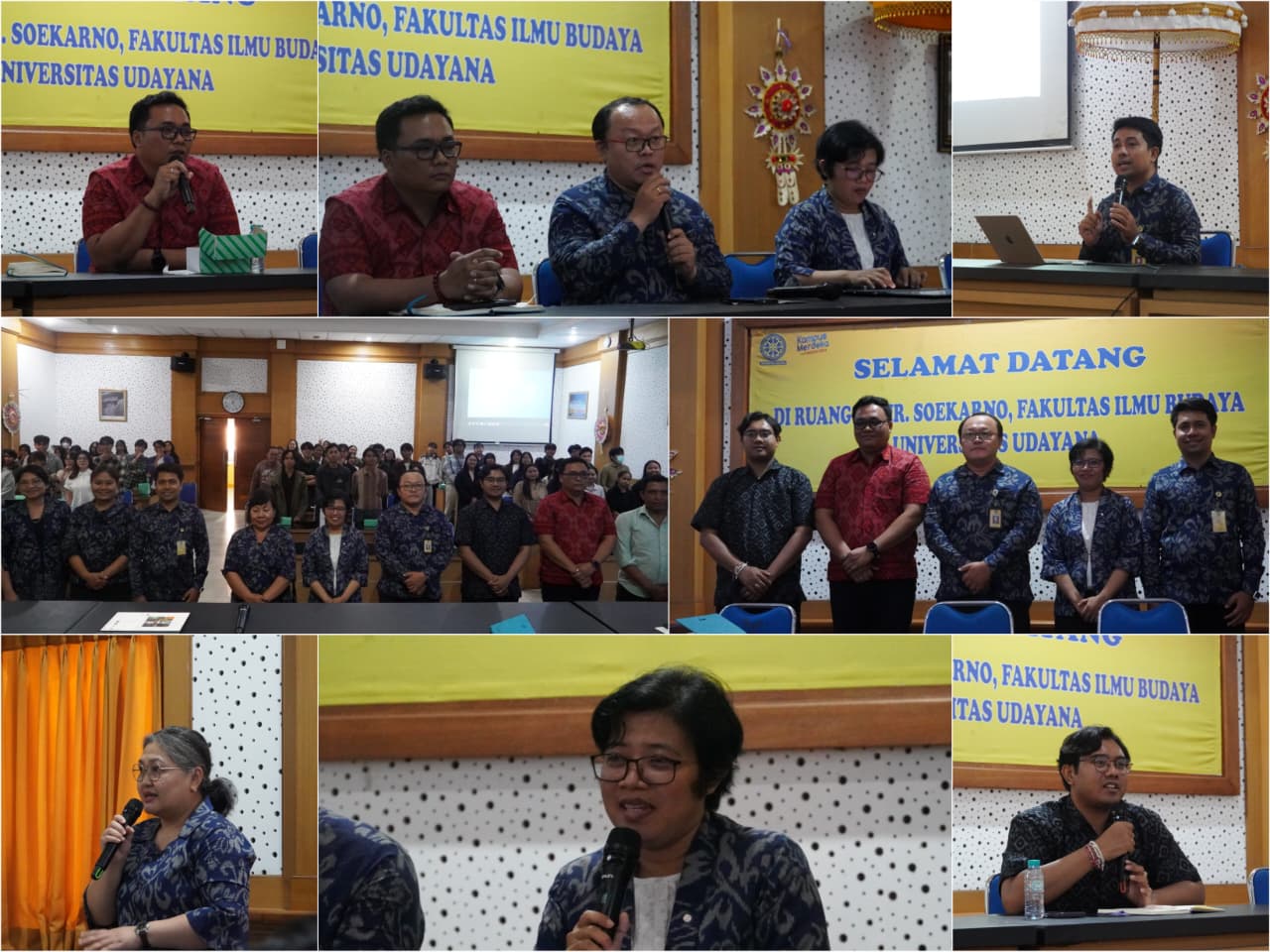
In commemoration of the 21st Anniversary of the Japanese Literature Study Program, the Japanese Literature Study Program, Faculty of Humanities, Udayana University, in collaboration with The Japan Foundation, held a Workshop on Improving Japanese Language Teaching Skills for Prospective LPK Instructors on Tuesday, October 6, 2026, at the Soekarno Room, Faculty of Humanities Campus, Unud.
The activity, which began at 13.00 WITA, was attended by Vice Dean I of the Faculty of Humanities, Unud, the Coordinator of the Japanese Literature Study Program, lecturers, alumni, and students particularly final-year students preparing to become professional teaching staff in job training centers (LPK). The workshop featured three expert speakers in their respective fields: I Made Sukadana Antara, Director of Bali Japan International College; I Gede Boy Sistha Nanda Dipraja, S.S., M.Hum., Principal of LPK Ganesha Karya Abadi; and Dr. Ngurah Indra Pradana, S.S., M.Hum., a lecturer and academic at the Faculty of Humanities, Unud.
The event commenced with an implementation report and opening remarks by the Coordinator of the Japanese Literature Study Program, Dr. Silvia Darmayanti, S.S., M.Hum. In her remarks, she stated that many final-year Japanese Literature students aspire to pursue careers as instructors in LPKs. Therefore, this workshop was specifically organized to equip students with applicable teaching skills. She also expressed her appreciation to The Japan Foundation for its grant and support in making the event a success.
The agenda continued with remarks and the official opening by Vice Dean I of the Faculty of Humanities, Unud, Dr. Gede Oediyana, S.S., M.A., Ph.D. In his direction, he expressed high appreciation to the Japanese Literature Study Program for its consistency in organizing student competency improvement activities. He advised all participants to follow the workshop series earnestly to absorb useful knowledge that supports their readiness in the workforce.
The core session of the workshop featured material presentations by the speakers sequentially. The first session was delivered by I Made Sukadana Antara, who presented material on the industrial profile at Bali Japan International College and the competency standards required for prospective instructors (sensei). He emphasized the importance of Japanese language proficiency equivalent to at least N3, effective teaching skills, and the cultivation of soft skills, business ethics, and disciplinary character among students.
The second material was delivered by I Gede Boy Sistha Nanda Dipraja, S.S., M.Hum., who discussed the challenges of becoming a Japanese language instructor in the modern and digital era. He highlighted the shift in learning methods from teacher-centered to learner-centered, the wise utilization of technology including the role of AI, and the introduction of the Irodori textbook which focuses on real-life contexts.
The third session was then continued by Dr. Ngurah Indra Pradana, S.S., M.Hum., who delivered an in-depth material on the "Can-Do" approach within the Japan Foundation (JF Standard). He explained how measuring language proficiency is not merely based on what is known, but rather on what tasks can be completed by learners. Participants were also invited to understand the four key components of Can-Do namely situation, action, condition, and evidence as well as practical demonstrations of compiling learning instruments in class. This interactive series of events concluded with a discussion and Q&A session between participants and the speakers
UDAYANA UNIVERSITY