 ENG
ENG
 INA
INA
Lecturer at the History Study Program, Faculty of Humanities Udayana University Successfully Obtains Doctoral Degree
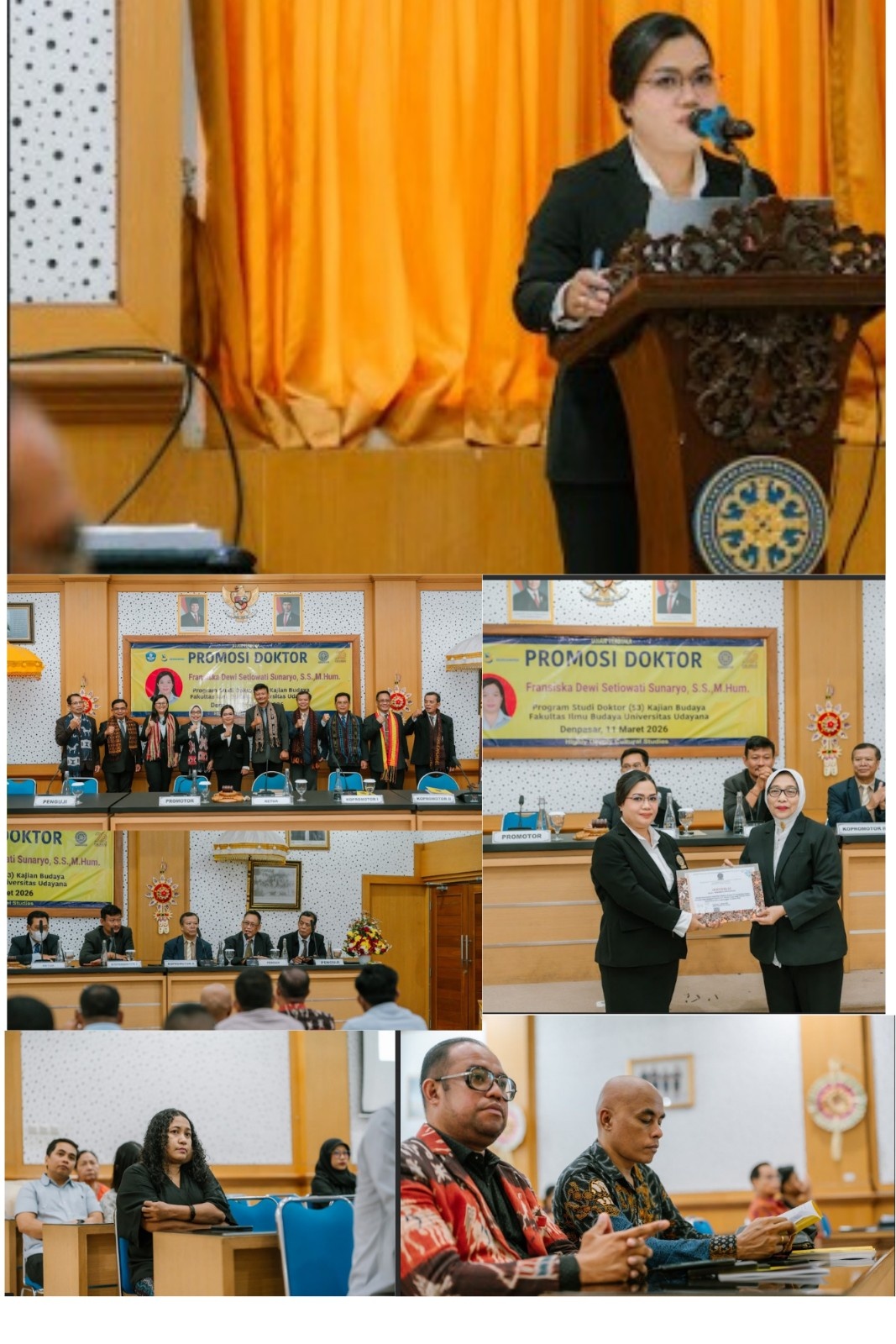
Fransiska Dewi Setiowati Sunaryo, S.S., M.Hum., a lecturer in the History Study Program, Faculty of Humanities, Udayana University, successfully obtained her doctoral degree in the Doctoral Study Program in Cultural Studies after defending her dissertation in an open examination held on Wednesday, March 11, 2026, at the local campus. In the session, she graduated with honors and was recorded as the 301st Doctor. The open examination was led by Prof. Dr. I Nyoman Suarka, M.Hum., and attended by nine examiners, including an external examiner from Ganesha University of Education in Singaraja, along with a number of lecturers, family members, and representatives of the Flobamora Bali community. The dissertation examination team consisted of: Prof. Dr. Ni Luh Nyoman Seri Malini, S.S., M.Hum. (Promotor), Dr. Nanang Sutrisno, S.Ag., M.Si. (Co-promotor I), Prof. Dr. I Nyoman Darma Putra, M.Litt. (Co-supervisor II) Prof. Dr. Phil. I Ketut Ardhana, M.A., Prof. Dr. I Nyoman Suarka, M.Hum., Prof. Dr. I Nengah Punia, M.Si., Prof. Dr. Drs. I Made Pageh, M.Hum. (External examiners), Dr. I Made Anom Wiranata, S.IP., M.A., and Dr. Ida Ayu Laksmita Sari, S.S.Hum., M.Hum.
This study uses a qualitative method with a critical ethnographic approach. The research locations include Denpasar City, Badung Regency, and Gianyar Regency, which are the main destinations for the Sumba diaspora to live and work in Bali. Data was collected through field observations, in-depth interviews, focus group discussions (FGDs), and document studies. Research informants included members of the Sumba diaspora in Bali, administrators of NTT diaspora organizations, Sumba ethnic leaders, as well as religious leaders, traditional leaders, and Balinese community leaders.
In her analysis, Fransiska Dewi Setiowati Sunaryo, S.S., M.Hum. eclectically utilizes practice theory, power relations and knowledge theory, and multiculturalism theory in accordance with her findings in the field. The results of the study show that the integration process of the Sumba diaspora in Bali is influenced by shared values and identities, economic interests, and emotional solidarity among members of the diaspora community. This integration is reflected in various practices of social adaptation, utilization of social and economic capital, participation in community life, and representation of identity in public spaces. This study also found various forms of contestation faced by the Sumba diaspora. These contestations arise due to capital inequality, limited access to various social spaces, and state policies that also influence their position in society. This situation has given rise to economic competition, marginalization, stigmatization, and various forms of resistance by the Sumba diaspora to maintain their identity and position in social life. This phenomenon is also marked by the emergence of the term “Nak Sumba” as a form of symbolic recognition of the Sumba ethnic identity in Balinese society. One of the important findings of this research is the concept of “modern Marapu,” which describes the transformation of Marapu beliefs in the lives of the Sumba diaspora in Bali. These local wisdom values have not disappeared even though the Sumba people have migrated, but rather have been adapted to the new social context.
Promotor Prof. Dr. Ni Luh Nyoman Seri Malini, S.S., M.Hum. in her speech appreciated Fransiska's courage in choosing the research topic and her success in completing her Doctoral studies on time. On the same occasion, the Chairman of the Flobamora Bali Association, Herman Umbu Billy, also expressed his appreciation for the research, which was considered capable of providing an academic perspective on the issues and stigma often faced by the diaspora community.
UDAYANA UNIVERSITY