 ENG
ENG
 INA
INA
Mawes Language Conservation Efforts: Faculty of Humanities Udayana University Held Seminar on Fieldwork and Community Engagement in West Papua
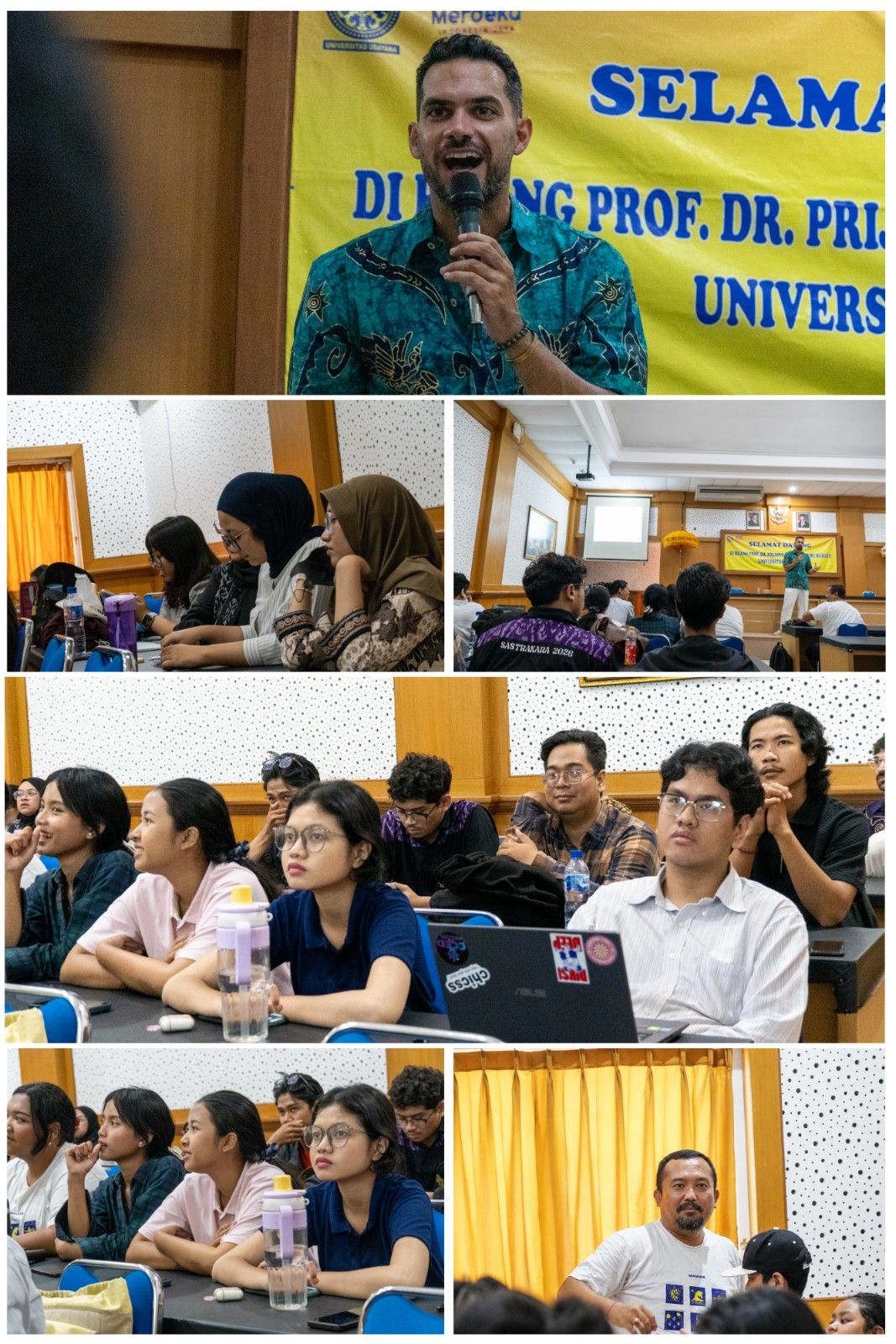
Denpasar, June 15, 2026 - The English Literature Study Program, Faculty of Humanities, Udayana University (FIB Unud), in collaboration with Palacký University Olomouc, organized a seminar entitled "The Mawes Language: A Fieldwork Report of a Language of West Papua" to introduce the intricacies of the Mawes language research and preservation project. Held in the Prof. Dr. Prijono Meeting Room, 4th Floor of the Poerbatjaraka Building, FIB Unud on Monday (15/06), the seminar was attended by various lecturers and students from the English Literature study program at FIB Unud.
This research was conducted by George Saad, a linguist from the Czech Republic, alongside I Komang Sumaryana Putra, S.S., M.Hum., I Made Sena Darmasetiyawan, S.S., M.Hum., Ph.D., Aldila Tania Agatha, and Ni Putu Cintya Wartini Putri from Udayana University.
This language documentation project bears high urgency considering the linguistic status in Indonesia. Based on the presentation during the seminar, Indonesia is home to 10% of the world's languages, with a total recorded number reaching 707 languages. However, the language vitality level in Indonesia is quite alarming, as 65% of these languages are classified as endangered or completely extinct. Globally, Indonesia ranks first as the country with the highest number of endangered languages in the world, amounting to 425 languages. The selection of West Papua as the research location was based on its vast linguistic diversity, encompassing both Austronesian and Papuan language families, as well as possessing approximately 19 language isolates. The main objective of this project is to provide the first comprehensive description of the Mawes language while simultaneously conducting capacity building for local researchers.
In its implementation, this research combines experimental linguistics and field observation. The research team designed silent stimulus videos to test the syntax and morphology of the Mawes language, combined with a sociolinguistic questionnaire. This experiment compared language acquisition data from an older group of speakers, serving as a baseline, with a younger group of speakers. The experiment revealed that younger speakers frequently encounter difficulties in utilizing the complex Mawes numeral system (which includes singular, dual, and plural forms), leading them to simplify the grammar. The data collection process also presented its own challenges, where the research team had to provide an understanding to traditional elders not to interrupt the younger speakers being recorded, as the data on their errors is precisely what is crucial for improving future language learning methods.
Beyond the Linguistic approach, this project also highlights anthropological aspects and community engagement that uncover the root causes of the Mawes language's endangerment. The Mawes community, originally a coastal society, was forced to migrate 4.5 kilometers through the jungle from their original village (Kampung Lama/Maui) to a new village. This relocation was triggered by the impacts of global warming, rising sea levels, erosion, and an unrecorded tsunami strike in 1996.
Furthermore, the extinction of the Mawes language is closely intertwined with intergenerational trauma triggered by past policies. Based on field findings, during the 1970s and 1980s, which coincided with the Enhanced Indonesian Spelling System (EYD) campaign and the national transmigration program, students in Papua frequently received physical punishment from school teachers if they were caught using their regional language. It is this trauma that has caused the older generation to be reluctant to teach the Mawes language to their children, ultimately breaking the chain of language transmission and distancing the community from their cultural roots, nature, and ancestors.
To break this cycle of extinction, the research team implemented various sustainable community engagement initiatives. They held weekly workshops that successfully gathered residents from various age ranges, starting from teenagers to the elderly, to learn how to use laptops and transcribe their own language data. In addition, the research team also collaborated with local artists and elementary school children to draw illustrations of their village. These artworks were then developed into merchandise and educational stickers to compellingly repromote the Mawes vocabulary. Through this initiative, the community is encouraged to take pride in using their language again, for example, by learning the various local terms for kangaroos, such as sefe, mambe, and was. The sale of the merchandise is also directed toward independently funding the community's needs, making this language preservation project long-term and community-centered.
.jpg)
UDAYANA UNIVERSITY