 ENG
ENG
 INA
INA
National Research and Innovation Board Researcher Successfully Achieves Doctoral Degree in Cultural Studies at the Faculty of Humanities Udayana University

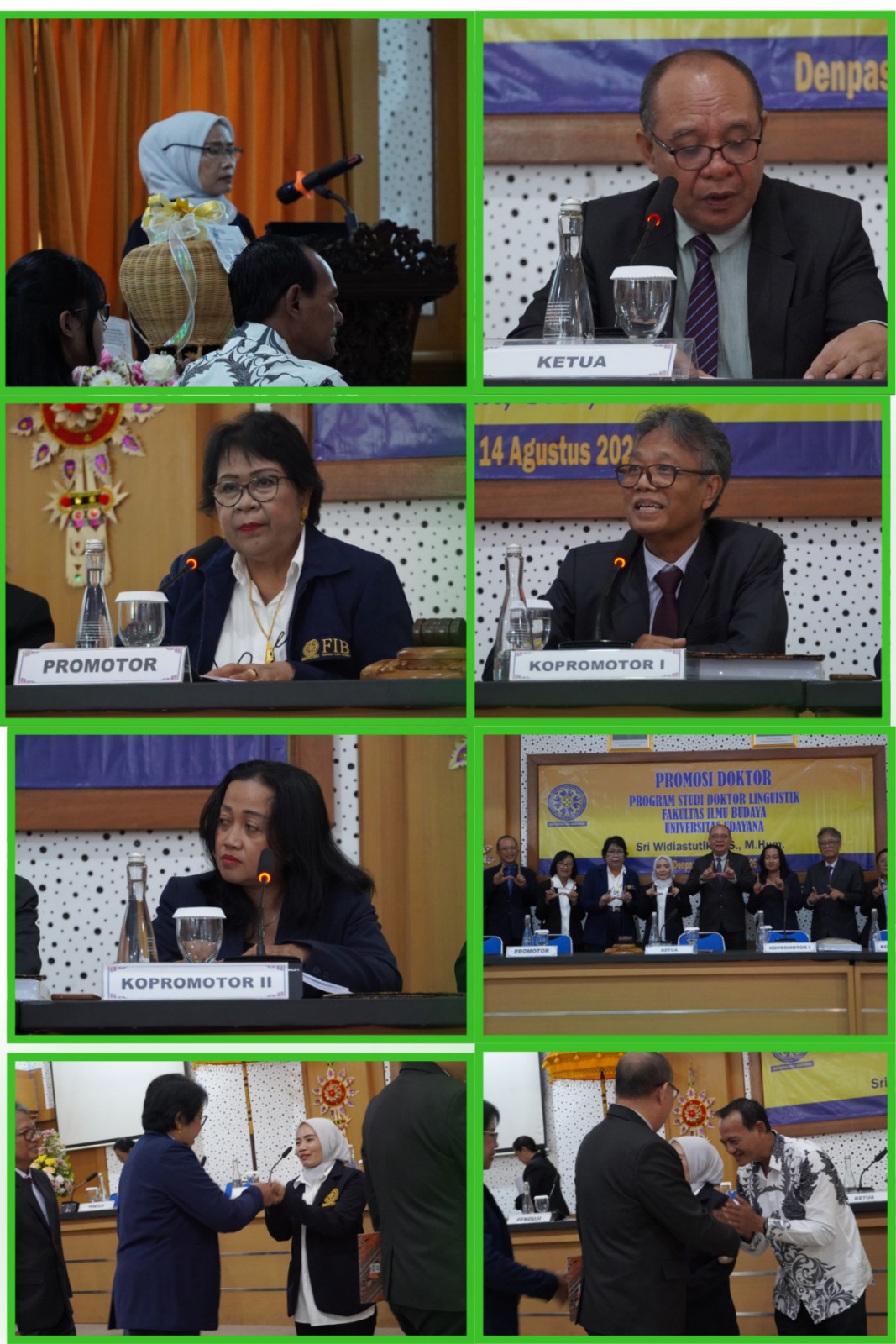
A researcher from the National Research and Innovation Agency (BRIN) successfully achieved a doctoral in Cultural Studies at the Faculty of Humanities Udayana University, after successfully defending his dissertation in an open examination held on Thursday, March 12, 2026, at the local campus. This success marks an important academic achievement for researchers who have been active in cultural research activities.
The Doctoral candidate, Ida Bagus Putu Prajna Yogi, S.S., M.A. presented a dissertation entitled “Artikulasi dan Disartikulasi Hidup Baadat dan Mati Bapati pada Komunitas Dayak Tomun Kristen di Kalimantan Tengah” or “Articulation and Disarticulation of Baadat Life and Bapati Death in the Christian Dayak Tomun Community in Central Kalimantan”. In the open examination, he was declared to have passed with a grade of Very Satisfactory. With this graduation, he is now the 276th doctoral graduate of the Faculty of Humanities and the 302nd Doctoral graduate of the Doctoral Program in Cultural Studies at the Faculty of Humanities, Udayana University.
The open examination was attended by students, faculty members, the Faculty of Humanities Senate, and the candidate’s colleagues from BRIN. The session was led by Prof. Dr. I Nyoman Suarka, M.Hum., and the examination team consisted of Prof. Dr. I Nyoman Wijaya, M.Hum., as the supervisor; Prof. Dr. I Nyoman Darma Putra, M.Litt., as Co-Supervisor I; Dr. I Wayan Suardiana, M.Hum., as Co-Supervisor II; and examination members Prof. Dr. I Gusti Putu Bagus Suka Arjawa, M.Si., Prof. Dr. I Nyoman Weda Kusuma, M.S., Prof. Dr. I Nengah Punia, M.Si., Dr. Ni Luh Putu Agustini Kerta, S.E., M.M., and Dr. I Wayan Nuriarta, S.Pd., M.Sn.
In his research, Ida Bagus Putu Prajna Yogi, S.S., M.A. examines the cultural dynamics of Hidup Baadat (Baadat Life) and Mati Bapati (Bapati Death), which have developed among the Christian Dayak Tomun community in Central Kalimantan. Normatively, these traditions were expected to decline alongside the community’s conversion to Christianity and the influence of religious doctrines emphasizing the concept that “life is Christ, death is gain.” However, his research findings indicate that these cultural practices have, in fact, persisted and emerged in contemporary cultural forms such as Babukunk and Bebantan Laman. He explains that the continuity of these traditions not only demonstrates the resilience of customary practices but also reflects a process of negotiation within a social space shaped by various power relations. This study aims to uncover how power plays a role in the processes of both the articulation and disarticulation of the Hidup Baadat and Mati Bapati cultures, while also tracing how power relations and knowledge operate through social practices, habitus, and assets in the lives of the Christian Dayak Tomun community.
Theoretically, this study employs Michel Foucault’s approaches of the archaeology of knowledge and the genealogy of power, enriched by Pierre Bourdieu’s concept of habitus and Anthony Giddens’ theory of structuration. Through this framework, the study finds that the Hidup Baadat and Mati Bapati cultures serve as arenas of contestation among three major forces: the church, adat, and the state. The church plays a role in disciplining religious practices through doctrine and morality; adat strengthens social solidarity through ancestral rites; while the state interprets adat as an economic potential through cultural and tourism policies. Together, they form a network of power that gives rise to a dual identity within the community—as Christians, members of the adat community, and citizens.
At the end of the session, the promotor, Prof. Dr. I Nyoman Wijaya, M.Hum., expressed appreciation for the candidate’s courage and perseverance throughout the academic process. He assessed that the dissertation successfully applied critical theory within a cultural studies framework in a robust manner grounded in field research. Ida Bagus Putu Prajna Yogi, S.S., M.A. also expressed gratitude to the promotor and co-promotors, as well as the examiners, for their guidance and feedback throughout the dissertation preparation process. Additionally, family members also expressed their hope that this academic achievement would mark the beginning of broader service and scientific contributions to society.
UDAYANA UNIVERSITY