 ENG
ENG
 INA
INA
Strengthening China-Indonesia Cultural Diplomacy, FIB Unud Archaeology Lecturer Participates in the "Kang Cing Wie" Program in Beijing
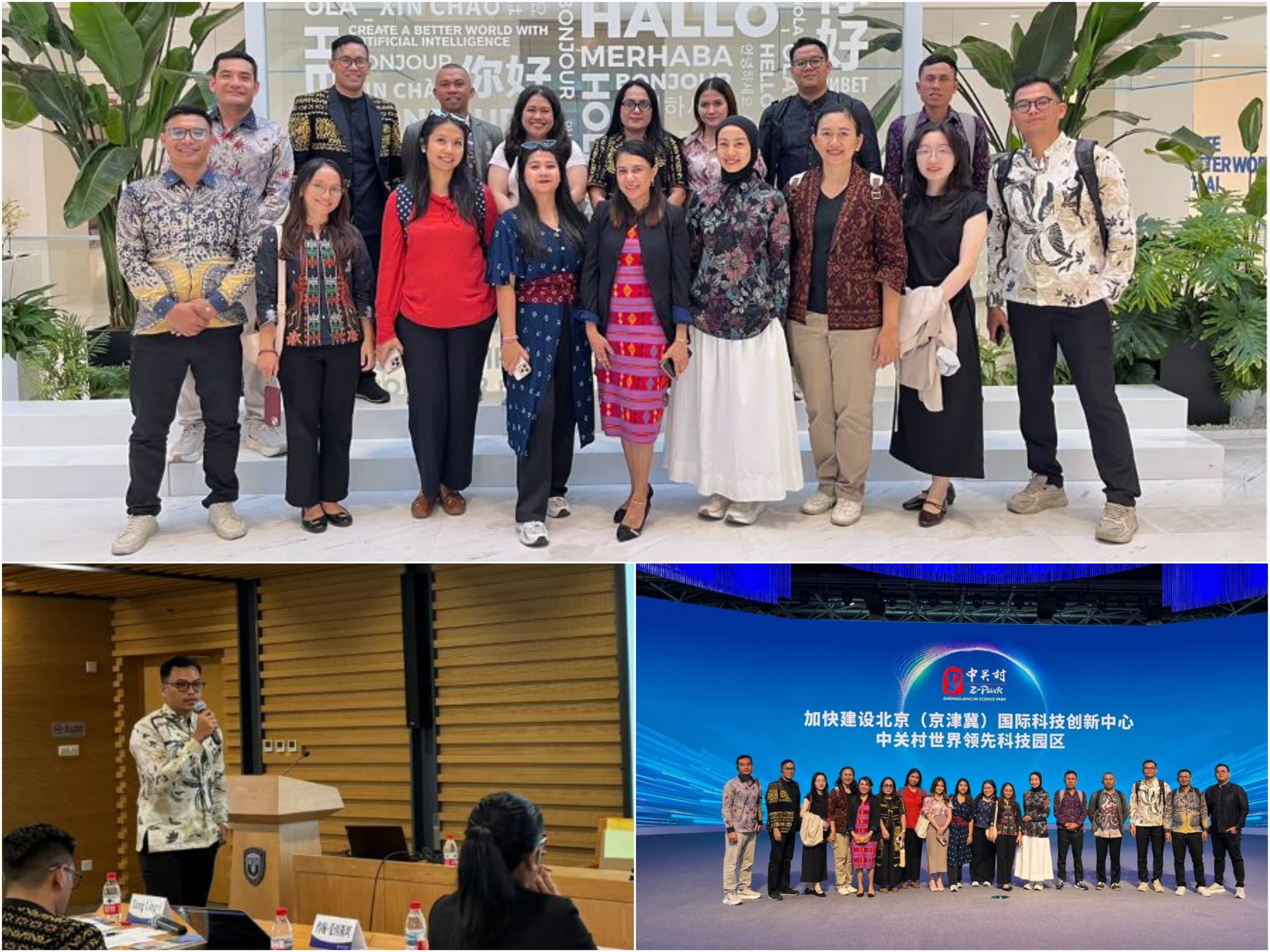
DENPASAR – I Made Agus Julianto, S.S., M.Sc., a lecturer from the Archaeology Study Program, Faculty of Cultural Sciences (FIB) Udayana University, was selected as one of the Indonesian delegates in the "Kang Cing Wie Cultural Exchange Program" in Beijing, China, from September 20 to 24, 2026. This prestigious program, initiated by the Consulate General of the People's Republic of China in Denpasar, was held to promote the exchange of personnel, culture, and knowledge between Indonesia and China.
One of the main agendas of the program was a discussion forum that brought together researchers from both countries at Beijing Foreign Studies University (BFSU). In this forum, the delegates took turns presenting and discussing various strategic cooperation opportunities across multiple sectors, ranging from technology, tourism, history, archaeology, and culture, to agriculture.
On this occasion, I Made Agus Julianto presented a comparative study entitled "Agricultural Technology & Landscape Management: A Comparative Study of Traditional Irrigation Systems and Agrarian Landscapes in South China and Bali (Indonesia)". He explained the early history of the emergence of agricultural technology and agrarian landscapes in mainland China during prehistoric times, which were later spread by Austronesian speakers to the Nusantara archipelago, especially Bali, and how they have developed to this day.
The academic discussion was considered highly effective in expanding networks among researchers. "This activity opens up academic networks, where each delegate shares ideas from various fields. Therefore, the opportunities for future cooperation are quite promising," Agus stated, noting the enthusiasm during the forum.
In addition to participating in academic activities on campus, the delegates were also invited to do field visits to a number of advanced technology facilities and important historical sites in Beijing. Some of these destinations included the Central Gifts and Artifacts Center, iFLYTEK, CGTN Indonesian Language Programming Department, the Great Wall of China, the Forbidden City, and the modern waste treatment facility, Anding Waste-to-Energy Plant. These visits provided firsthand insight into China's progress in environmental management, media, cultural preservation, and cutting-edge technological innovations.
From an archaeological and museological perspective, Agus highlighted the optimization of technology utilization in China to present a new, more interactive experience for visitors to cultural sites. Audiovisual technology and various digital devices were considered very helpful in conveying historical information, making it easier for the public to understand. The participation of the Udayana University delegation in this program is expected to continuously expand international networks and open up concrete collaboration opportunities in education, research, and cultural preservation in the future.
UDAYANA UNIVERSITY