 ENG
ENG
 INA
INA
Supporting The Final-Year Students, Bachelor of Japanese Literature Conducted Guidance and Counseling with a Psychologist
.jpeg)
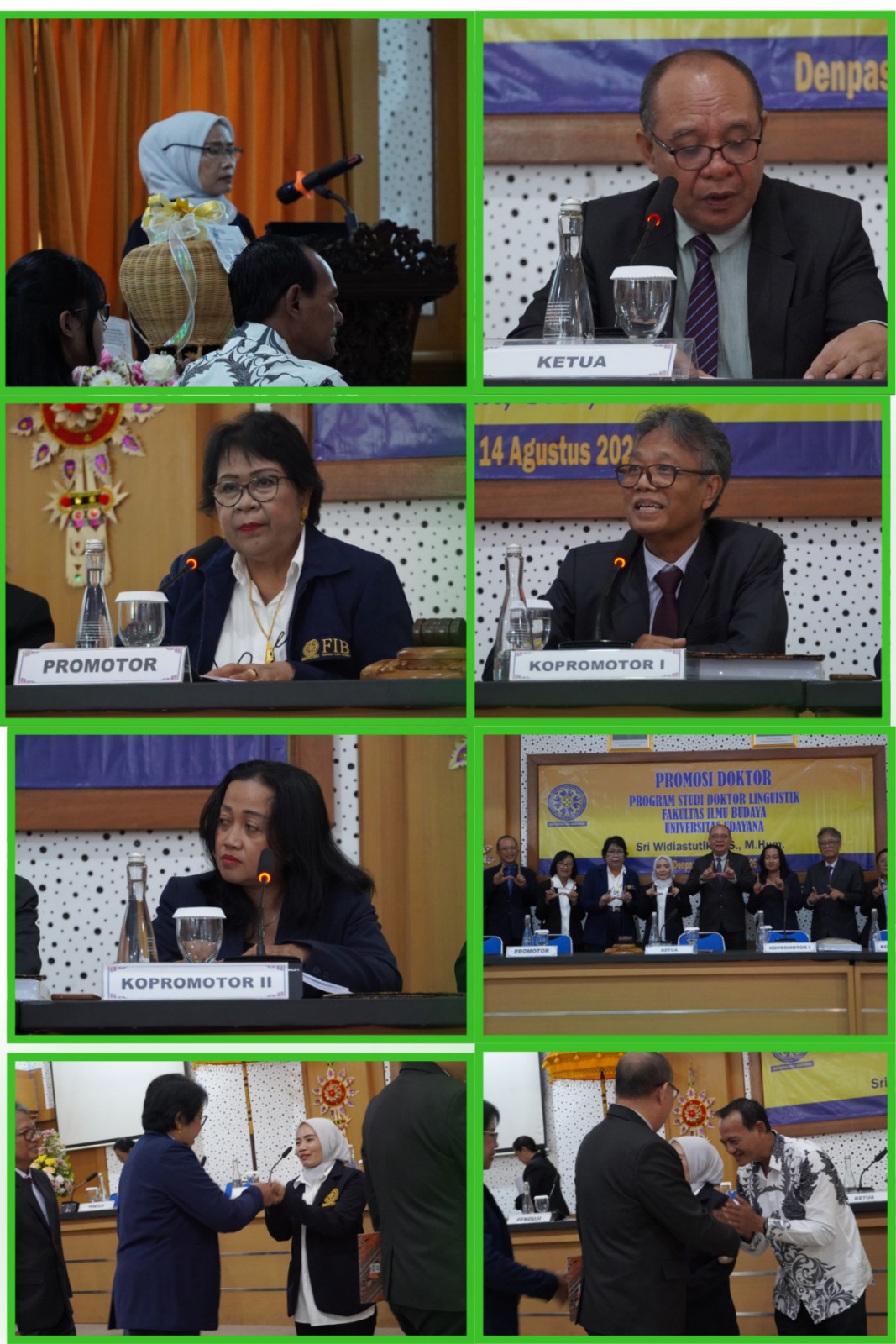
Denpasar, April 20, 2026 — The Bachelor of Japanese Literature, Faculty of Humanities, Udayana University held a guidance and counseling workshop in a hybrid system at Ir. Soekarno Room. The event, conducted for five days and attended by lecturers and also students from the Bachelor of Japanese Literature. Dr. Silvia Damayanti, S.S., M.Hum. as the moderator and also the Coordinator of the Japanese Literature Study Program who accompanied Ni Putu Adelia Kesumaningsari, S.Psi., M.Sc. as the Keynote Speaker. The Keynote Speaker delivered her material online, while approximately half of the participants attended offline and the other half participated remotely.
Dr. Silvia Damayanti as the moderator explained the background of holding this workshop, which was because nearly 50 percent of students from the 2019 to 2023 cohorts had not completed their thesis. Additionally, it was found that there were psychological disorders affecting thesis work among students. The event was then officially opened by the First Vice Dean of the Faculty of Humanities, Dr. I Gede Oeinada, S.S., M.Hum who expressed his gratitude for the presence of the speaker. In his speech. He stated that the challenges of completing the final assignment are not only technical issues but also mental issues and mental resilience. For students, according to him, the thesis is a test of independence to see whether they are willing to work hard. Meanwhile, lecturers who are supervising a thesis is an art. He hoped that through this workshop, a positive cooperation between lecturers and students could be achieved, and students could absorb knowledge about how to avoid burnout and maintain mental health while completing their final assignment. The opening was marked by tapping the microphone three times.
In the first session which was intended for lecturers, the Keynote Speaker, Ni Putu Adelia Kesumaningsari, S.Psi., M.Sc. explained various psychological obstacles often experienced by students when completing their thesis. She explained that current students tend to appreciate themselves more. Thesis often feels like a mental burden because it is considered as the final process before graduation. Several factors influence thesis completion such as: cognitive factors, work attitude, personality, and social factors such as pressure or support from family and conflicts at home. The speaker also identified four types of students based on the combination of motivation and ability, namely Type A with high ability and high motivation, Type B with strong motivation but lacking ability, Type C with high ability but low motivation, and Type D with both low ability and low motivation. According to her, Type C and Type D are the ones that need the most attention so that they do not get lost in the thesis writing process. The strategies include weekly meetings, personal approaches, providing tools and resources, encouraging peer support, as well as institutional structural interventions such as writing retreats, methodology workshops, structured guidance, and regular discussion forums.
During the question and answer session, a lecturer asked about the limitations of supervisors in providing support beyond technical matters, for example when students have family problems. The lecturer expressed concern that empathy given without real action could become toxic positivity. Responding to this question, the Keynote Speaker explained that indeed as supervisors they cannot enter the personal domain of students. However, supervisors can acknowledge the problem by reminding the student that if the thesis is not completed, it will only add new problems. The Keynote Speaker suggested that lecturers convey to students that we want to help solve the thesis problem while still accompanying the student through the process. Another question arose regarding students who do not want to meet at all because they are outside the island and do not want to participate in online guidance. The speaker suggested that the campus involve parents if the problem has progressed further, especially in the form of a warning letter.
The second session for students, presented online the topic of completing a thesis without burn-out. The material in this session was presented fully shared through a presentation file to participants. The speaker provided various tips and strategies for students to maintain mental health during the thesis writing process, avoid excessive fatigue, and remain productive without sacrificing psychological well-being. This session was also equipped with a question and answer session where students could consult directly about the obstacles they faced.
The workshop closed with a certificate of appreciation presented to the speaker as a token of gratitude for her participation and the knowledge she had shared. Overall, this five-days guidance and counseling workshop is expected to help lecturers and students of the Bachelor of Japanese Literature to face challenges during thesis completion, both from technical and psychological aspects, including strengthening positive cooperation.
UDAYANA UNIVERSITY