 ENG
ENG
 INA
INA
The 27th IFSSO International Conference Officially Launched at Faculty of Humanities, Udayana University Focusing on the Dynamics of Religion, Modernization, and Secularization
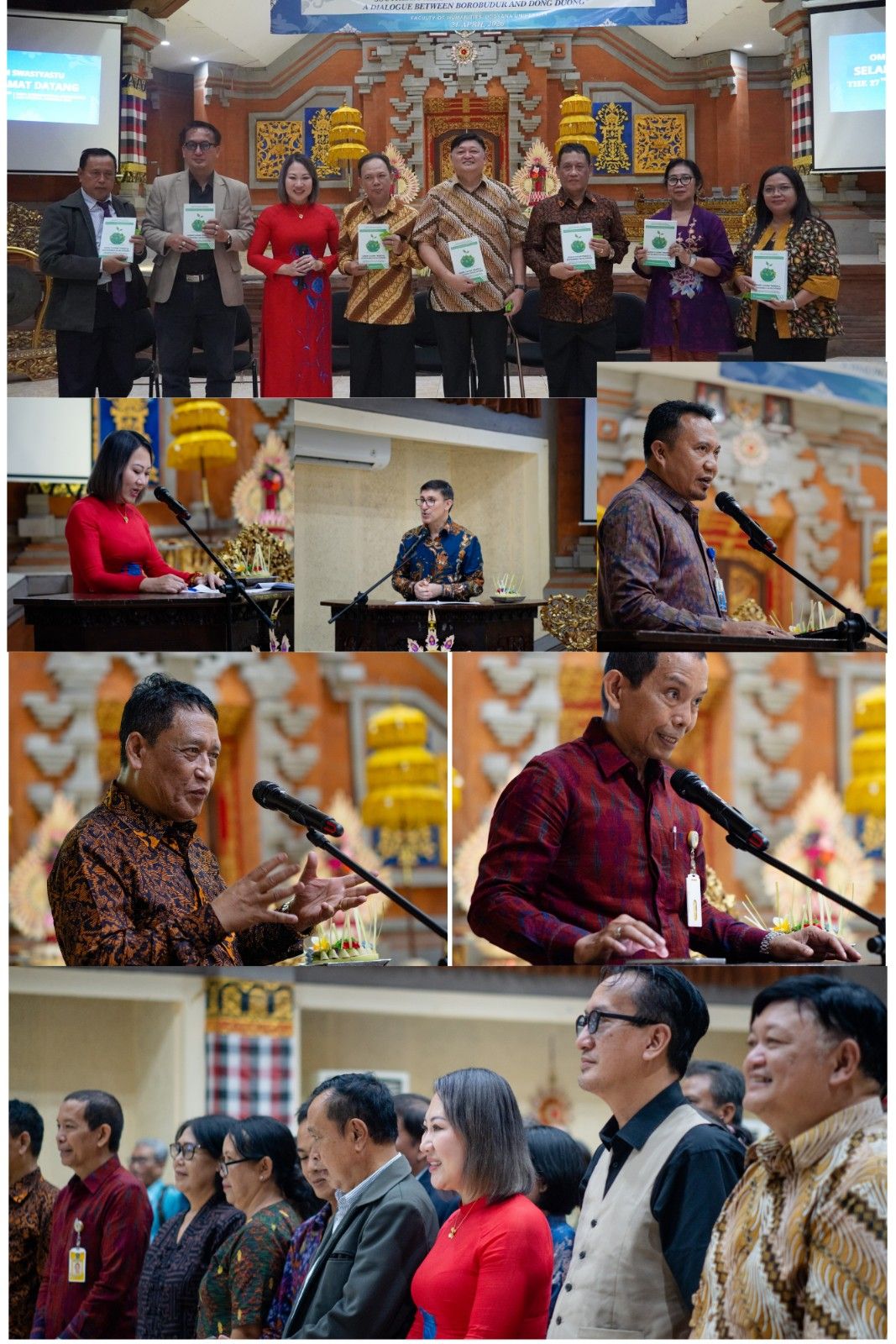
Denpasar, April 21, 2026 - The Bachelor of History, Faculty of Humanities, Udayana University successfully held a prestigious academic event titled "The 27th IFSSO International Conference and General Assembly 2026". The conference, which was held offline at the Widya Sabha Mandala Auditorium, 3rd Floor of the Ida Bagus Mantra Building, Faculty of Humanities, Udayana University, is a manifestation of a massive collaboration with various global institutions, including the University of the Philippines, The Institute for Social Sciences and Humanities Research (ISSH) VNU-HCM Vietnam, University of Mumbai, Gujarat University, and the International Federation of Social Science Organizations (IFSSO). This prestigious event was also attended by the Ambassador of Türkey for Indonesia, the Rector of Udayana University, the leadership ranks within the Faculty of Humanities, Udayana University, and experts from the collaborating institutions.
In the welcoming session, the President of IFSSO, Prof. Dr. phil. I Ketut Ardhana, M.A. appreciated the enthusiasm of the global delegates who successfully contributed more than 35 research abstracts. Marking the end of his tenure after leading IFSSO since 2003, he ensured that all ideas in this event would not merely end in the discussion room. The academic output of this conference will culminate in official publications through a publishing collaboration between Vietnam and Udayana University.
Following the welcoming remarks, the Dean of the Faculty of Humanities, Udayana University, Prof. I Nyoman Aryawibawa, S.S., M.A., Ph.D., expressed his pride in the faculty being appointed as the host of this event. Responding to the grand theme of the conference, Prof. Aryawibawa reflected on the historical value of the Faculty of Humanities, Udayana University, which in 1959 was the birthplace of the religious council Parisada Hindu Dharma Indonesia (PHDI). Furthermore, as a form of cultural and literacy diplomacy, he specifically invited the global delegates to explore the intellectual wealth of the archipelago by visiting the Faculty of Humanities' Lontar Library, which currently houses 898 collections of ancient manuscripts.
The peak of the opening ceremony was officially marked by the striking of a gong by the Rector of Udayana University, Prof. Ir. I Ketut Sudarsana, S.T., Ph.D. In his speech, Prof. Sudarsana emphasized that Bali is a living representation of the harmonization between spiritual values and the current of modernization, a balance deeply rooted in the local philosophical vision of *Nangun Sat Kerthi Loka Bali*. Through the momentum of the inauguration of The 27th IFSSO International Conference, the Rector reiterated Udayana University's commitment as a main driver of cross-disciplinary research collaboration on the global stage, while inviting the international delegates to directly experience the beauty of the Island of the Gods' culture.
Beginning the presentation of the materials, IFSSO Board Member, Prof. Nestor T. Castro, Ph.D., presented the track record of the International Federation of Social Science Organizations (IFSSO). Officially established in 1977, this cross-continental organization has consistently encouraged global social science collaboration to respond to various contemporary societal problems, especially in developing countries. Interestingly, Prof. Castro specifically highlighted the central role of Indonesia in the organization's progress, noting that since 2019, the IFSSO central secretariat has been officially relocated and is based in Jakarta.
Continuing the presentation, Prof. Dr. Talip Küçükcan, as the Ambassador of Türkiye to Indonesia and keynote speaker, presented a study titled "Managing State-Religion Relations in the Context of Modernization and Secularization". He refuted the old theory from Western scientists stating that the progress of time would cause society to abandon religion. According to him, religion does not die out eroded by modernization, but rather stays alive and adapts. This is evident from global phenomena, such as the emergence of megachurches in the United States to the strong spiritual traditions in Bali. In front of the international participants, Prof. Talip specifically praised Indonesia as an example of a successful modern state. He was amazed to see how the state respects various religions equally, one of which is by providing national holidays for the sacred celebrations of each religion—a harmony that, according to him, is often difficult for Western countries to comprehend.
Prof. Dr. phil. I Ketut Ardhana, M.A. presented a study on "Reinterpretation of Buddhism in the Context of State and Statecraft in Early Udayana". He highlighted the roles of the Srivijaya Kingdom and the early Udayana era as a bridge for the spread of spiritual values in Southeast Asia. Prof. Ardhana emphasized that the harmonious relationship between Hindu and Buddhist traditions in the past successfully gave birth to peaceful syncretism without triggering conflicts. This value of tolerance later became the historical root for the birth of the Indonesian national motto, *Bhinneka Tunggal Ika*.
As the final keynote speaker, Assoc. Prof. Dr. Phan Thi Hong Xuan from VNU-HCM presented a study on "Religious Urbanism as 'Soft Infrastructure': The Role of Buddhist Spaces in Shaping Identity and Community Connectivity in Contemporary Southeast Asian Cities". She asserted that temples or pagodas in Southeast Asia are not merely passive places of worship, but active social infrastructures that support modern city life. Through real examples in Vietnam and Thailand, Prof. Phan demonstrated the vital role of temples in uniting citizens; ranging from becoming social assistance centers to initiating the recycling of plastics into monk robes. Therefore, she urged that future urban planning should integrate religious institutions as the foundation of urban community resilience.
This was followed by a panel discussion immediately after the in-depth presentations by the keynote speakers. During this parallel session, delegates from various countries were divided into several discussion rooms to delve into more specific topics.
UDAYANA UNIVERSITY