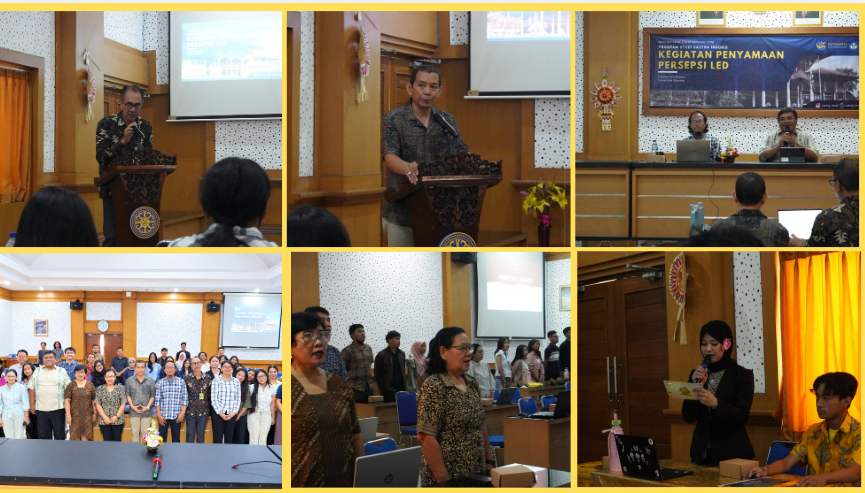
In preparation for the extend of accreditation of the Bachelor of English Literature, the Faculty of Humanities Udayana University held an LED Perception-Alignment Workshop. The event took place over two (2) days, on Thursday and Friday, September 17 and 18, 2026. The two-day event was held in person at the Faculty of Humanities Udayana University involving faculty and program leaders, Bachelor of English Literature's lecturers, guest speakers, and students.
To kick off the series of activities, the Coordinator of the English Literature Program, Dr. I Gusti Ngurah Parthama, S.S., M.Hum., delivered opening remarks. In his remarks, he stated that this event was part of the preparations for the reaccreditation of the Bachelor of English Literature Faculty of Humanities, Udayana University. He expressed his hope that this event would foster a shared understanding regarding the extend of accreditation process for the Bachelor of English Literature.
The event continued with opening remarks by the Dean of the Faculty of Humanities, Prof. I Nyoman Aryawibawa, S.S., M.A., Ph.D., who also officially opened the LED Consensus-Building Session. In his remarks, he provided a brief overview of the Self-Assessment Report currently being prepared by the Bachelor of English Literature. He noted that the Self-Assessment Report is not merely descriptive but should also include evaluative aspects. He also expressed his appreciation to the lecturers and others who have worked on compiling the LED. At the end of his remarks, he officially opened the event.
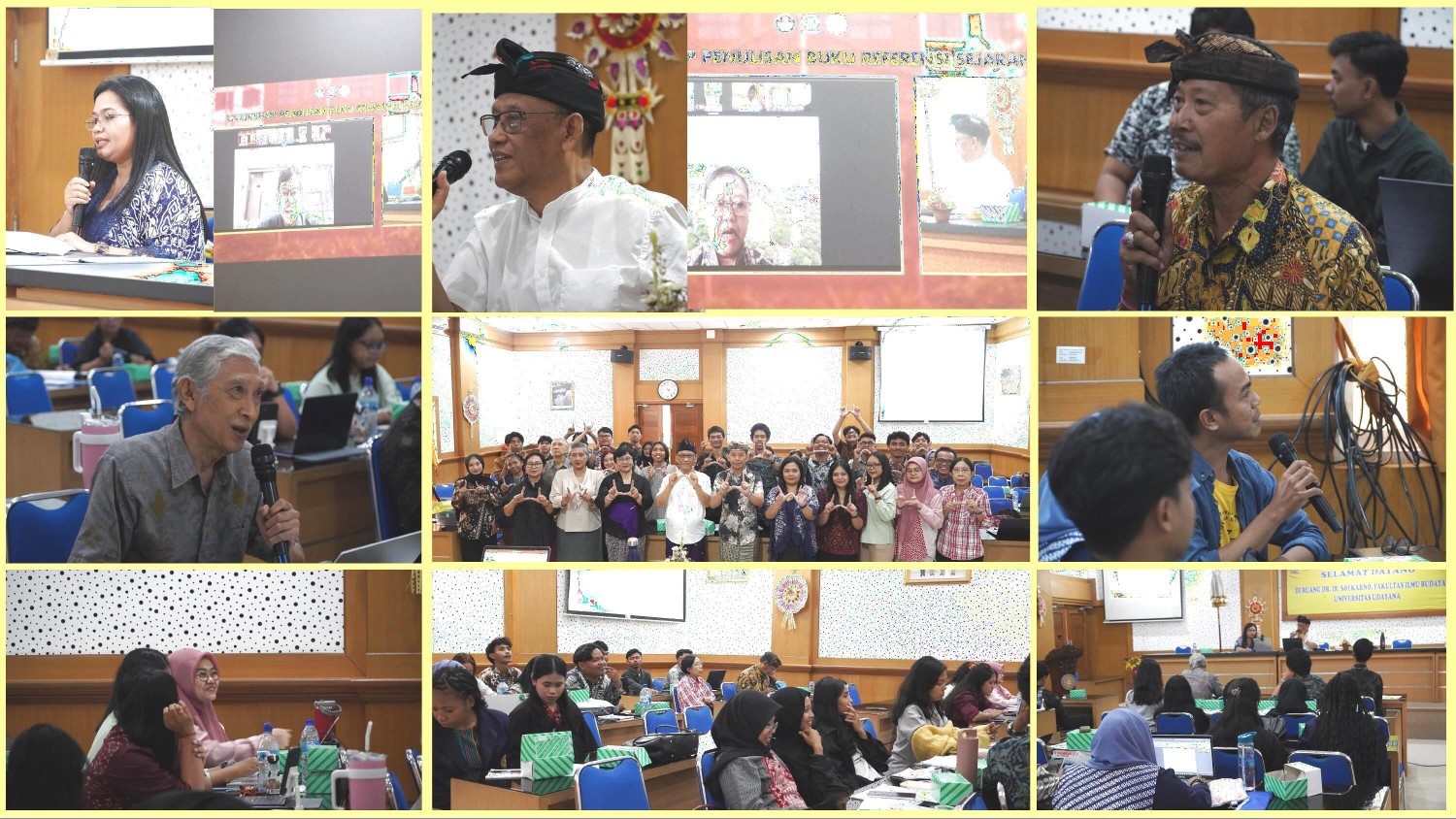
The next session was a presentation accompanied by Dr. Galuh Febri Putra, S.Pd., M.A. as the moderator. The keynote speaker, Dr. I Nyoman Larry Julianto, S.Sn., M.Ds., M.I.Kom. presented a session titled “Quality Culture—Impactful Recognition”. It was divided into two parts and delivered on the first and second days. The speaker began by noting that “excellent” accreditation status serves as an indicator of achieving accreditation quality objectives. He emphasized that when preparing the LED, academic programs must also focus on presenting the program’s actual conditions factually.
The discussion also covered the Establishment, Implementation, Evaluation, Monitoring, and Improvement (PPEPP) cycle must be reflected in the Self-Assessment Report consists of: planning, implementation, evaluation, and improvement. Additionally, he discussed tracer studies as well as enhancing the outcomes for faculty and students. When preparing the Self-Assessment Report , the program must also strengthen its analysis by focusing on the differentiation of its mission and quality culture. He continued by discussing the description of achievement indicators. The speaker also discussed the review of the Self-Assessment Report previously prepared by the study program. The review involved examining the Self-Assessment Report’s content in greater detail and highlighting several sections that still require attention, page by page. In this regard, the speaker emphasized the importance of descriptive explanations supported by sound reasoning and evidence. One of the topics discussed was the measurement of Learning Achievement.
In each session, once the presentation of the material on both days was completed, it was followed by a discussion session addressing various questions and feedback from the faculty members and students in attendance. This discussion session covered a number of issues and challenges encountered in preparing the Self-Assessment Report, including the possibility of changes or extensions after the document is submitted, the reporting of study program shortcomings in the Self-Assessment Report, and discrepancies between the original data and PDDikti data.
One of the questions raised during the session concerned the disclosure of shortcomings in the accreditation process: whether study programs need to openly disclose these shortcomings when preparing the LED, and how to describe them without worrying about negatively impacting the accreditation assessment. In response, the speaker explained that the descriptions in the LED should reflect the actual conditions of the study program. The LED should not only highlight successes but also include facts about areas that still need improvement, serving as the basis for evaluation and follow-up corrective actions.
Additional questions concerned discrepancies between actual data in academic programs and the PDDikti database. The speaker emphasized the importance of updating or correcting data whenever discrepancies are found. The speaker explained that the data used must be accompanied by explanations and evidence once corrections have been made. This is part of the effort to ensure that the data presented in the Self-Assessment Report is accountable.
This discussion session provided a forum for lecturers to analyze various issues in the preparation of the Self-Assessment Report and to align their understanding of the data, analysis, and supporting evidence required in the accreditation process. The outcome of this activity was the refinement of the Bachelor of English Literature’s Self-Assessment Report document, which included improvements to the narrative, data harmonization, synchronization between analysis and relevant evidence, as well as strengthened explanations regarding the current situation, evaluation, and follow-up steps in the study program’s accreditation renewal process.
 ENG
ENG
 INA
INA
.jpg)
UDAYANA UNIVERSITY