 ENG
ENG
 INA
INA
Workshop on Shopping and Balinese Attire, Introducing Local Culture to BIPAS Program Students
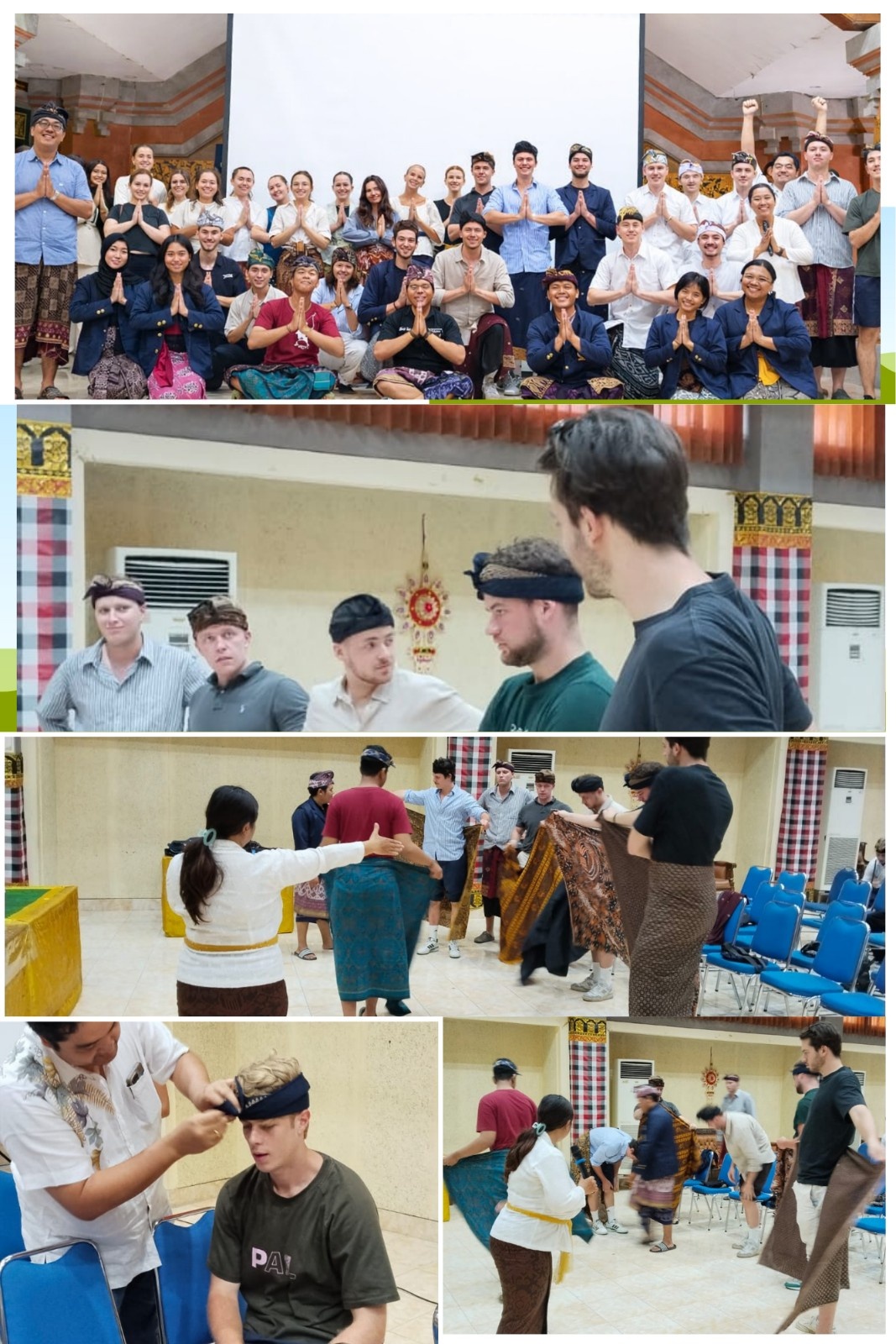
The Workshop on Shopping and Balinese Attire was held on Thursday, March 12, 2026, at Nias Campus Auditorium. This event was part of the BIPAS program series, which aims to introduce Balinese culture to participants through hands-on experiences with traditional dress and shopping practices at traditional markets. This workshop was a mandatory activity for all program participants.
The event began at 9:00 a.m. WITA with opening remarks from the BIPAS Program Coordinator, I Made Sena Darmasetiyawan, S.S., M.Hum., Ph.D. In his remarks, he emphasized the importance of understanding local culture for participants so they can get to know Balinese society more closely. This activity was also designed as an interactive learning experience that combines cultural knowledge with practical experience in the spot.
The main workshop session was led by Dr. Ni Ketut Sri Rahayuni, S.S., M.Hum., who provided an explanation of traditional Balinese attire. During her presentation, participants were introduced to various types of traditional Balinese clothing, the function of each garment component, and the cultural significance embedded within them. This knowledge served as a foundation for the participants before they practiced wearing the traditional attire. Next, participants received instruction on bargaining techniques at traditional markets. In this session, Dr. Ni Ketut Sri Rahayuni, S.S., M.Hum., explained the etiquette and negotiation strategies commonly used by Balinese people when shopping. After receiving the explanation, participants were invited to practice these skills firsthand through a shopping activity at Sanglah Market.
The shopping activity lasted about an hour, during which participants could purchase various items needed for traditional Balinese attire. Although purchases were optional, the practice of bargaining was an important part of the learning experience. During this activity, several local students accompanied the participants to ensure that everything ran smoothly and that all participants could take part safely. The workshop continued with a hands-on session on wearing traditional Balinese attire, led directly by the expert. Participants learned how to properly put on each garment according to local traditions. The event concluded with closing remarks from the Program Coordinator of BIPAS and a group photo session, marking the end of the workshop that provided an authentic cultural experience for the program participants.
UDAYANA UNIVERSITY