 ENG
ENG
 INA
INA
Faculty of Humanities, Udayana University and Jembrana Tourism and Culture Office Sign Self-Management Cooperation Contract Regarding Museum Risk Mitigation
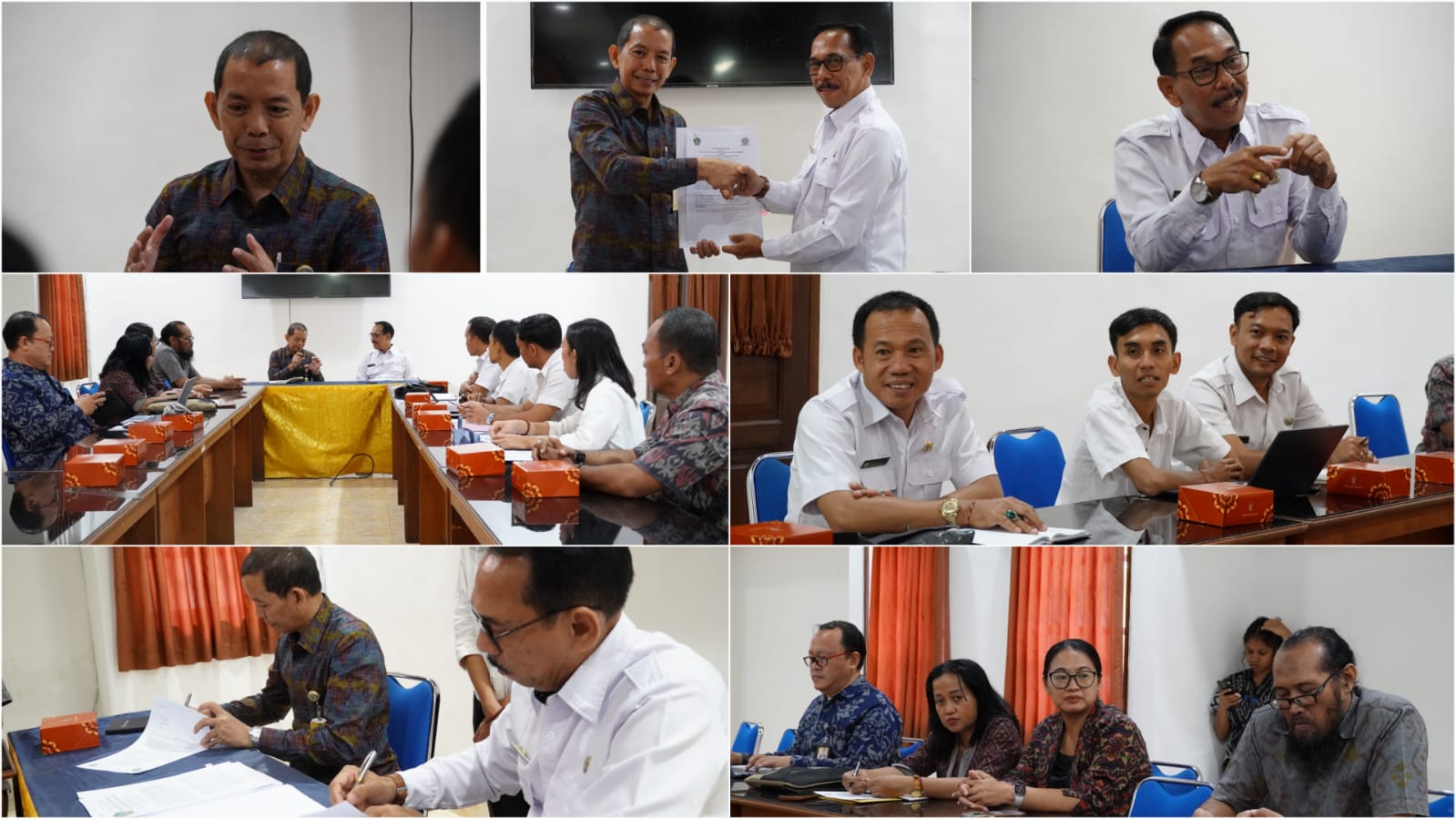
In order to strengthen synergy between the academic world and regional government, the Faculty of Humanities, Udayana University held a self-management cooperation contract signing with the Tourism and Culture Office of Jembrana Regency on Wednesday, September 30, 2026. This activity focuses on museum risk mitigation studies for the arrangement and strategic strengthening of museum management in Jembrana.
The event was attended by the Dean of the Faculty of Humanities, Udayana University, the Vice Dean I, the Coordinator of the Archaeology Study Program, the research team from related study program lecturers, and the Head of the Tourism and Culture Office of Jembrana Regency along with his staff.
In his remarks, the Dean of the Faculty of Humanities, Udayana University, I Nyoman Aryawibawa, S.S., M.A., Ph.D., expressed his appreciation and gratitude to the Head of the Jembrana Tourism and Culture Office for his willingness to visit the Faculty of Humanities campus directly. He also welcomed the trust given to the university to collaborate, and hoped that the lecturers would be productive and make the best use of this cooperation.
Meanwhile, the Head of the Jembrana Tourism and Culture Office revealed that this cooperation stemmed from seeing the potential of several study programs at the Faculty of Humanities related to regional culture, which was then followed up through a Cooperation Agreement (PKS) so that the museum's arrangement could be more appealing. He also explained the conditions in the field, where his office has limited human resources (HR) amounting to only six people, including a night watchman, without any special operators. His office also opens up opportunities for Unud students who wish to conduct practical work or direct observation in Jembrana.
On that occasion, the Jembrana Tourism and Culture Office added that through this impact mitigation study, it is hoped that the team can predict various risks in the future, and hopes that this collaboration will not be limited to museum risk mitigation alone, but can continue in other fields.
The series of events was then continued with the signing of the cooperation document, a documentation session, and closed with the hope that this collaboration between academics and the regional government can continue to be established sustainably in the future.
UDAYANA UNIVERSITY